Keeping squirrels off your roof
The routes squirrels use to reach your roof, how to cut back trees within the rules, and how to make the roofline harder to get into.
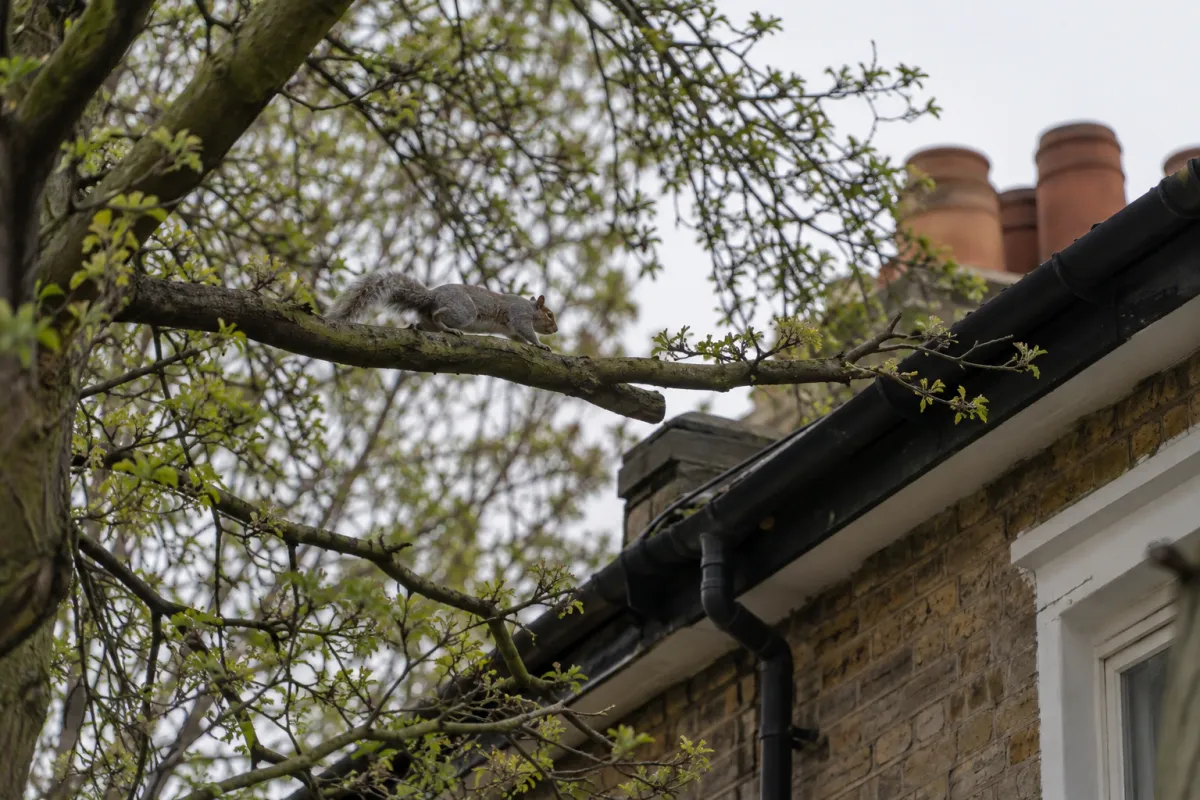
The best time to deal with squirrels is before they reach the roof. Grey squirrels are superb climbers and jumpers, and in East London's streets of terraces, back gardens and mature street trees, most houses have more than one way up. Taking away those routes, and making the roofline harder to get into, protects your loft and saves the cost of repairs later.
How squirrels get onto a roof
- Trees. Branches that overhang or come close to the roof are the main route, as squirrels can leap a couple of metres or more from a branch.
- Walls and fences. Garden walls and fence tops are squirrel highways, and a fence that runs up to an extension roof is an easy step up.
- Climbing plants. Ivy, wisteria and climbing roses act as a ladder up the brickwork to the gutters and eaves.
- Drainpipes and rough walls. Squirrels climb drainpipes, rough brickwork and pebbledash with ease.
- Overhead cables. Phone and broadband lines strung from poles to houses make handy tightropes.
- Neighbouring roofs. On a terrace, once a squirrel is on one roof it can run along the whole row.
Cutting back trees and plants
Cut branches back so there's a clear gap of around three metres between the tree and the roof. Before you start:
- Check whether the tree is protected. Trees covered by a Tree Preservation Order need council consent before work, and in a conservation area you usually have to give the council six weeks' notice before pruning most trees. Your council can tell you whether either applies.
- Neighbours' trees. You can usually cut branches that overhang your property back to the boundary, but no further, and you should offer the cuttings back to the owner. Talk to them first.
- Street trees. These belong to the council. Report branches touching your roof rather than cutting them yourself.
- Nesting birds. Avoid major cutting during the bird nesting season, roughly March to August, as active nests are protected by law. Check carefully for nests whenever you cut.
Cut climbing plants back so they stop well short of the gutter, leaving a good stretch of bare wall that squirrels can't use as a ladder.
Making the roofline harder to get into
Squirrels look for gaps they can widen. Check the roofline from the ground with binoculars in spring and autumn, and after storms. The weak points are usually:
- rotten or loose fascia and soffit boards
- the joint where an extension roof meets the house wall
- open eaves on older houses with no soffit, where the top of the wall meets the tiles
- slipped or broken tiles, and the ridge and hip tiles at the end of a row
- plastic roof and soffit vents, which squirrels chew through
- gable ends and the edges of dormer windows
Squirrels can chew through plastic, soft timber and chicken wire, so repairs should use tougher materials, such as galvanised steel mesh, metal vent covers and sound timber or metal behind replacement boards.
Roof work means working at height, so use a roofer with proper access equipment rather than a ladder propped against the gutter. On a terrace, agree repairs with your neighbours where you can, because a gap next door lets squirrels into the shared roofline.
Only proof the roofline when you're sure there are no squirrels inside. If they're already in the loft, read our guide to squirrels in the loft first.
Taking away the reasons to visit
- Use squirrel-resistant bird feeders, such as caged feeders or ones that close under a squirrel's weight, and fit a baffle to feeder poles.
- Hang feeders well away from fences, trees and the house.
- Don't put food out for squirrels, and pick up fallen fruit and nuts.
- Store bird seed and pet food in metal bins rather than in bags in a shed they can chew into.
Plastic owls, ultrasonic devices and scented repellents rarely work for long. Squirrels quickly get used to them, especially when there's food nearby.
When to get help
If squirrels are on your roof every day, you've spotted fresh chewing at the eaves, or the roof needs work you can't reach safely, it's worth having the roofline surveyed. The squirrel control page explains what a survey involves, and our squirrel control guide covers how to arrange a visit.
If squirrels are running across your roof and you're worried they'll get in, call Mighty Pest Control on 020 7112 8473.