Rat control in East London
Almost every rat problem in London involves the brown rat, a strong swimmer and burrower that often reaches buildings through damaged drains, gaps under doors or holes in walls. We find how rats are getting in, treat with professional-use rodenticides in secure bait stations, and explain what needs repairing so they do not return. Acting early matters, because rats breed quickly and cause real damage.
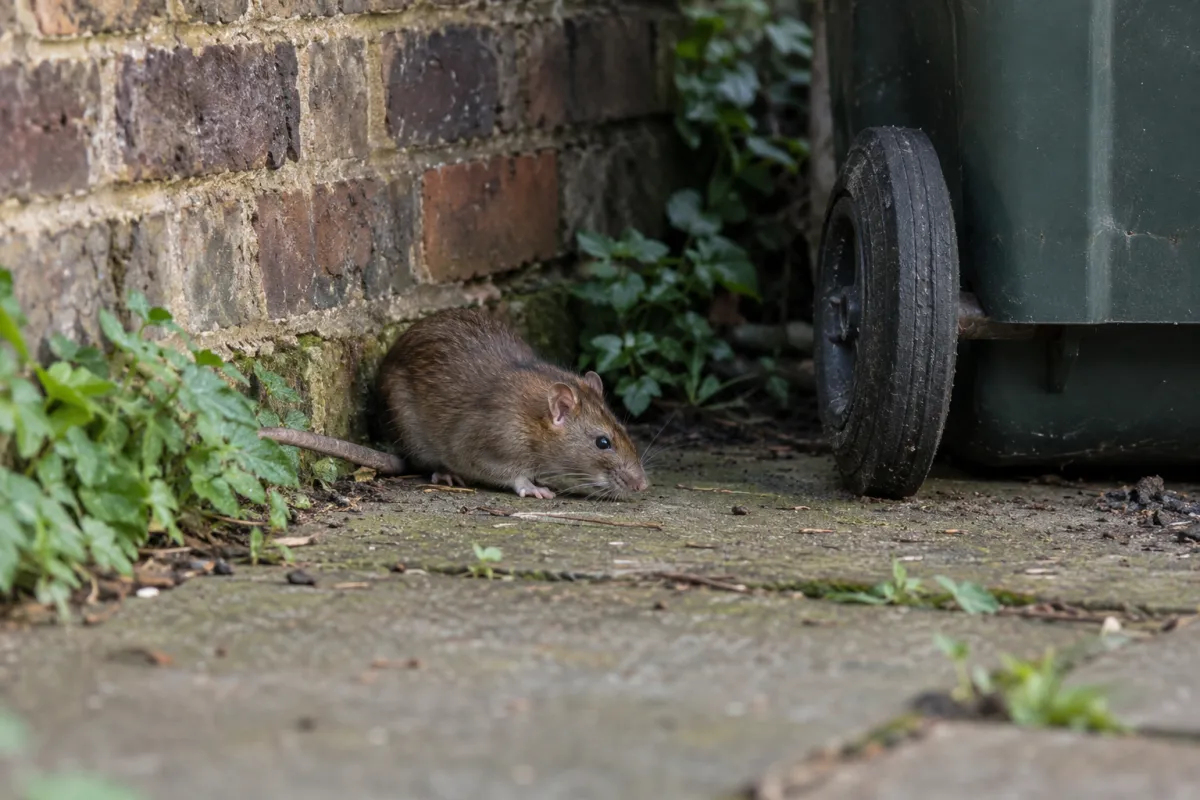
What rats look like
The brown rat is a big, heavy-set rodent, often around 40 cm from nose to tail tip. It has a blunt snout, small furry ears that sit close to the head, and a thick, scaly tail that's darker on top and a little shorter than its body. A young rat can pass for a mouse at a glance, but its head and feet look oversized for its body.
- Size
- Body around 20–27 cm, tail a little shorter
- Colour
- Brown to grey-brown, paler grey underneath
- Breeding
- Usually 6–10 young a litter, several litters a year
- Lifespan
- Usually about a year in the wild
- Diet
- Almost anything, and they need water most days
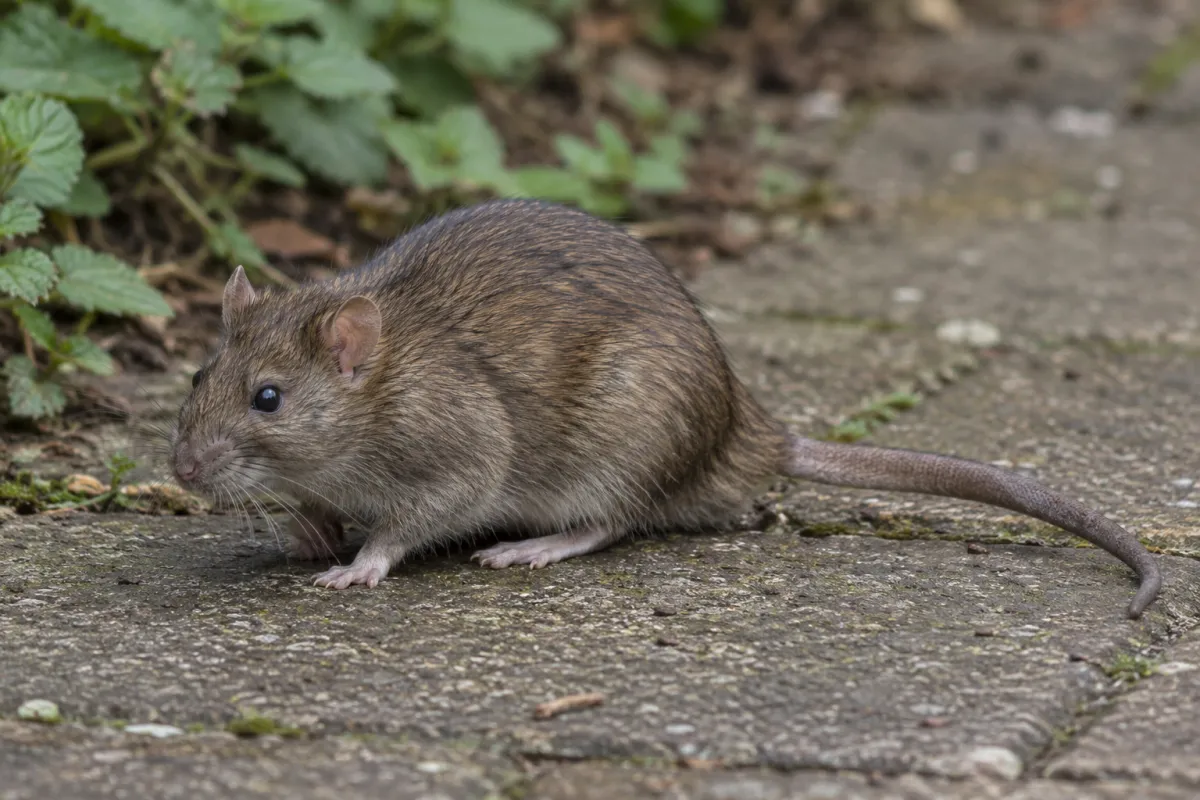
Signs of rats
Large droppings
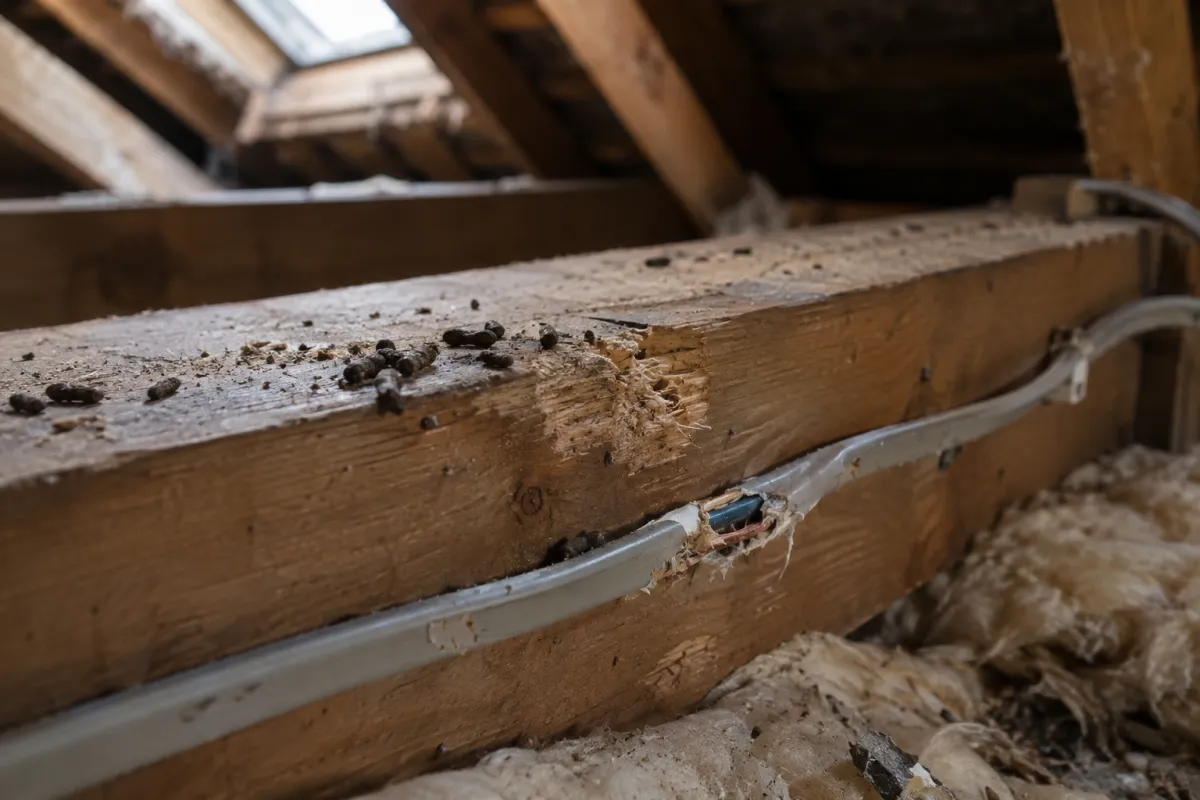
Dark, spindle-shaped droppings around 10–14 mm long, often in groups along walls, near bins or in lofts.
Burrows and runs
Holes in soil banks, under decking, sheds or paving, with worn paths through grass and greasy smears along walls where rats travel.
Gnawing damage
Chewed doors, skirting, pipes, cables or bin lids, often with rough edges and coarse tooth marks.
Noises and footprints
Heavy scratching or gnawing in walls, floors and ceilings at night, and footprints or tail marks in dust or mud.
Rats seen in daylight
Rats mostly come out at night, so seeing one during the day can point to a larger population nearby.
Life cycle and breeding
Brown rats breed all year round wherever there's food and shelter. A female can have her first litter at around three months old and mate again soon after giving birth, so numbers climb fast.
Pregnancy
Pregnancy lasts about three weeks. The female gives birth in a nest of grass, paper or insulation, at the end of a burrow or in a hidden void.
Pups
A litter is usually 6–10 pups, born blind and hairless. Their eyes open at around two weeks.
Following the adults
From about three weeks old they start leaving the nest and following adults along the same runs, learning where the food is.
Breeding age
They're ready to breed at around two to three months old. Most wild rats live about a year, with several litters in that time.
Where rats live and how they get in
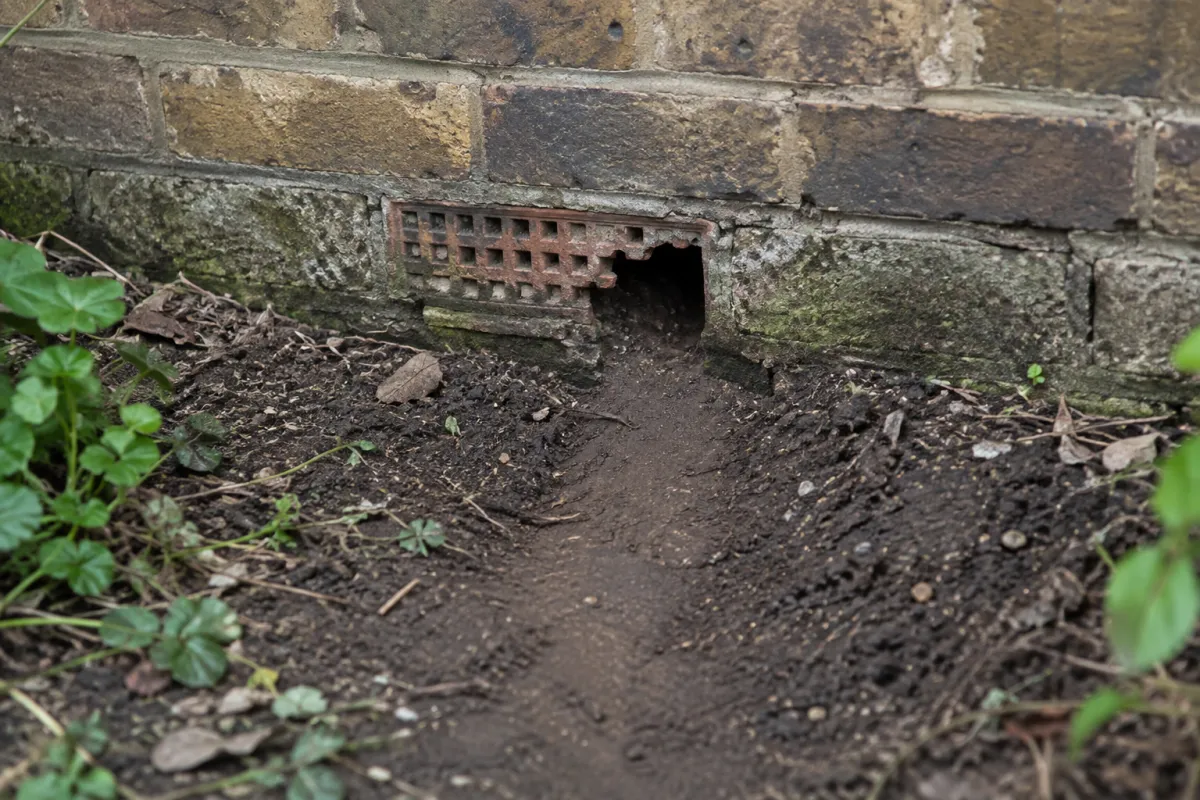
Outside, brown rats dig burrows in soft ground under sheds, decking, paving and overgrown corners, usually close to water and a steady food supply. Across East London many also live in the sewers and older drains. Indoors they settle in floor voids, wall cavities and behind kitchen units, and they stick to the same routes along walls and fences rather than crossing open ground.
- Through broken or missing air bricks into the void under a suspended timber floor.
- Up through cracked or disconnected drains, or a pipe left open after a kitchen or bathroom refit.
- Under doors with a worn threshold, as a young rat can squeeze through a gap of around 15 mm.
- By gnawing round an existing gap in a plastic pipe, vent cover or rotten door to make it bigger.
- By climbing drainpipes, ivy and rough brickwork to reach gaps at the roofline.
Why it matters
In a home or rented flat
Rats can spread diseases including leptospirosis, the cause of Weil's disease, mainly through their urine, and they contaminate food and surfaces. They also gnaw through pipes, cables and timber, which can lead to leaks, electrical faults and costly repairs.
For landlords and businesses
Evidence of rats in a food business, shop or office quickly damages trust with customers and can lead to enforcement by environmental health officers. Under the Prevention of Damage by Pests Act 1949, local authorities can require owners and occupiers to deal with rats on their land.
How rat control works
Survey and identification
We confirm rat activity from droppings, runs, burrows and damage, and work out whether rats are living outside, inside or coming up through the drains.
Secure baiting
Professional-use rodenticides are placed in secure bait stations along active runs, sited where children, pets and wildlife cannot reach them.
Proofing and repairs
We point out entry points such as broken air bricks, gaps under doors and damaged or disused drains, and explain which repairs will keep rats out.
Follow-up and prevention
Follow-up visits check bait take until activity stops, and remaining bait is then removed. We finish with advice on waste storage and housekeeping to prevent a return.
What you can do yourself
Find what's feeding them
Walk round at dusk and look for what's drawing them in, such as split bin bags, cooked scraps in the compost, pet food left out or chicken feed. Cut that off first and everything else works better.
Pre-bait rat traps
Rats are wary of anything new, so put rat-size snap traps along their runs with bait but unset for a few days, then set them. Always place traps inside a box or tunnel so pets and birds can't get to them.
Bait boxes only
If you use poison, buy only products sold for amateur use and follow the label exactly. Use a tamper-resistant bait box, keep it away from children and pets, and remove it once the activity stops.
Protect yourself
Rat urine can carry leptospirosis, so wear gloves when clearing up, cover any cuts and wash your hands afterwards. Don't sweep or hoover droppings dry; damp them down with disinfectant first.
Prevention
- Keep bin lids closed, put rubbish bags inside bins rather than on the ground, and clear up spilt food waste.
- Avoid feeding birds on the ground, and clear away any bird food left at the end of the day.
- Replace broken air bricks and vent covers, and make sure external doors fit closely.
- Repair damaged drains and manhole covers, and make sure disused drains are properly sealed during building work.
- Cut back overgrown areas and clear piles of timber and rubbish where rats can shelter.
Rats are active all year, but they are often noticed more in autumn and winter as they move towards buildings for warmth and food.
Common myths
Myth: You're never more than six feet from a rat.
The truth: It's an old saying, not a measurement. Rats are common in London, but they gather where there's food, water and shelter, not evenly everywhere.
Myth: Only dirty houses get rats.
The truth: Clean homes get rats too, usually through a drain fault or a gap in the building. The fix is finding the way in, not more scrubbing.
Myth: Poison sends rats outside looking for water.
The truth: It doesn't. Rats usually die where they feel safe, often in the nest under a floor or in a wall, which is why there can be a smell for a while.
Questions about rats
Are rats coming up from the sewers?
Often, yes. Brown rats live in sewers and can enter homes through cracked pipes, broken drain connections or disused drains left open after building work. If signs appear indoors with no obvious gap, a drainage fault is worth investigating.
Is it a brown rat or a black rat?
Almost certainly a brown rat. The black rat, or ship rat, is now very rare in Britain, while the brown rat is widespread. Brown rats have a blunt nose, small furry ears and a tail shorter than the head and body.
Who is responsible for rats in a rented property?
It depends on the cause and the tenancy agreement. Landlords are generally expected to fix structural problems that let rats in, such as damaged drains or holes in walls, while tenants are expected to keep the property clean and bins closed. Pests are also one of the hazards councils assess under the Housing Health and Safety Rating System.
How long does rat treatment take?
It depends on the size of the infestation and how quickly the rats accept the bait, as they are wary of anything new in their surroundings. A treatment normally runs over several visits, and proofing is what stops new rats arriving.
Further reading
Related services
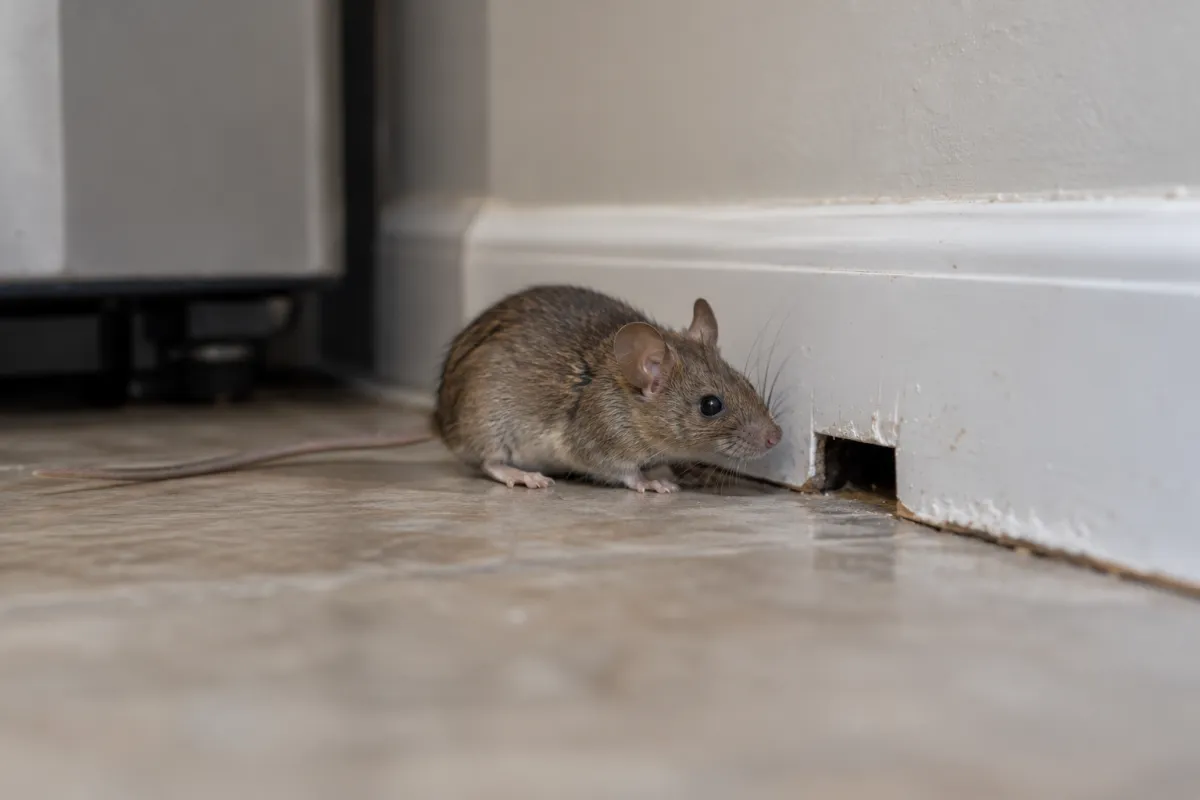 Mice controlFind and treat mice in homes, flats and business premises, then close the gaps they use to get in.
 Rodent controlNot sure if it is rats or mice? We identify the rodent first, then treat and proof the building.
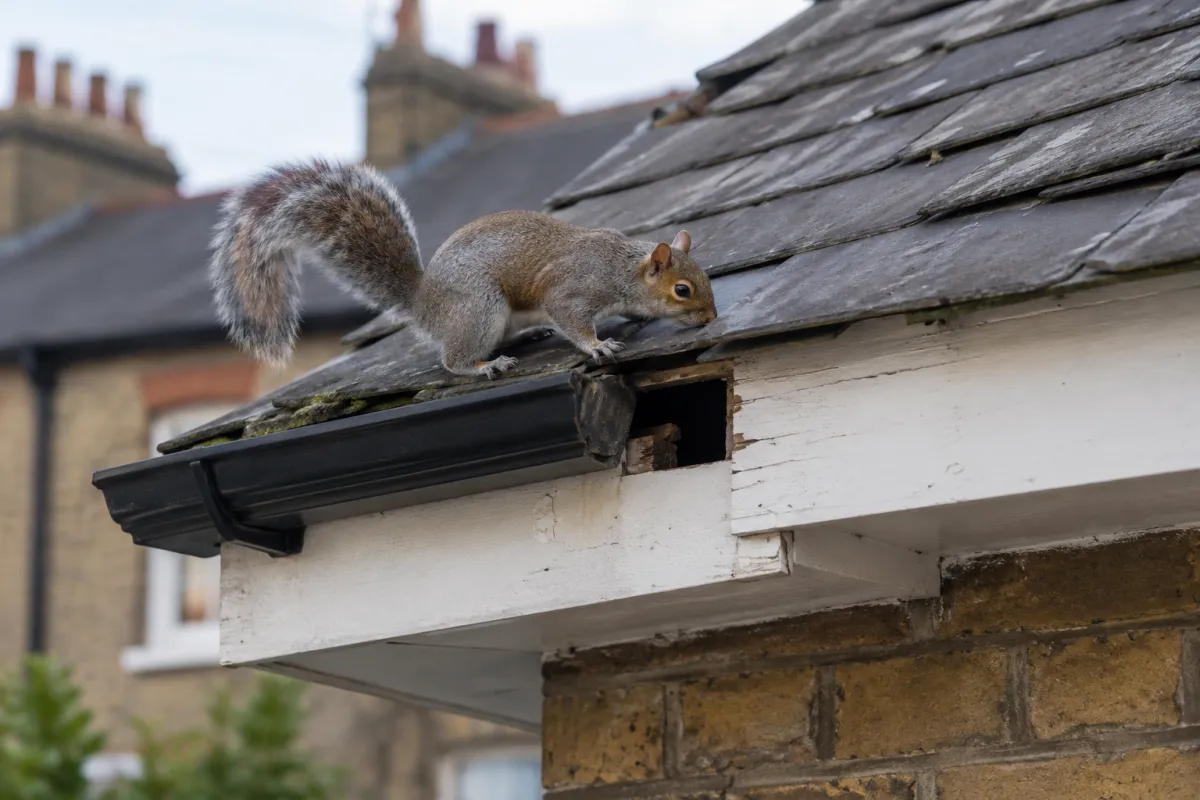 Squirrel controlSurvey and advice for grey squirrels in lofts, roofs and eaves, with a plan to stop the damage.
Let’s talk about the problem.
Tell us what you’ve seen, the property type and your postcode.