Squirrel control in East London
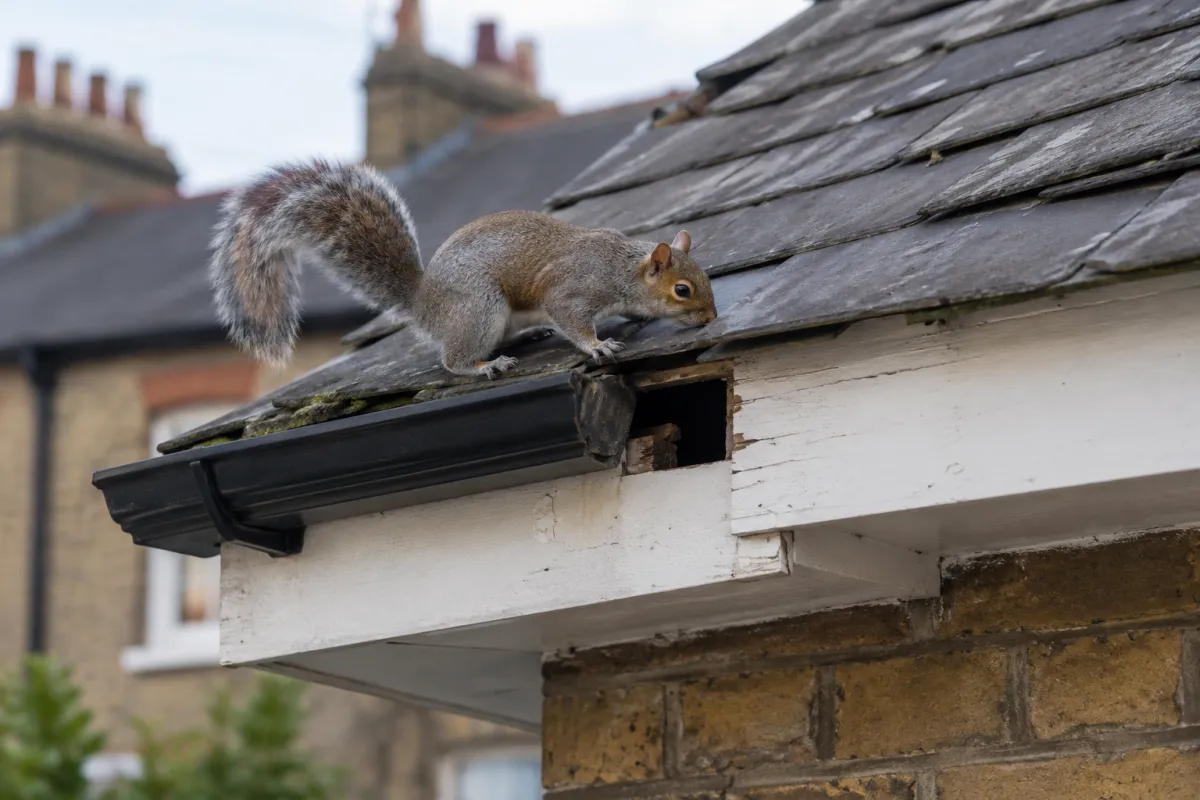
Grey squirrels get into lofts through gaps at the eaves, fascias and roof edges, then chew timber, insulation and cables while they nest. We survey the problem, find where they are getting in and recommend an appropriate course of action. Grey squirrels are covered by specific laws, so any treatment has to be planned properly.
What squirrels look like
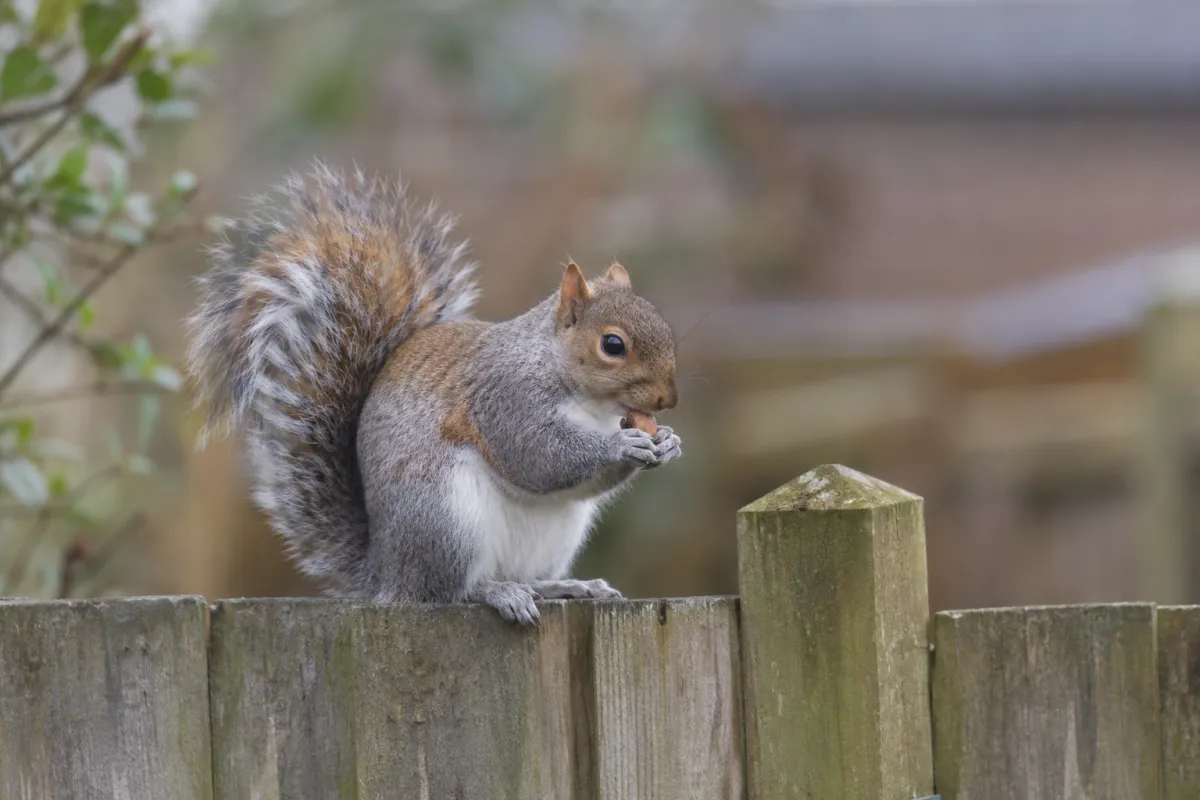
A grey squirrel has a grey coat, often with a brownish tinge along the back in summer, a white or pale belly and a big bushy tail it often holds curled over its back. Its ears are short and rounded, without the tufts of a red squirrel. Red squirrels disappeared from London long ago, so any squirrel you see around East London will be a grey.
- Size
- Body 23–30 cm, with a bushy tail nearly as long
- Colour
- Grey, often brownish on the back, with a pale belly
- Breeding
- One or two litters a year, usually 2–4 young
- Diet
- Nuts, seeds, buds, bark, fungi and bird food
- Nest
- A drey of twigs and leaves, or a loft if it can
Signs of squirrels
Daytime loft noise
Thumping, scratching and scampering overhead, mostly in the early morning and late afternoon. Rats and mice are usually heard at night instead.
Holes at the roofline
Chewed gaps in fascia boards, soffits or at the eaves, sometimes with fresh wood chips on the ground below.
Damaged loft contents
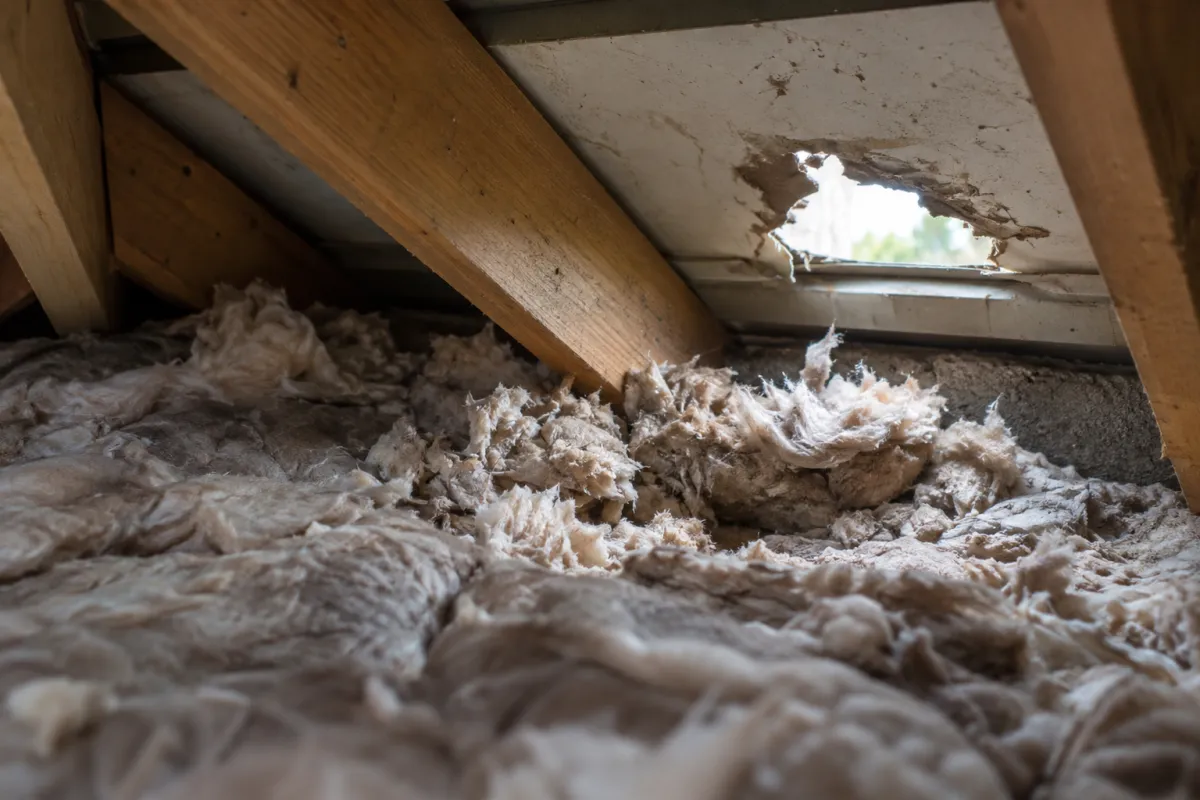
Shredded insulation, gnawed timber and stored boxes, and bulky nests made from insulation, leaves and paper.
Chewed cables and pipes
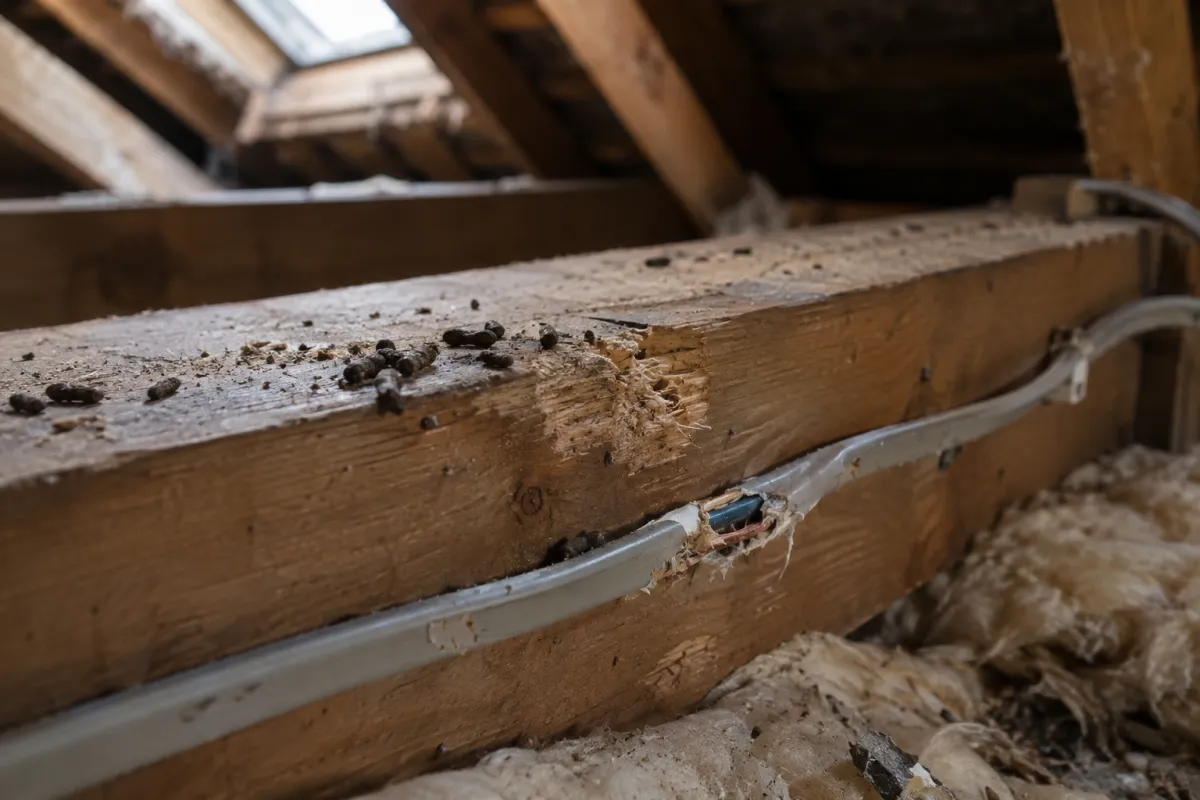
Stripped cable insulation or gnawed pipes in the roof space, which can create a fire or leak risk.
Regular roof visits
Squirrels seen running along the roof, gutters or nearby branches, and disappearing at the same spot each time.
Life cycle and breeding
Squirrels breed more slowly than rats or mice, but the timing matters. A pregnant female looking for somewhere dry and safe is often the one that ends up in your loft.
Mating chases
From around December to February, and again in early summer, you'll see males chasing a female through the trees and across roofs.
Pregnancy
Pregnancy lasts about six weeks. The female builds or takes over a nest to give birth, and a quiet loft suits her well.
In the nest
Litters are usually 2–4 young, born blind and hairless. They stay in the nest until they're around ten weeks old.
Moving on
Once weaned, young squirrels move off to find their own patch. Most can breed by the following year.
Where squirrels live and how they get in
Grey squirrels live in the parks, gardens, street trees and railway embankments that run all through East London. They normally nest in a drey, a football-sized ball of twigs and leaves high in a tree, but a loft is warmer, drier and safer. Terraced rows with joined-up rooflines let them run from one roof to the next.
- By leaping onto the roof from nearby trees, fences and garden walls.
- By climbing rough brickwork, drainpipes and cables up to the eaves.
- Through gaps where the soffit meets the wall, or where fascia boards have rotted or come loose.
- By chewing a small gap at the roofline until it's big enough to squeeze through.
- Through slipped tiles, broken vents or the joint where an extension roof meets the house.
Why it matters
In a home or rented flat
Squirrels in a loft chew roof timbers, insulation and electrical cables, and the noise can disturb sleep. Water tanks and pipes in the roof space can also be damaged, leading to leaks.
For landlords and businesses
In offices, shops and rented buildings, squirrels in roof voids can damage wiring and ceilings in areas that are rarely checked. Landlords may also face repeat problems if entry points along a shared roofline are not repaired.
How squirrel control works
Roof and loft survey
We inspect the roofline and loft to confirm squirrels are the cause, find the active entry points and assess the damage.
Options and advice
We explain the options that suit the building and the level of activity, within the legal rules that apply to grey squirrels.
Treatment where appropriate
Any treatment is agreed with you beforehand and planned so that no squirrels are left trapped inside the roof space.
Proofing and prevention
Once the loft is confirmed clear, entry holes should be repaired with durable materials, and we advise on branches and other access routes.
What you can do yourself
Watch where they go in
Spend half an hour watching the roofline early in the morning. Squirrels tend to use the same spot every time, and knowing exactly where it is saves a lot of guesswork later.
Don't trap one yourself
It's illegal to release a grey squirrel once it's caught, so a cage trap leaves you with an animal you can't legally let go. Leave any trapping to someone who can deal with it properly and humanely.
Check cables and the tank
Have a careful look at the wiring, pipes and water tank cover in the loft. If you find chewed cables, don't touch them, and get an electrician to check them.
Protect what's stored
Move boxes, clothes and paperwork off the loft floor into sealed plastic crates, as squirrels shred them for nesting. Wear gloves and a dust mask if you handle soiled insulation.
Prevention
- Cut back branches that overhang or touch the roof, as squirrels use them to get across.
- Repair rotten fascias, soffits and gaps at the eaves before squirrels can chew through them.
- Use squirrel-resistant bird feeders and avoid leaving food out close to the house.
- Check the loft now and then for droppings, shredded insulation or chewed timber.
Squirrels are most often found in lofts in late winter and spring, and again in summer, when they look for somewhere to raise young.
Common myths
Myth: They'll leave once the weather warms up.
The truth: Spring and summer are when they're most likely to have young up there, so warmer weather often means more activity, not less.
Myth: That gap's far too small for a squirrel.
The truth: Squirrels chew wood and plastic vents to widen a gap, so a small hole at the roofline doesn't stay small for long.
Myth: Squirrels are protected, so nothing can be done.
The truth: Grey squirrels aren't a protected species. They're classed as invasive and non-native, so they can be dealt with, but only by legal and humane methods.
Questions about squirrels
How can I tell squirrels from rats in the loft?
Timing is the best clue. Squirrels are active by day, so noise is usually heard in the early morning and before dusk, while rats and mice are mainly heard at night. Squirrel damage also tends to be concentrated around fascias and eaves.
Can I catch a grey squirrel and release it elsewhere?
No. Grey squirrels are an invasive non-native species, and it is illegal to release one into the wild once it has been caught. This is one reason to get advice before taking any action yourself.
When should I seal the holes squirrels are using?
Only once you are sure no squirrels are left inside. Blocking an entry point with animals or young still in the loft can make them chew a new way out and cause more damage.
When do squirrels nest in lofts?
Grey squirrels usually have one litter in late winter or early spring and often a second in summer. Lofts are warm and sheltered, so they are popular nest sites at both times.
Further reading
Related services
 Rodent controlNot sure if it is rats or mice? We identify the rodent first, then treat and proof the building.
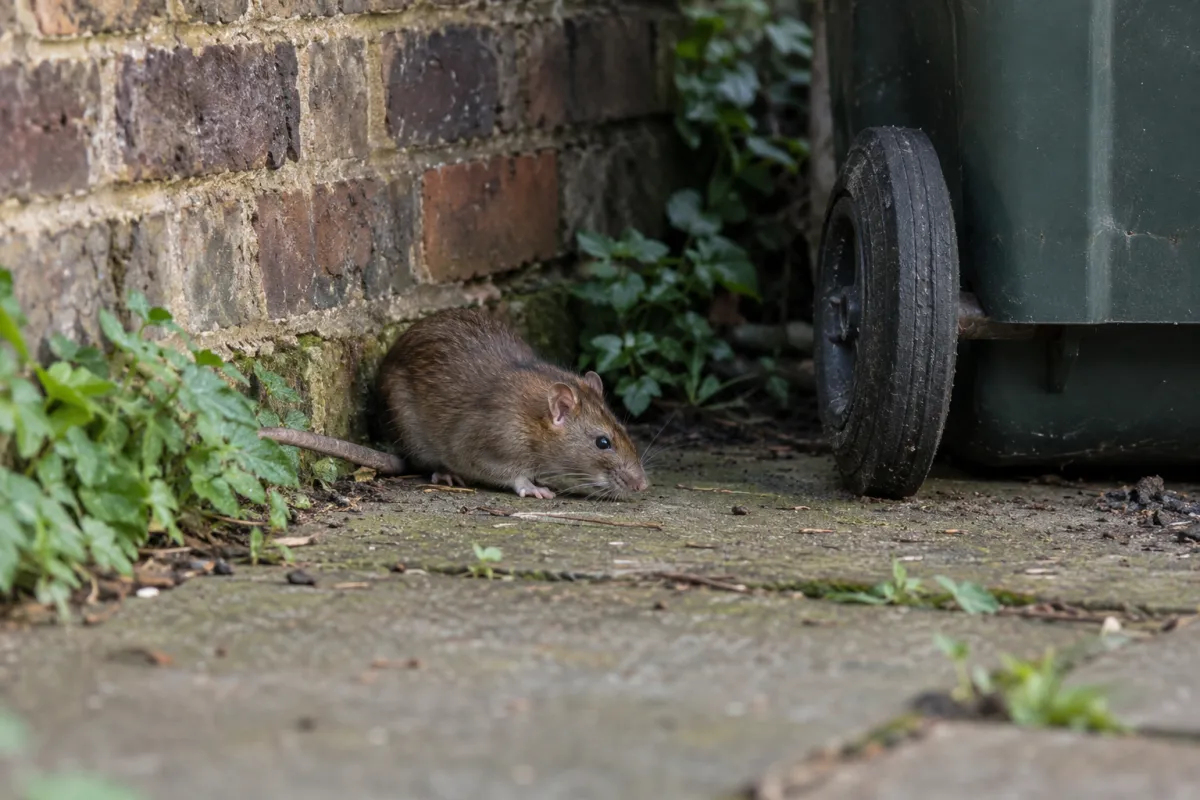 Rat controlTreat brown rats in and around buildings, and find the drain defects or gaps that let them in.
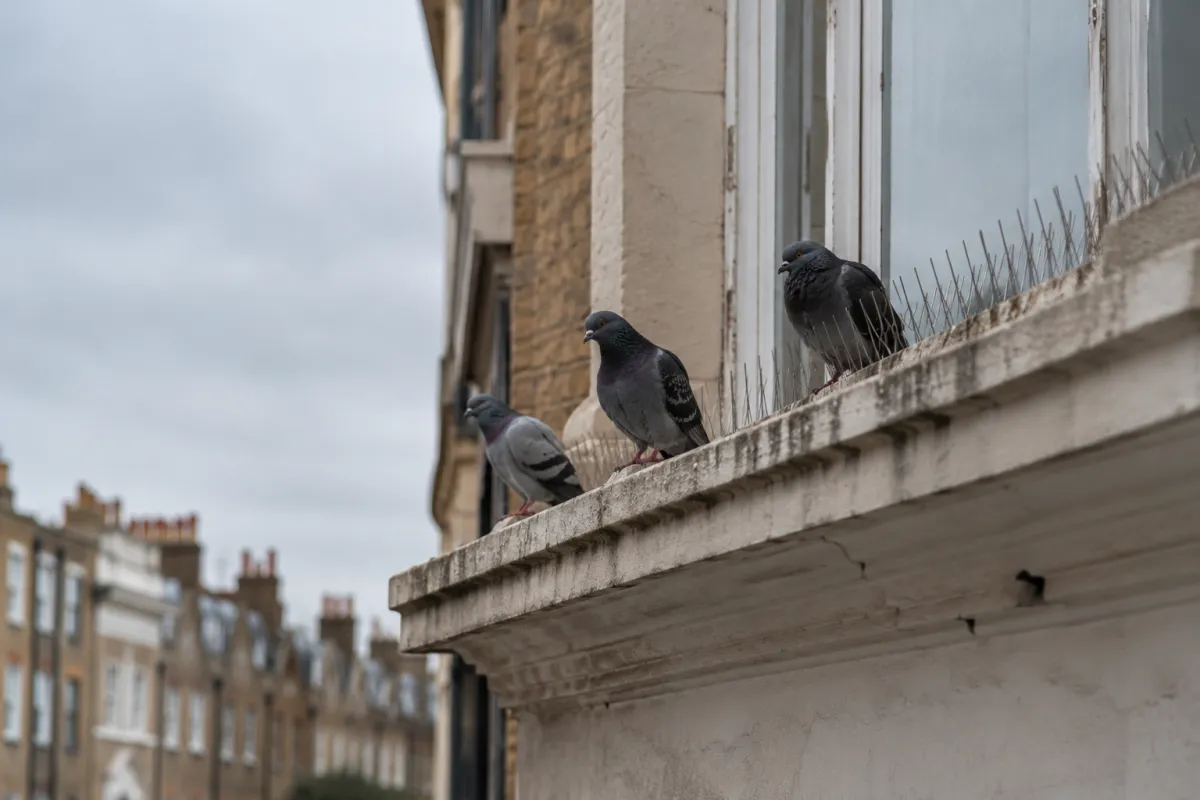 Bird controlSurvey and advice for pigeons fouling ledges, roofs, balconies and shopfronts, with a quote on request.
Let’s talk about the problem.
Tell us what you’ve seen, the property type and your postcode.