Cockroach control in East London
Two cockroaches cause most problems in London: the German cockroach, which lives in warm kitchens and behind appliances, and the Oriental cockroach, which prefers cooler, damp places such as drains and basements. Both hide by day, breed in hidden cracks and spread through shared ducts in blocks of flats. We identify the species, treat their hiding places with professional-use insecticide and use monitoring traps to check progress.
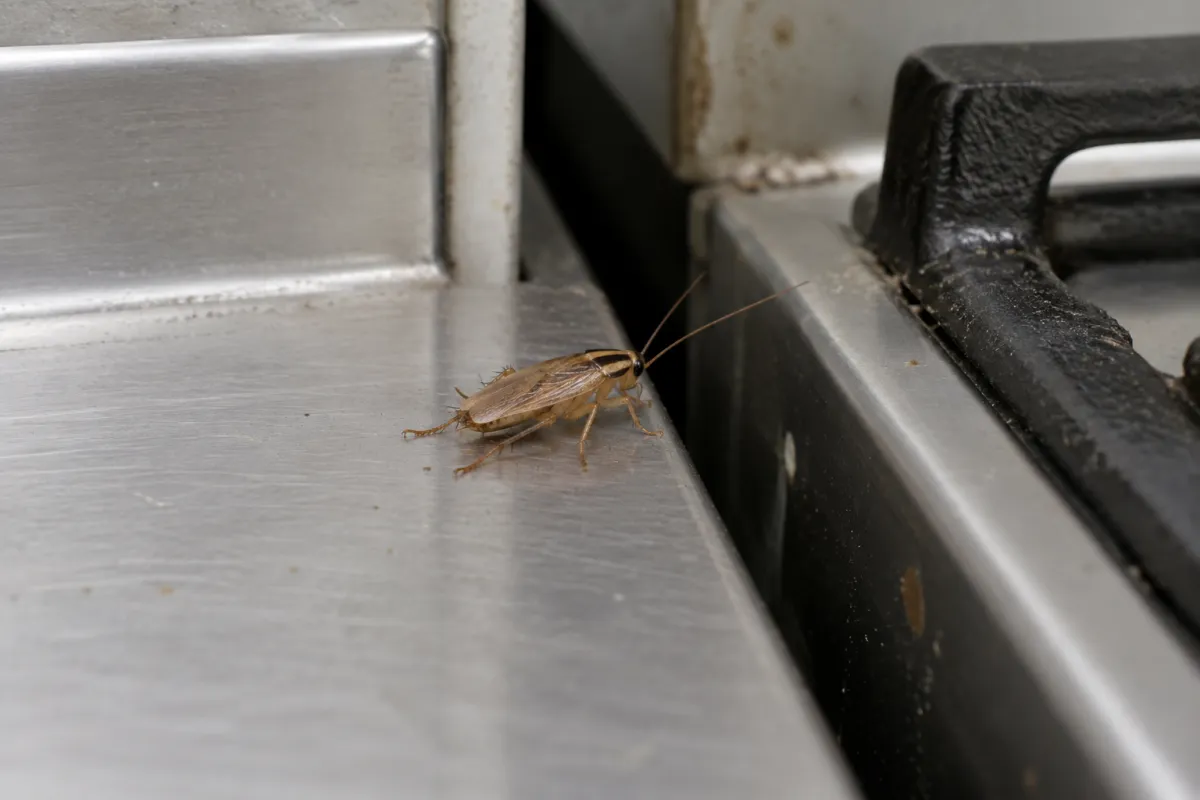
What cockroaches look like
Cockroaches are flat and oval, with long, whippy feelers and a shield behind the head that hides it from above. Young ones look like small, wingless adults, and Oriental females only have stubby wing pads. Oriental cockroaches get called black beetles, but a beetle has a hard, domed back with a straight line down the middle where the wing cases meet, and shorter feelers.
- Size
- German 10–15 mm; Oriental 20–24 mm
- Colour
- German light brown; Oriental dark brown to black
- Breeding
- Egg cases holding around 16 to 40 eggs
- Most active
- At night, hiding in tight cracks by day
- Hides in
- Warm gaps by appliances, pipes and drains
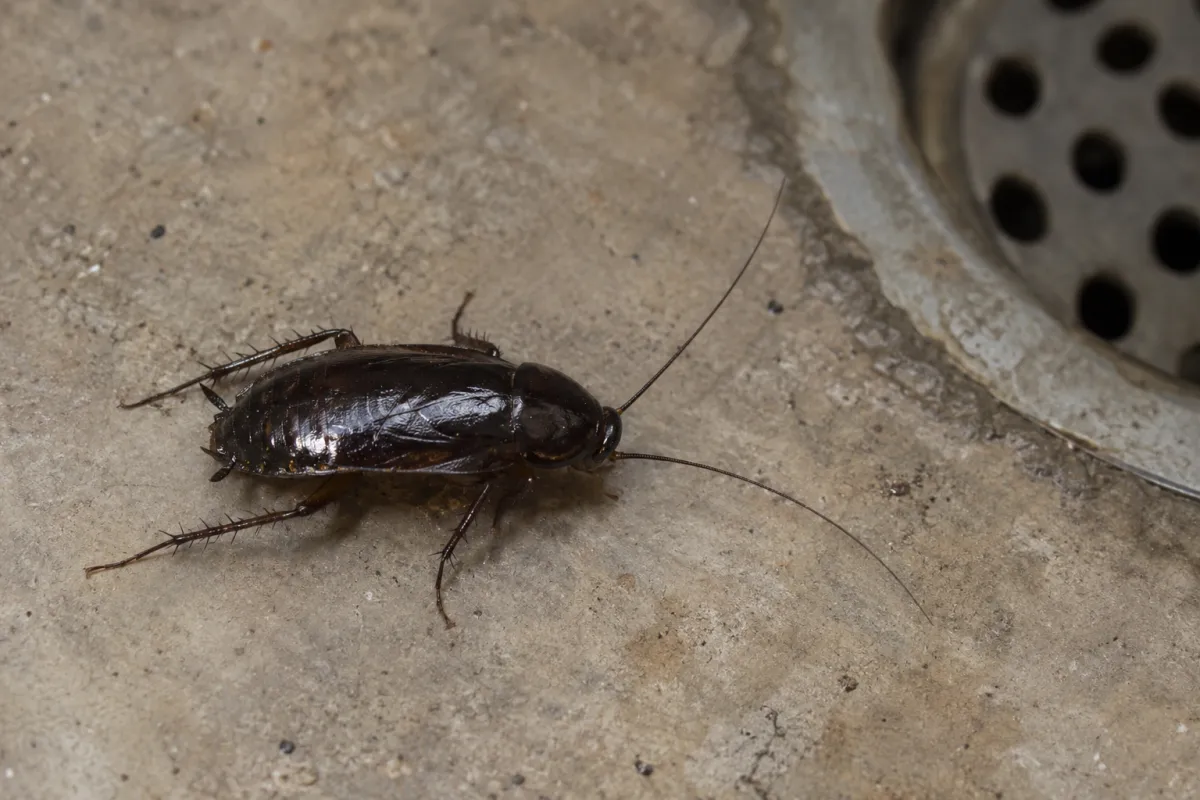
Signs of cockroaches
Insects at night
Cockroaches scattering when a light is switched on, especially in kitchens and bathrooms. Seeing them in daylight often means a larger population.
Dark droppings
Tiny dark specks like ground pepper from German cockroaches, or larger cylindrical droppings from Oriental cockroaches, along shelves and hinges.
Egg cases
Small, brown, purse-shaped egg cases in cracks and behind units, or carried by female German cockroaches until the eggs are ready to hatch.
Shed skins
Pale, empty skins left behind as young cockroaches grow, often near warm motors, boilers or pipework.
Musty smell
A stale, oily odour in cupboards or storerooms where a heavy infestation has built up.
Life cycle and breeding
In a warm kitchen, German cockroaches can go from egg to breeding adult in around two to three months, so numbers climb quickly. Oriental cockroaches are slower, usually taking six months to over a year to grow up.
Egg case
Eggs develop inside a tough brown case. A German female carries hers, with around 30 to 40 eggs, until they're nearly ready, while an Oriental female drops hers, with around 16, in a sheltered spot.
Nymphs
The young hatch pale and wingless, darken within hours and shed their skin several times as they grow. They share the same cracks and food as the adults.
Adults
Adults usually live for several months. A German female can produce several egg cases in that time, each one adding dozens more.
Where cockroaches live and how they get in
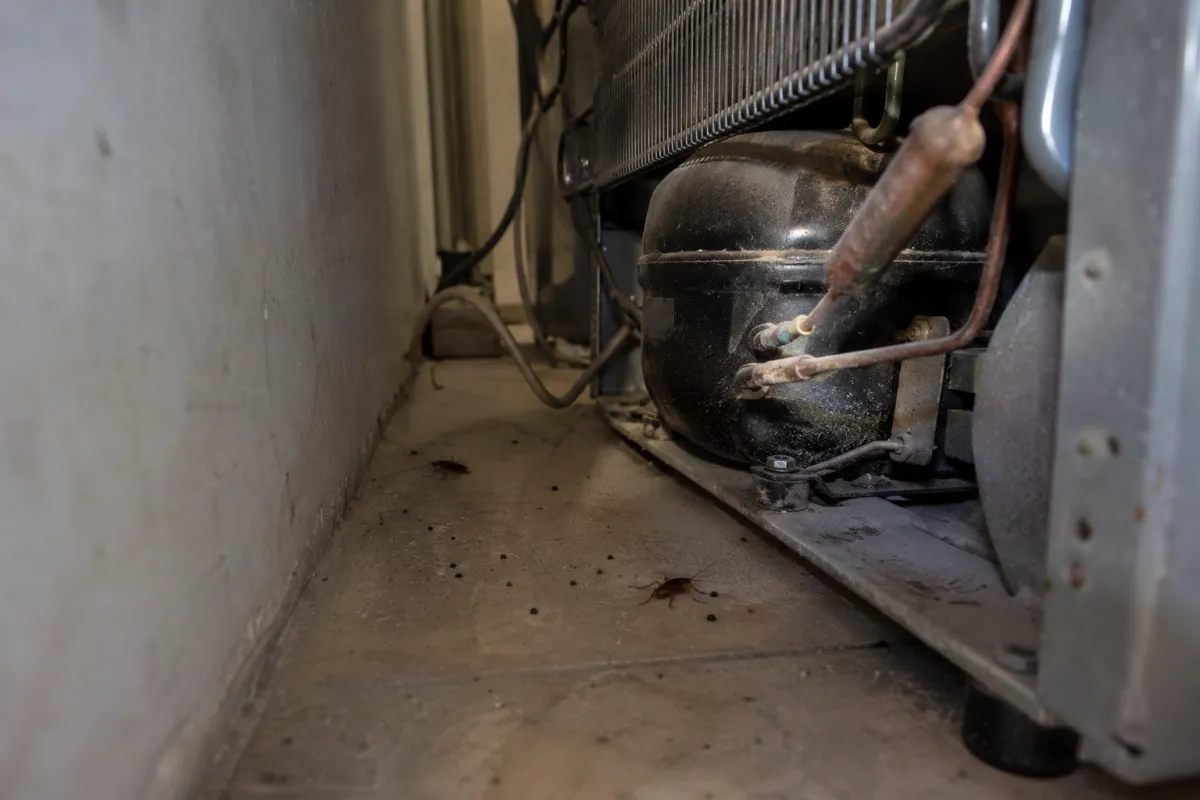
German cockroaches want warmth and food close together, so they stay in kitchens: behind fridges, cookers and dishwashers, inside unit voids, under sinks and even inside the casings of microwaves and toasters. Oriental cockroaches like it cool and damp, in drains, cellars, under floors and around ground-floor kitchens and bathrooms. They can't climb smooth surfaces, so you'll often find one stuck in a bath or sink.
- Oriental cockroaches come up from drains and sewers through broken pipes and gaps around waste pipes.
- They also come up through floor drains and unused sinks where the water in the trap has dried out.
- German cockroaches often arrive hidden in cardboard boxes, food deliveries and second-hand appliances.
- In blocks of flats, they move between homes along heating pipes, service risers and the voids behind kitchen units.
- In warm weather, Oriental cockroaches may wander in under ill-fitting back doors.
Why it matters
In a home or rented flat
Cockroaches pick up bacteria from drains and waste and carry it onto worktops, utensils and food. Their droppings and cast skins can also trigger allergies and worsen asthma, which is a particular concern for children.
For landlords and businesses
In restaurants, takeaways and food stores, cockroaches can lead to complaints, spoiled stock and closure by environmental health officers. Landlords and managing agents of blocks also need a joined-up approach, because treating one flat alone often leaves cockroaches to return from neighbouring units.
How cockroach control works
Survey and identification
We confirm the species and find where cockroaches are living, checking behind appliances, under sinks, around pipework and inside ducts.
Cleaning first
A thorough clean before treatment removes grease and food debris, so cockroaches have nothing to feed on except what the treatment targets.
Insecticide treatment
Professional-use insecticide is applied into the cracks, crevices and voids where cockroaches and their young shelter, with sticky monitors used to track activity.
Follow-up and prevention
Egg cases protect the young inside, so follow-up treatment is often needed to catch newly hatched nymphs. We also advise on proofing and hygiene to stop them returning.
What you can do yourself
Find the hotspots
Put a few sticky traps under the sink, behind the fridge and along the back of the units. After a few nights, the ones with the most catches show you where to focus.
Use gel bait, not spray
Shop-bought cockroach gel, put in small dots in cracks near the hotspots, can knock back a light problem. Follow the label and keep it out of reach of children and pets. Don't spray near it, as sprays put cockroaches off the bait.
Vacuum, then bag it
Vacuum up droppings, shed skins and any loose egg cases you can see. Seal the bag, or empty the canister into a tied bag, and put it in the outside bin.
Plugs in at night
If Oriental cockroaches are the problem, put the plugs in sinks and baths overnight. Run water down unused drains every week so the traps stay full.
Prevention
- Wash up before bed rather than leaving dishes in the sink overnight.
- Clean behind and under cookers, fridges and dishwashers, where grease and crumbs collect.
- Fix dripping taps and leaks under sinks to take away water sources.
- Seal gaps around pipes, cables and service ducts where they pass through walls and kitchen units.
- Keep food in sealed containers and empty kitchen bins often.
Cockroaches breed all year in heated buildings, although Oriental cockroaches are usually seen more in late spring and summer.
Common myths
Myth: Only dirty homes get cockroaches.
The truth: They need warmth, water and shelter more than dirt, and a clean flat can get them from next door. Crumbs and grease just help them build up faster.
Myth: I've only seen one, so there's only one.
The truth: Cockroaches spend the day packed together in cracks, so the one you spot is rarely on its own. A few sticky traps will show you how many more there are.
Myth: Those black beetles by the back door are harmless.
The truth: If it's flat and glossy with long feelers, it's probably an Oriental cockroach that's come up from a drain. It's worth a closer look.
Questions about cockroaches
What is the difference between German and Oriental cockroaches?
German cockroaches are about 10–15 mm long, light brown with two dark stripes behind the head, and can climb smooth surfaces. Oriental cockroaches are larger at around 20–24 mm, dark brown to black and slower, and they prefer cooler, damp places such as drains and basements.
Why do I still see cockroaches after treatment?
Egg cases shield the developing young from insecticide, so nymphs can keep hatching for several weeks. Seeing some during this period is expected, and a follow-up treatment deals with them as they emerge.
Can cockroaches come from next door?
Yes. In blocks of flats and terraces, cockroaches move through service ducts, pipe runs and gaps behind kitchen units. Treating all affected homes together, and sealing shared gaps, gives the best result.
Are sticky traps enough to get rid of cockroaches?
No. Sticky traps are useful for showing where cockroaches are active and whether numbers are falling, but they catch too few to control an infestation. They work best alongside a targeted treatment.
Further reading
Related services
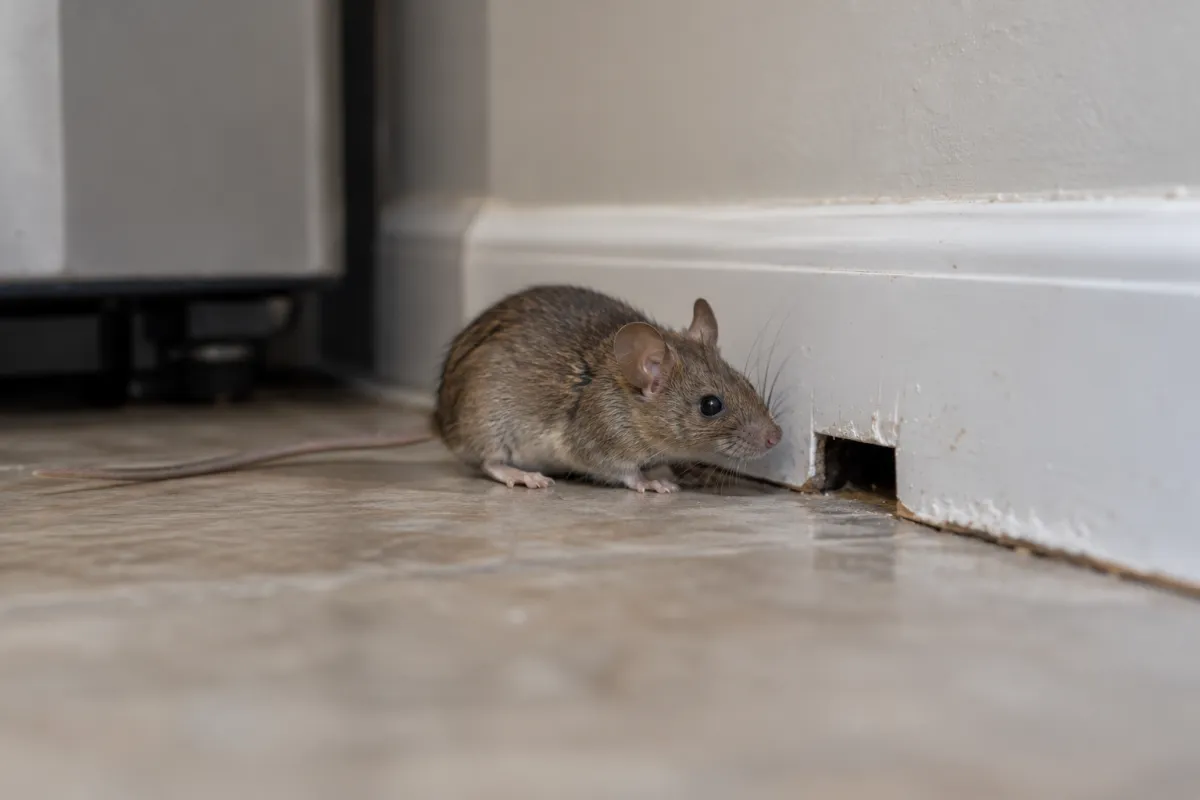 Mice controlFind and treat mice in homes, flats and business premises, then close the gaps they use to get in.
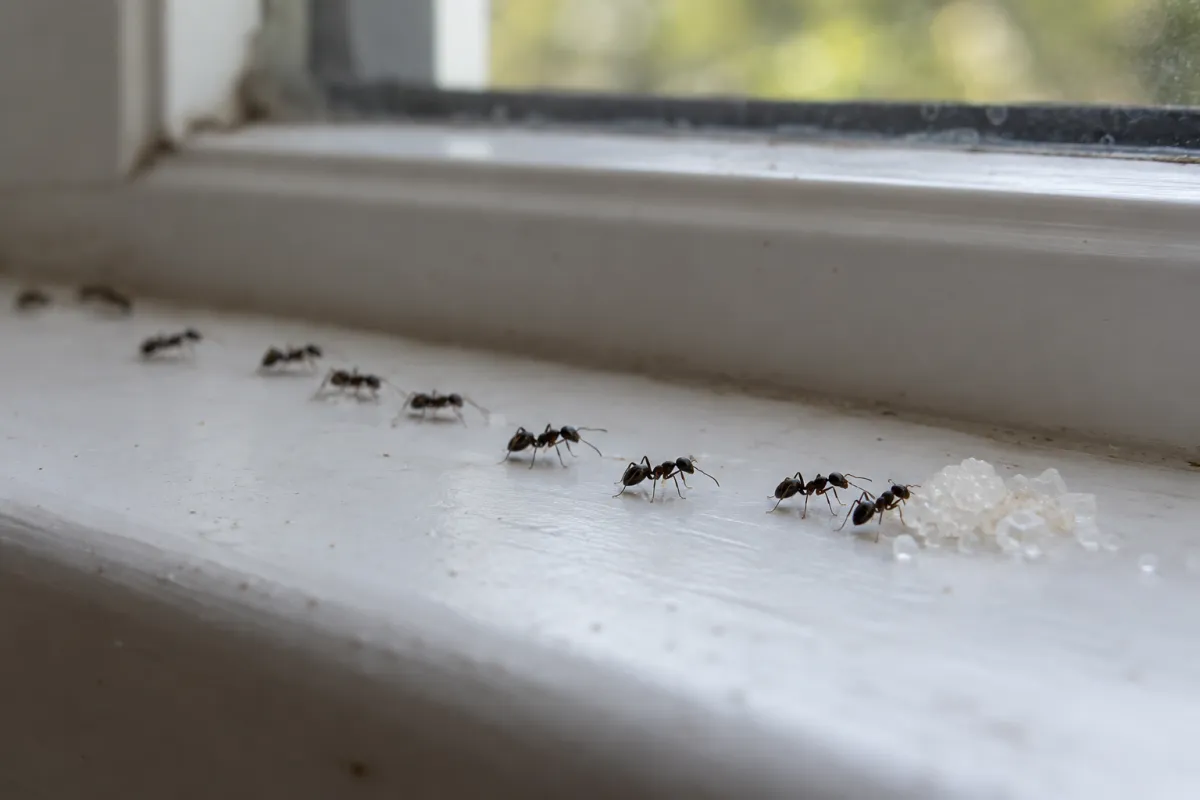 Ant treatmentTreatment for black garden ants and Pharaoh's ants, aimed at the colony rather than the trail.
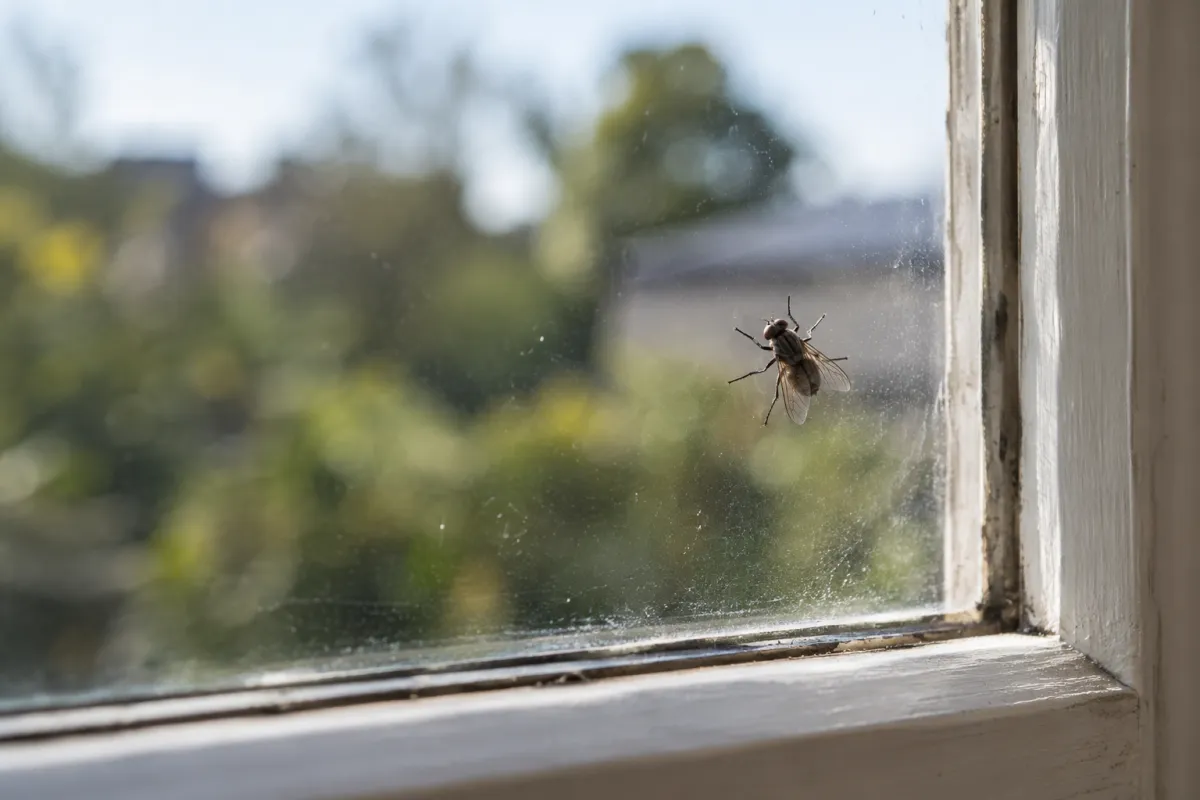 Fly controlFind where flies are breeding, from bins to lofts, and deal with house flies, bluebottles and cluster flies.
Let’s talk about the problem.
Tell us what you’ve seen, the property type and your postcode.