Pharaoh's ants
Tiny pale ants indoors in winter? How to recognise Pharaoh's ants, why sprays make them worse and what to do while they're treated.
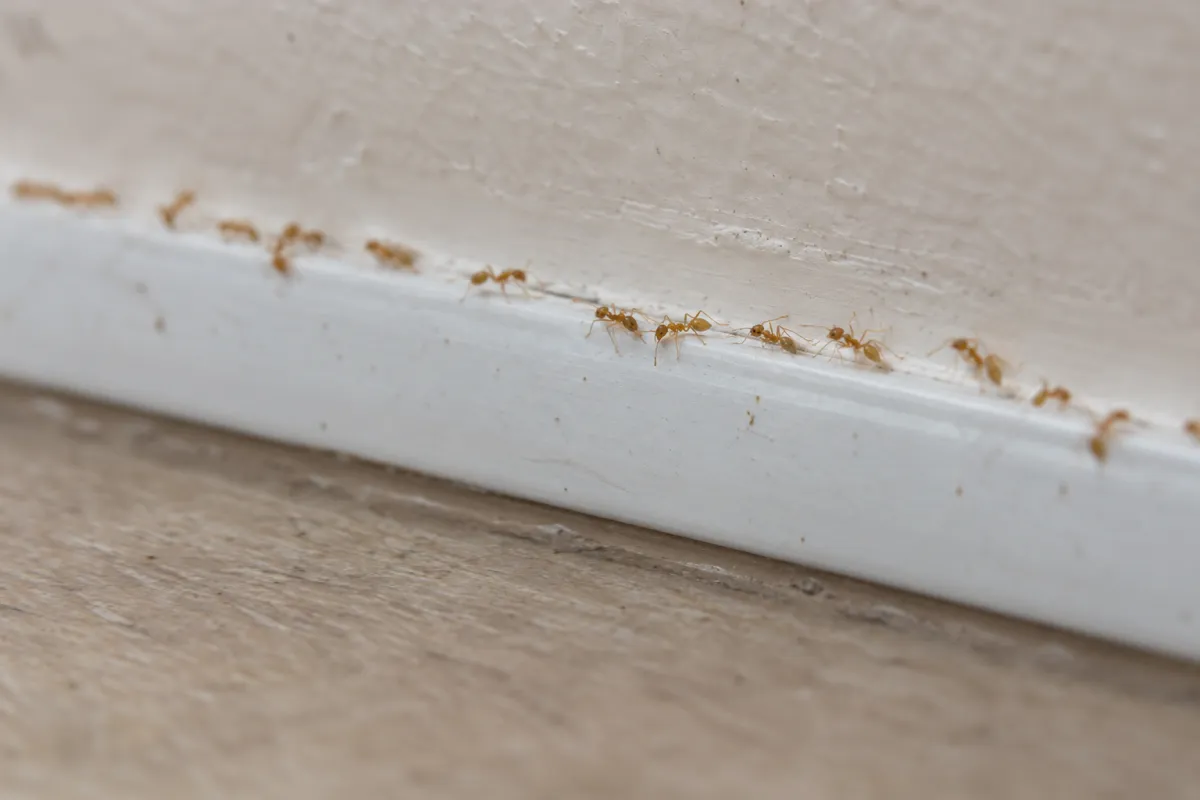
Pharaoh's ants are a tropical species that can't survive a British winter outdoors. Here they live entirely inside heated buildings, in flats, hospitals, care homes, hotels and bakeries, and they behave very differently from the black ants that come in from the garden. Treat them the way you'd treat garden ants and you can turn one colony into several. This guide covers how to recognise them, why they spread and what you can do while they're being dealt with.
How to tell Pharaoh's ants from other small ants
Indoors, the ants most people see are black garden ants coming in from outside. Pharaoh's ants differ in almost every way.
- Size. Workers are tiny, around 2 mm, less than half the length of a garden ant.
- Colour. Pale yellow to light amber-brown, with a darker tip to the body that's easiest to see with a magnifying glass or a phone camera zoomed in.
- Season. Garden ants come indoors mostly from spring to late summer. Pharaoh's ants are active all year, including midwinter.
- Floor. Garden ants usually stay near the ground floor, close to their nest outside. Pharaoh's ants turn up on any floor, including high up in tower blocks.
- Where. Look for them in warm, humid spots: around radiator and heating pipes, in bathrooms, near boilers and hot water cylinders, behind kitchen units and around dishwashers and washing machines.
- Trails. They move steadily in narrow lines along pipes, cables, skirting boards and the edges of worktops, often coming out of electrical sockets, light switches or gaps around pipework.
If you're seeing tiny pale ants in a bathroom in January, assume they're Pharaoh's ants until they've been identified.
Why sprays make them worse
A garden ant nest has one queen. A Pharaoh's ant colony has many, sometimes hundreds, spread across lots of small nests that cooperate rather than fight.
When a nest is disturbed, groups of workers carry queens, eggs and young to a new spot nearby and set up again. This is called budding. Insecticide sprays and strong cleaning products wiped along trails can both trigger it. The ants you sprayed die, but the colony has now split into several nests in places you can't see. That's why an infestation can seem to get worse after a few cans of spray.
So avoid:
- household ant sprays, powders and bug bombs
- bleach and strong cleaning products wiped along their trails
- moving or emptying cupboards they're nesting in before they've been assessed
Mapping where they are
Before treatment, it helps to know every place the ants are active, as they're rarely in just one room. A simple way to find out is with small food lures.
- Cut a few squares of card and put a tiny dab of jam on some and a dab of peanut butter or a scrap of cooked meat on others.
- Place them in the kitchen, bathroom, airing cupboard, by radiators and anywhere else you've seen ants.
- Check after an hour or two, and again in the morning. Note which cards have ants and which food they prefer.
- Sketch a rough plan of the home marking each spot, then throw the cards away.
Pharaoh's ants switch between sweet and protein foods depending on what the colony needs. Knowing what they're taking right now helps the treatment work. Keep the cards out of reach of children and pets.
In flats and larger buildings
Pharaoh's ants travel through buildings along the routes that carry warmth: heating and hot water pipes, cable runs, ducts and the voids behind walls and ceilings. In a block of flats, the ants in your kitchen may belong to nests spread across several homes.
- Tell your landlord, housing provider or building manager as soon as you suspect them, and mention whether neighbours have seen them too.
- Expect a building-wide approach. In blocks, care homes, hospitals and hotels, treating one room or one flat rarely works. Neighbouring units and service areas need to be checked and treated as part of the same plan.
- Give access when asked. One untreated flat can keep the colony going.
What you can do during treatment
Treatment uses slow-acting baits that workers carry back to share with the queens and young. Our ant guide explains how the hormone bait works and what to expect along the way. While it's in progress:
- Leave the baits alone. Don't move them, wipe them away or clean right next to them.
- Keep other food covered, so the bait is the easiest meal around.
- Don't use your own ant products, even in rooms that haven't been baited.
- Keep a note of sightings, with dates and places, to help the follow-up visit.
Pharaoh's ants don't swarm out in summer flights the way garden ants do. If you're seeing winged ants pouring out of a gap, our guide to flying ants is the one you need. For what a treatment visit involves, see our ant control page.
If you think you have Pharaoh's ants at home or in a building you manage, call us on 020 7112 8473.