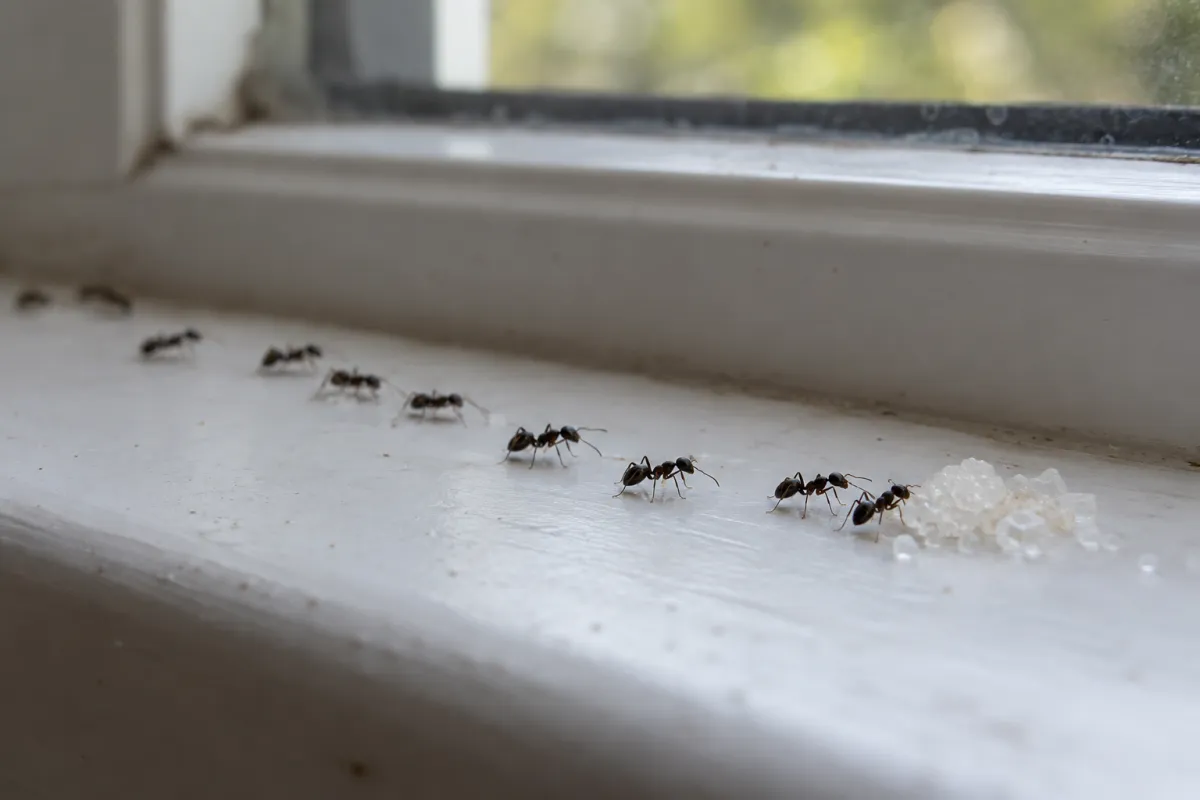
The common black garden ant (Lasius niger) is not considered a risk to public health, but from time to time it can become a nuisance. Pharaoh's ants are a different matter, and they need effective treatment. This guide looks at each in turn.
Black or garden ants
Garden ants are dark brown or black and 3–5 mm long. They generally live outside, but will often come into buildings in search of food, and this is when they can become a nuisance.
Ants are social insects and live in colonies that contain worker ants (infertile females), males, queens and grubs (the larval stage). Although they are omnivorous, black ants, like other ant species, have a liking for sweet foods.
Nests are often found:
- around foundations
- under paving slabs
- at the edges of flower beds and lawns
Sandy and clay soils are preferred.
Are black ants harmful?
Black ants are not inherently dirty insects, and there are no health risks associated with them. However, they travel considerable distances foraging for food, so they may walk over unclean surfaces and could, in theory, contaminate open food.
When a foraging worker ant finds a source of food, it very quickly passes the news to other workers. In a very short time, your kitchen worktops or food waste bin can be overrun with ants.
How to avoid attracting ants
Although there are no real health risks, it's unpleasant to have such large numbers of insects invade your home, so it's best not to encourage them:
- Don't leave sweet and sugary foods uncovered.
- Clear up food waste and spillages.
Flying ants
Large swarms of flying ants appear each year in early summer. These are winged males and females that take to the air to mate on the wing.
- After mating, the male dies.
- The female bites off her wings and lies dormant in the soil over winter.
- The following spring, these young queens lay eggs, which hatch into white larvae.
- The queen feeds the larvae until they are ready to pupate.
- Worker ants emerge from the pupae, and it then becomes their job to feed new larvae and the queen.
In favourable conditions, nests can often survive for a few years.
Pharaoh's ants
Pharaoh's ants (Monomorium pharaonis) are yellow-brown and much smaller than the common black or garden ant, generally less than 2 mm long.
Where Pharaoh's ants live
They normally live in colonies indoors and like warm, damp environments. They can occasionally be found in drains or outside ducts, but again, these areas must be warm enough for them to live and breed happily.
In these conditions, they breed prolifically. When the original colony is under threat, they expand to form new colonies, which can contain many thousands of ants.
Why Pharaoh's ants are a health risk
Pharaoh's ants pose a health risk because they can infect food with a range of diseases, such as food poisoning, dysentery and typhoid. In hospitals and care homes, they have been known to invade surgical dressings and may transfer infection from one patient to another.
Apart from carrying disease, they also make food inedible by transferring dirt and filth from their bodies to food and food preparation surfaces.
How quickly they spread
A queen ant can lay up to 350 eggs each week. These hatch after a week and develop into mature adults within a month, so infestations can grow rapidly unless effective treatment is applied.
Worker ants scavenge widely for food and are often seen moving in long chains across work surfaces, kitchen fittings and food cupboards. Their mouthparts are strong enough to chew through packaging and plastics.
Pharaoh's ant treatment
We at Mighty Pest Control carry out Pharaoh's ant treatments in both domestic and commercial properties, as part of our ant control service.
How the treatment works
- We apply hormone bait to the areas the ants visit.
- The hormone stops the ants from breeding and stops juvenile ants from developing into breeding adults, so the colony naturally dies off.
- The hormone only affects the ants.
- The treatment keeps working for up to 2 months, so it must not be cleaned away until all the ants have died off.
- A follow-up treatment is carried out 4 to 6 weeks after the first, to check the baits.
What to expect during treatment
It's usual to notice fewer ants within 28 days, but it may take longer for all the insects to disappear, because eggs will continue to hatch.
Occasionally during treatment, you may see one or two larger ants. This doesn't mean they are thriving on the hormone baits. It only means the number of worker ants has fallen so far that the larger queen ants are having to leave the nest to forage for food.
The treatment is very effective, but on rare occasions it does not completely work.