Pigeons under solar panels
The signs of pigeons nesting under solar panels, the problems they cause, and how mesh guards keep them out without drilling into the panels.
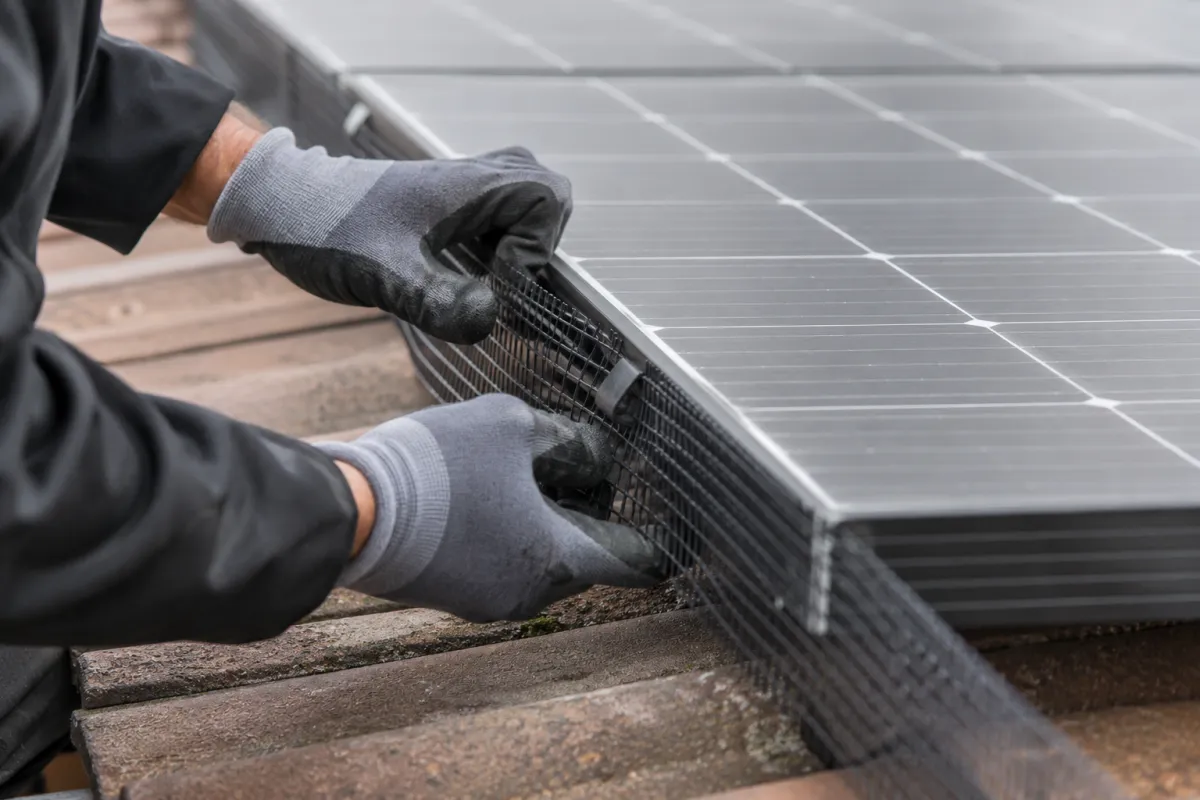
The gap between solar panels and the roof makes an almost perfect pigeon nest site. It's sheltered from rain and wind, warmed by the panels, hidden from predators and out of reach without a ladder. Once one pair settles under a panel, others often follow, and within a season the space underneath can fill with nests, droppings and debris.
Signs pigeons are under your panels
- pigeons landing on the panels or the roof beside them and disappearing underneath
- twigs, feathers and nest material poking out from the edge of the array
- droppings streaking down the roof and the panel glass, or collecting in the gutter below
- cooing, scratching and flapping heard in the rooms below, often early in the morning
- gutters and downpipes below the panels overflowing when it rains
- the panels producing less than usual, which can happen when droppings build up on the glass
Look from the ground, or from a neighbour's upstairs window, with binoculars. Don't climb onto the roof or walk on the panels.
Why it's worth dealing with
- Blocked gutters and damp. Nest material and droppings wash into gutters and downpipes, which then overflow and can cause damp patches on walls and ceilings.
- Cables. The wiring and connectors under the array sit right beside the nests, and installers generally want that space kept clear. Squirrels sometimes move into the same space and chew cables.
- Output. Droppings on the glass shade the cells and reduce how much electricity the panels generate.
- Noise and mites. Pigeons can nest in any month, so the noise can carry on all year, and old nests can harbour bird mites.
- Roof wear. Wet debris held against tiles and flashing keeps them damp for longer.
Because feral pigeons can breed at any time of year in London, the problem rarely stops on its own.
How panels are proofed
The usual fix is a mesh guard around the edge of the array. Strips of galvanised or PVC-coated steel mesh are cut to close the gap between the panel frame and the roof, and held in place with clips that grip the panel frame. Fitted this way, nothing has to be drilled into the panels or the roof covering, and the mesh keeps birds out while letting air circulate and rain run off.
The work is usually done in this order:
- Check for active nests. Nests with eggs or chicks are protected under the Wildlife and Countryside Act 1981. If there are any, the work waits until the young have flown.
- Clear underneath. Old nests, droppings and debris are removed from under the panels and out of the gutters.
- Clean the glass if needed, with soft brushes and water rather than a pressure washer or harsh cleaners, following the panel manufacturer's guidance.
- Fit the mesh all the way round, checking that no birds are left inside before the last section is closed.
Check with your installer or the panel manufacturer before any work, as drilling into panels or frames can affect the warranty. Clip-on mesh systems are designed to avoid this.
Doing it yourself or getting help
Fitting solar mesh means working on a roof, often a pitched roof two or more storeys up, beside live electrical equipment. Most people should leave it to someone with scaffolding or a proper access platform and experience of the work. Whoever does it should never stand, kneel or lean on the panels.
On the flat roofs of shops, offices and blocks of flats, panels are often mounted on angled frames, and the sheltered space underneath attracts pigeons in the same way. The same approach applies, with mesh or netting fitted around the frame. If pigeons are also using balconies on the same building, our page on pigeons on balconies explains how to deal with them.
The bird control page explains what a survey involves, and our pigeon control guide covers how to arrange a visit.
If pigeons are nesting under your solar panels, call Mighty Pest Control on 020 7112 8473.