Bird control in East London
Feral pigeons are the main bird problem in East London, roosting and nesting on ledges, roofs, balconies and under solar panels. Their droppings foul entrances and pavements, and their nests block gutters. We survey the problem, recommend suitable proofing or deterrents, and provide a quote for the work if you ask.
What pigeons look like
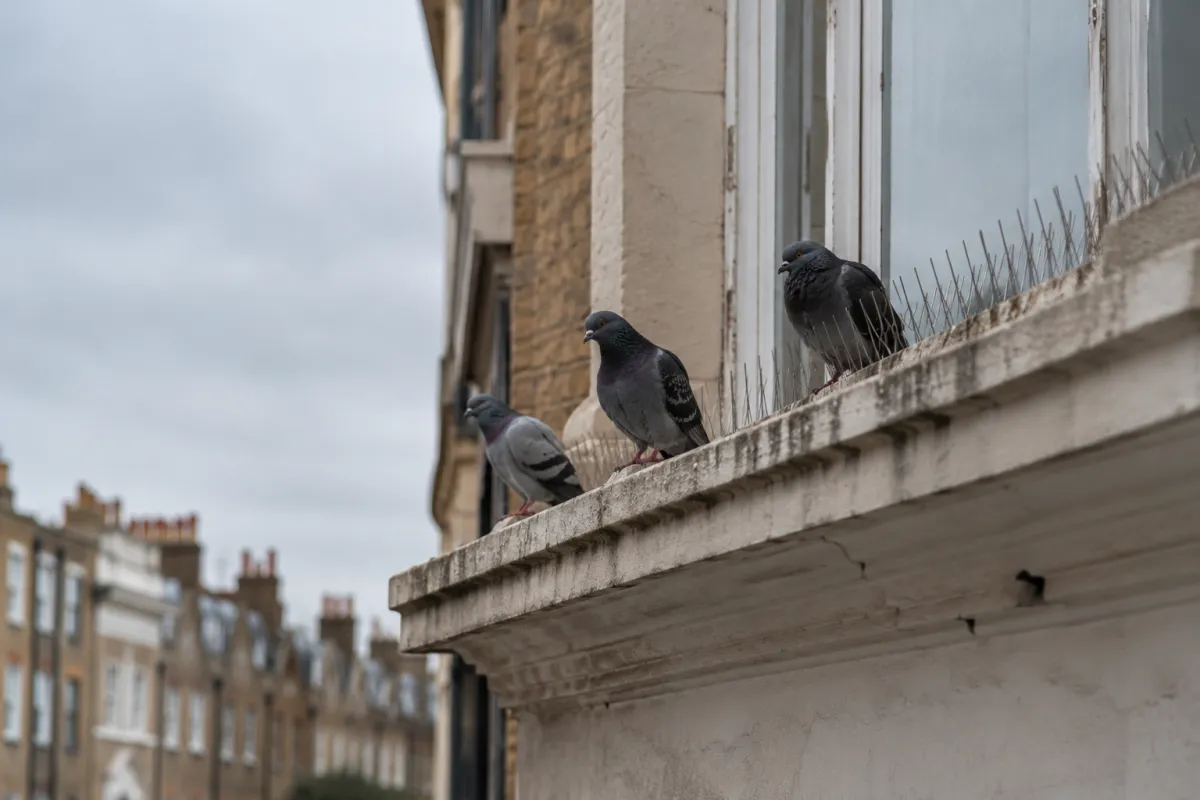
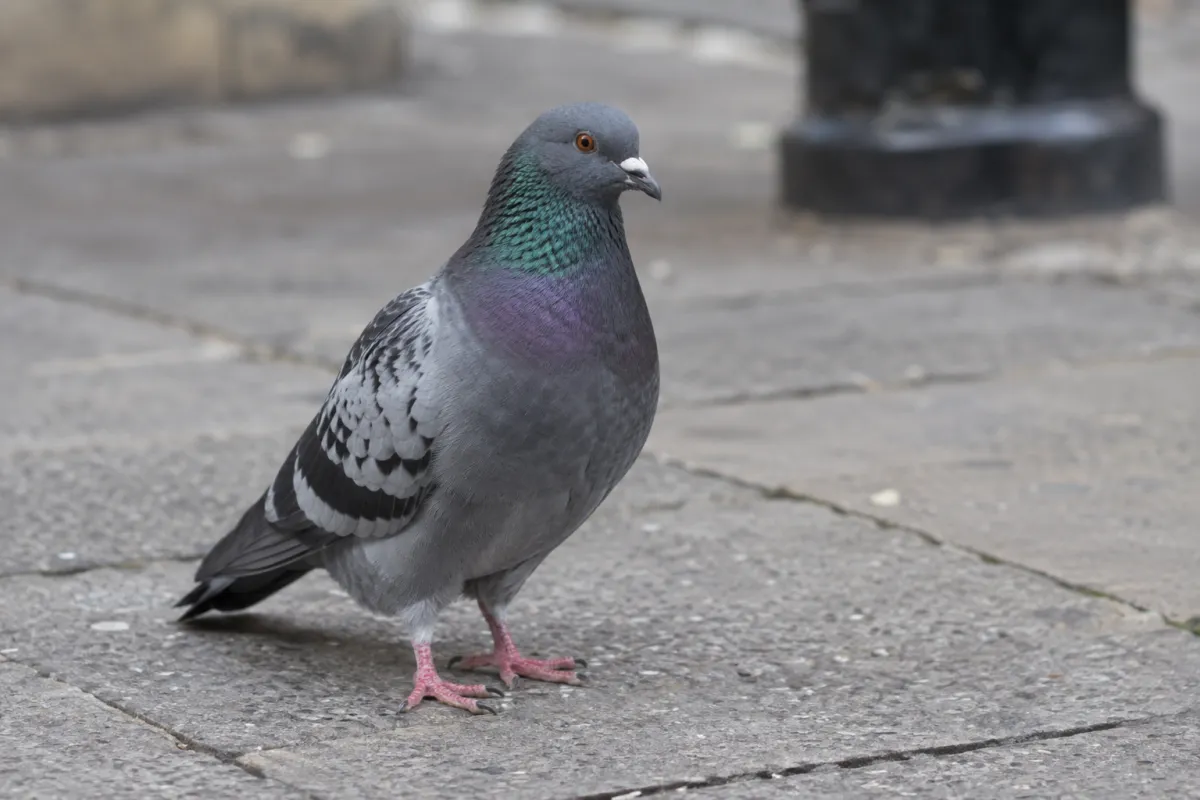
The feral pigeon is the familiar town pigeon: a plump bird, usually blue-grey with two dark bars on each wing, orange-red eyes and a green and purple sheen on the neck. Because they're descended from domestic birds, colours vary a lot, from nearly white to chequered brown or almost black. Collared doves are slimmer and sandy-buff with a thin black half-collar on the neck, while woodpigeons are bigger, with a white patch on the side of the neck.
- Size
- Around 30–35 cm long, wingspan about 65 cm
- Colour
- Blue-grey with two dark wing bars, but varies a lot
- Breeding
- Usually 2 eggs at a time, several broods a year
- Diet
- Seeds, grain and dropped food scraps
- Nest
- A loose platform of twigs on a sheltered ledge
Signs of birds
Droppings building up
Droppings collecting on window ledges, signs, balconies or the pavement below a favourite perch.
Nesting material
Twigs, feathers and debris in gutters, on ledges, behind signs or under solar panels.
Birds roosting
Pigeons gathering in the same place every day, especially under bridges, canopies and roof overhangs.
Noise in the roof
Cooing, scratching or fluttering in the roof space or behind cladding, which can mean birds are nesting inside.
Blocked gutters
Overflowing gutters and downpipes blocked by nests and droppings, sometimes causing damp patches indoors.
Life cycle and breeding
A single pair can raise several broods a year from the same ledge. They keep coming back to it, building new nests on top of old ones and the droppings underneath.
Nest building
The male brings in twigs and bits of debris, and the female arranges them into a loose, scruffy platform.
Eggs
She lays two white eggs a day or two apart, and both parents take turns sitting on them for around 18 days.
Squabs
Both parents feed the chicks on crop milk, then softened seed. The young leave the nest at around four to six weeks old.
Next brood
The female often lays again before the last chicks have left. Young birds can breed themselves at around six months old.
Where pigeons roost and nest
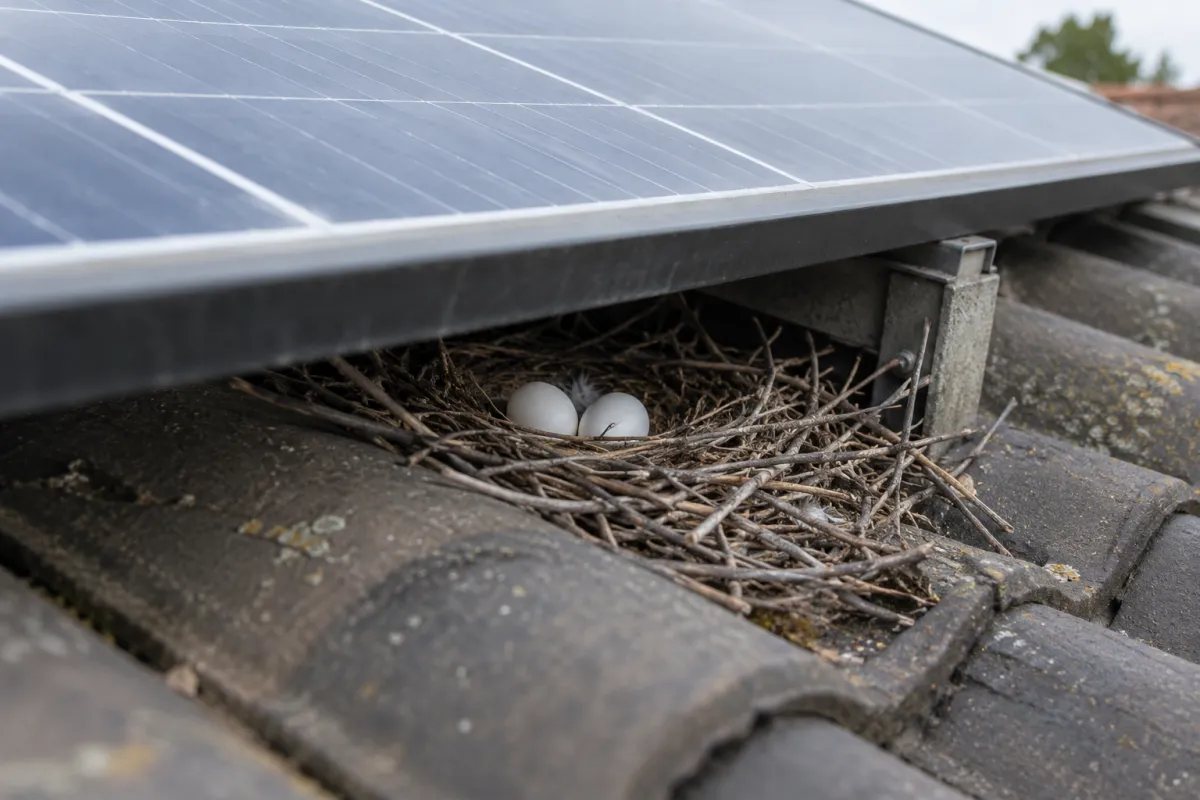
Feral pigeons are descended from rock doves, which nest on sea cliffs, so buildings suit them well. Around East London they roost and nest on railway bridges, shop signs, flat roofs, tower block balconies and under solar panels. They pick spots that are sheltered and close to a high street, market or other steady food source.
- By landing on window sills, ledges and signs that give a flat, sheltered perch.
- By walking in under solar panels through the open gap around the edges.
- Into lofts and roof voids through slipped tiles, broken vents and open gable ends.
- By nesting in gutters, behind downpipes and in the gap behind signs and cladding.
- By settling on balconies, especially ones with stored items or plant pots to tuck in behind.
Why it matters
In a home or rented flat
Pigeon droppings are unpleasant and slippery, and can carry bacteria and fungi linked to illnesses such as psittacosis, although the risk to healthy people is low. Nests in gutters and roofs can also cause blockages, damp and problems with mites and other insects.
For landlords and businesses
Fouled shopfronts, entrances and signs give a poor first impression and create slip hazards for staff and customers. Droppings near food preparation areas or deliveries are a hygiene risk, and cleaning costs keep adding up if the birds are not deterred.
How bird control works
Site survey
We look at where birds are landing, roosting and nesting, and at what is drawing them to the building.
Proofing recommendations
We recommend proofing or deterrents suited to the building, focused on stopping birds landing, roosting or nesting on the problem areas.
Quote for the work
If you ask, we provide a quote for the recommended work so you can decide how to go ahead.
Prevention advice
We advise on removing food sources and keeping ledges, gutters and roof openings clear so birds do not settle again.
What you can do yourself
Check before you clear
Before you move anything on a ledge, balcony or roof, check for eggs or chicks. An active nest is protected by law, so if you find one, leave it alone and get advice.
Clean once they've gone
Droppings build up fast where pigeons settle and can carry disease, so once there's no active nest, give ledges and balconies a thorough clean. Wear gloves and a mask while you do it.
Fit simple deterrents
Sloped boards or proper bird spikes on a sill stop pigeons landing without harming them. Fit them only when there's no nest in use.
Net the balcony
A properly fitted balcony net stops pigeons landing at all. Put it up when no nest is in use, and check no birds are left behind it.
Prevention
- Do not feed pigeons, and ask neighbours not to scatter food nearby.
- Keep bins closed and clear up food waste around shops, takeaways and yards.
- Repair missing roof tiles, broken vents and gaps at the eaves so birds cannot get inside.
- Keep gutters and flat roofs clear of debris where birds could start nesting.
- Fit mesh guards around solar panels to stop pigeons nesting underneath.
Feral pigeons can breed in any month in London, so problems often continue all year, with nesting usually busiest from spring to autumn.
Common myths
Myth: A plastic owl will scare them off.
The truth: Pigeons soon learn that it never moves. Before long you'll often see them perched right next to it.
Myth: Pigeons are protected, so I can't do anything.
The truth: You mustn't harm them or disturb an active nest, but you can clean up and fit deterrents like spikes and netting that stop them landing.
Myth: They'll leave once the chicks have flown.
The truth: Pigeons stick with a good nest site. The same pair will often start again on the same spot straight away.
Questions about birds
Are pigeons protected by law?
All wild birds, including feral pigeons, are protected under the Wildlife and Countryside Act 1981. Pigeons can only be killed or taken in specific circumstances allowed by licence, such as protecting public health, so deterrents and proofing are normally the first step.
Can I remove a pigeon nest?
It is an offence to damage or destroy the nest of a wild bird while it is being built or in use, and feral pigeons can breed at any time of year. Get advice before removing a nest, especially one with eggs or chicks.
Are pigeon droppings dangerous?
The risk to healthy people is low, but droppings can carry bacteria and fungi linked to illnesses such as psittacosis and cryptococcosis. Wear gloves when cleaning, dampen droppings rather than sweeping them dry, and wash your hands afterwards.
Why do pigeons nest under solar panels?
The gap between the panels and the roof is sheltered, warm and safe from predators, which makes it an ideal nesting spot. Nests and droppings there can block gutters and are hard to clear, and the noise can be a nuisance.
Further reading
Related services
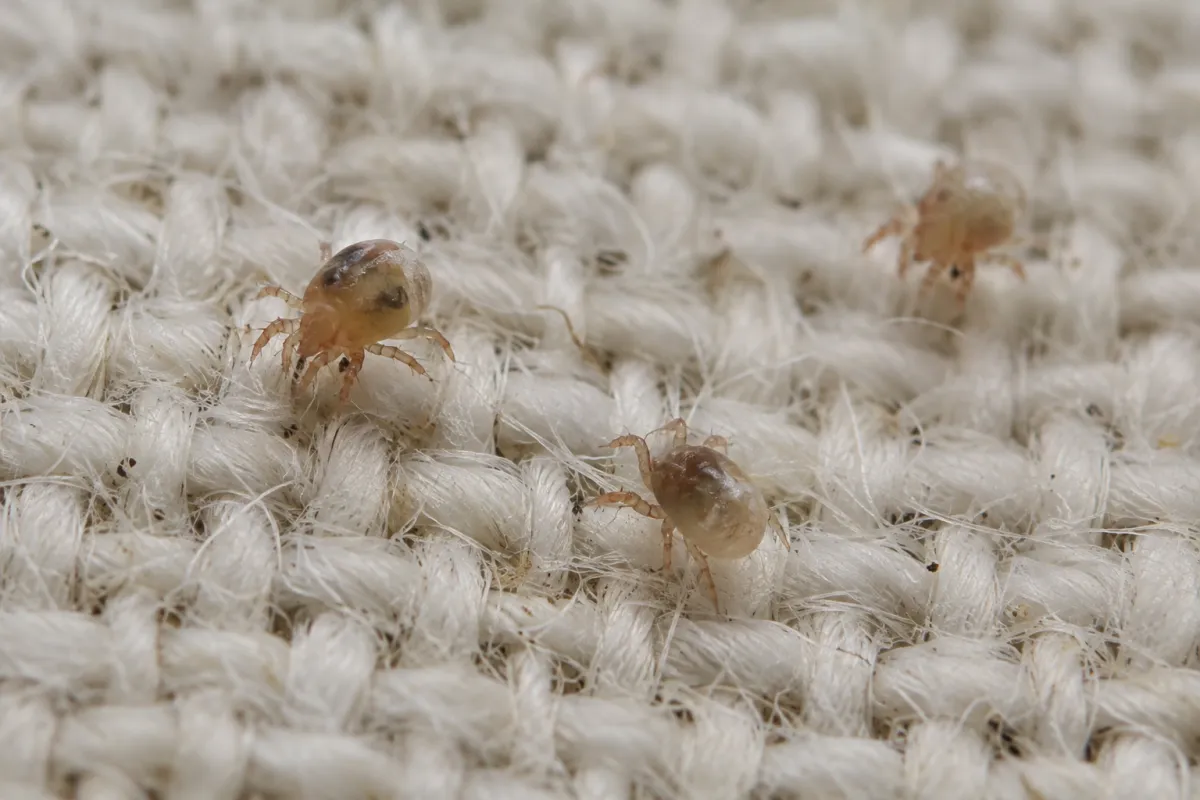 Mite controlIdentify flour, bird and clover mites and other stored product pests, then deal with the source.
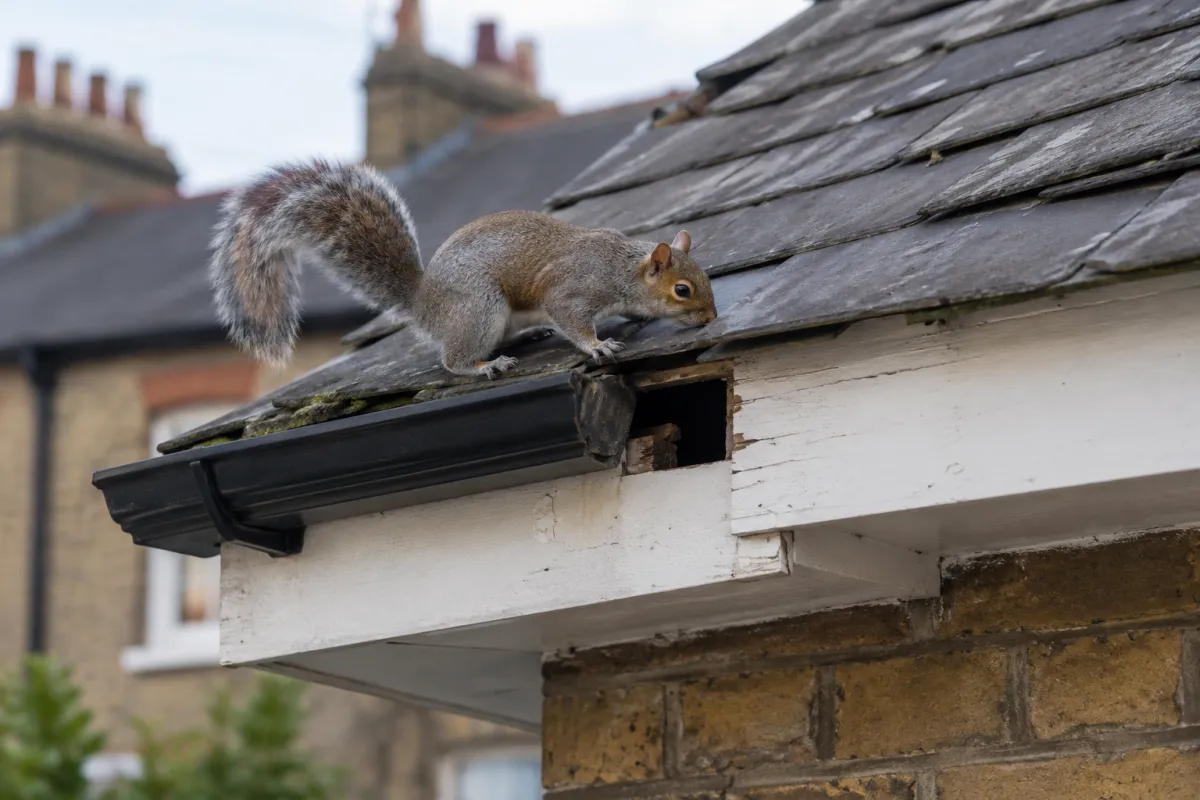 Squirrel controlSurvey and advice for grey squirrels in lofts, roofs and eaves, with a plan to stop the damage.
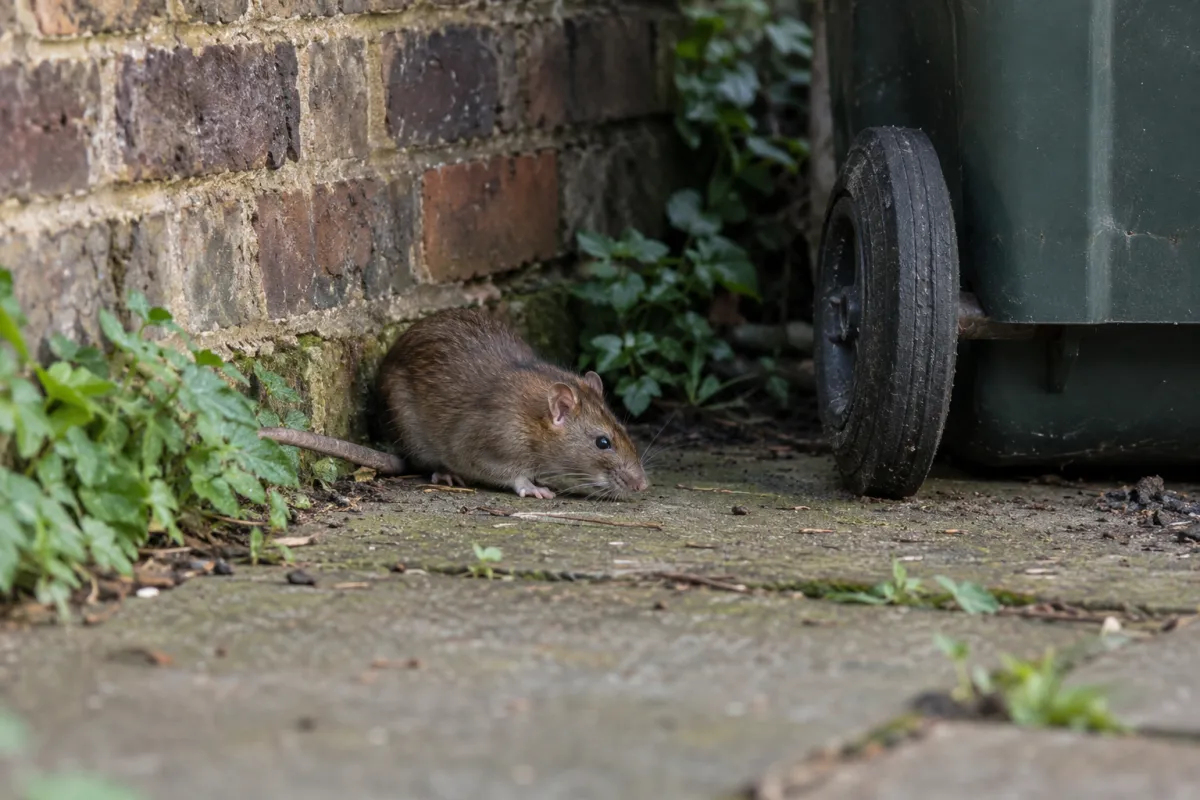 Rat controlTreat brown rats in and around buildings, and find the drain defects or gaps that let them in.
Let’s talk about the problem.
Tell us what you’ve seen, the property type and your postcode.