Fleas in a new home or after a pet has gone
Bitten after moving in, or after losing a pet? Why fleas wait in empty homes, how to check before you unpack and how to clear them.
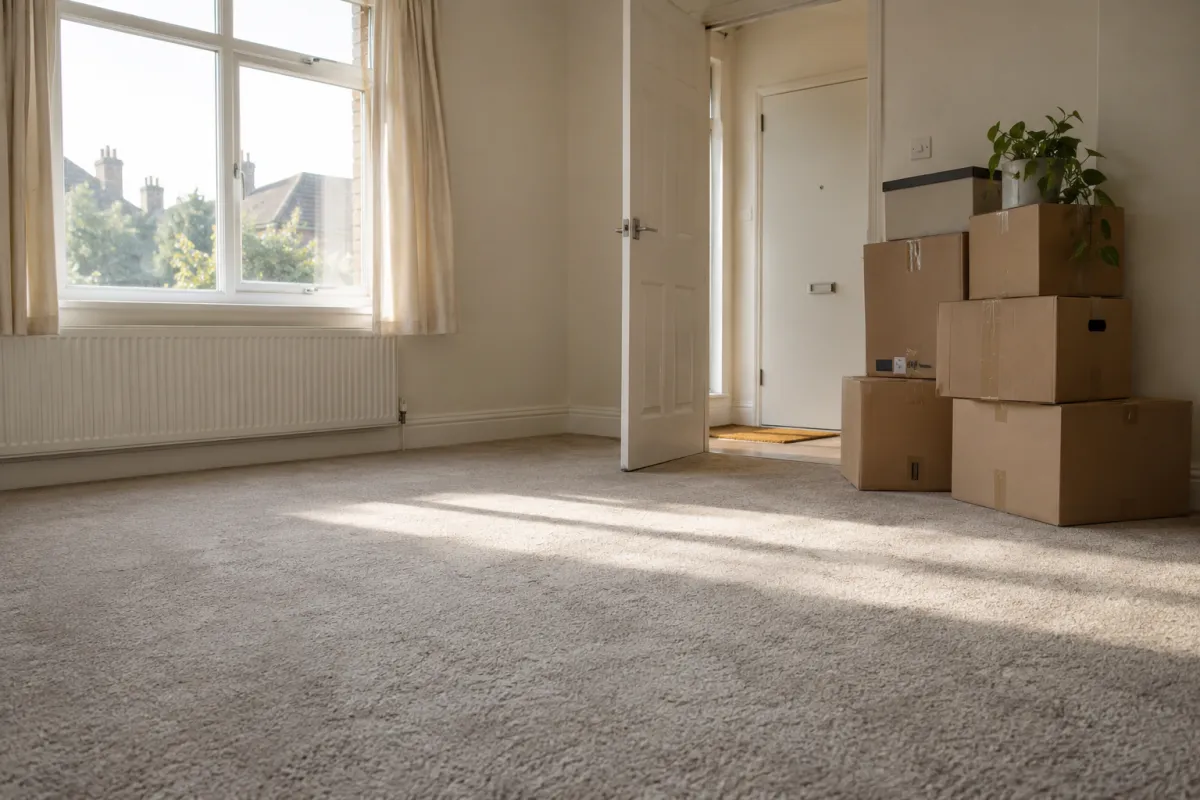
One of the most confusing flea problems hits people who don't have a pet at all. You move into a flat that's been empty for a while, or come back from two weeks away, or lose an old cat, and within days you're being bitten around the ankles. It's down to how the flea life cycle works, and once you understand that, it's much easier to deal with.
Why fleas appear when nobody's been living there
When a pet lives in a home, flea eggs drop off it wherever it sleeps and rests. They hatch into larvae that live deep in the carpet and in floorboard gaps, and each larva then spins a cocoon. Inside, it turns into an adult flea.
That adult doesn't have to come out straight away. It can wait inside the cocoon for months until it senses a host nearby, from vibration, warmth and the carbon dioxide in your breath. In an empty home, nothing sets them off, so a backlog builds up.
Then someone walks in. Footsteps, warmth and movement wake a large number of fleas at once, and with no pet in the house, people are the only thing to bite. That's why bites in a newly occupied home can be sudden and heavy, and why they often start a few days after moving in rather than on the first night.
When a pet has died, been rehomed or gone away
The same thing happens in your own home when a pet leaves. While the pet was there, regular flea treatment killed new fleas as they jumped on. Once it's gone, nothing stops them, and the fleas still coming out of cocoons in the carpet turn to you instead.
Typical times this happens:
- after a pet has died or been rehomed
- while a pet is at a cattery, kennels or staying with family
- when you come back from holiday and the house has been quiet
If you've lost a pet, keep vacuuming its favourite spots for a few weeks, and wash or throw away its bedding. If bites start, deal with them early before a backlog of fleas builds up.
Checking a home before you unpack
If you're moving in and can, find out whether the last occupants kept a cat or dog. A letting agent, the sellers or the check-in report may be able to tell you. Then check the empty rooms before the furniture arrives.
- Do the white sock test. In long white socks with trousers tucked in, walk slowly around each room, shuffling along the edges and in corners. Fleas show up as dark specks on the fabric.
- Look for pet traces. Hair along carpet edges and scratch marks on doors show where an animal spent its time, and that's where flea larvae will have built up.
- Don't rely on a carpet clean. Steam cleaning helps, but it doesn't reliably reach cocoons deep in the pile, the underlay or the gaps between floorboards.
An empty home is the easiest it will ever be to treat. Every floor can be reached without moving furniture. If you find fleas, it's worth arranging treatment before you move in.
Getting rid of them in an empty or new home
The aim is to get the waiting fleas out of their cocoons while there's something on the floor to kill them.
- Vacuum every day, slowly, across every carpet and along skirting boards, under radiators and in floorboard gaps. The vibration brings fleas out, and the vacuum removes eggs, larvae and some cocoons. Empty it into a sealed bag in the outside bin each time.
- Keep walking through every room, including rooms you aren't using yet. A room nobody goes into can hold on to its fleas for weeks.
- Follow the cleaning advice after treatment. Leave treated floors for the time you're told, then vacuum often, as this brings more fleas out onto the treated surface.
Expect some bites for a few weeks, as cocoons keep hatching after treatment. Our guide to flea bites covers how to tell them apart from other bites and how to look after them.
For landlords and letting agents
When the outgoing tenants kept pets, it's worth planning for fleas before the next tenants move in.
- Check at the check-out inspection. Do the white sock test in the rooms the pet used, and note any signs in the report.
- Time any treatment close to move-in. Fleas in cocoons may not hatch in a quiet, empty property. Treating shortly before the new tenants arrive means the treatment is still working when their footsteps bring the fleas out.
- Tell the incoming tenants. Let them know the home was treated, when to start vacuuming again, and to report bites early.
- Don't count on a long empty period. Leaving a flat empty for a month or two won't clear fleas. It just means more are waiting in cocoons when someone moves in.
Our flea guide explains the flea life cycle in more detail, and our flea treatment page sets out what a visit involves and how to prepare.
If you're moving in, or getting a property ready to let, call us on 020 7112 8473 to arrange a check.