Flea bites
How to recognise flea bites, tell them from other bites, look after the itch and stop the bites at their source.
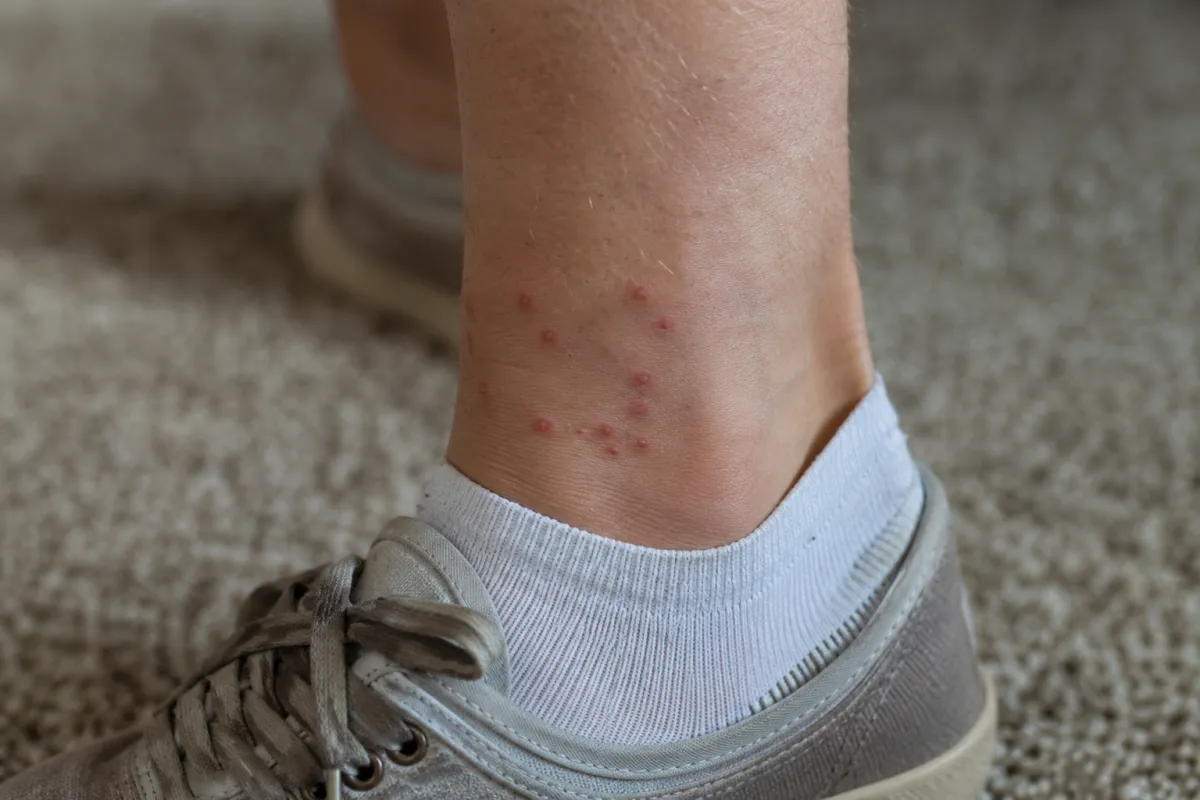
Flea bites are small, but they itch far more than their size suggests, and they keep coming until the fleas in the home are dealt with. In UK homes they're nearly always from cat fleas, which also live on dogs and will bite people when they get the chance. Here's how to recognise flea bites, how to tell them from other bites, how to look after them and how to stop them.
What flea bites look like
- Small, raised spots, often with a tiny darker point in the middle where the flea fed. On white skin they're red or pink. On brown or black skin they may look darker and be harder to see.
- In groups or short lines, because a flea often bites several times close together.
- Mostly below the knee. Fleas jump up from carpets and rugs, so ankles, feet and lower legs take most of the bites.
- On the forearms if you've been stroking or holding a pet.
- Very itchy, sometimes for days. A few people get small blisters.
You'll often notice new bites after sitting on the sofa or walking across a carpet in bare feet or thin socks, rather than first thing in the morning.
Why one person gets bitten and another doesn't
It's common for one person in a household to be covered in bites while everyone else seems untouched. Usually everyone is being bitten, but people react very differently. Some get large, itchy lumps. Others show nothing. Children often react more strongly than adults, and a sensitive person can develop itchy lumps that last for a week or more.
Fleas also bite whoever is nearest. If a pet has died, been rehomed or is away at a cattery, the fleas in the home turn to people instead, and the bites can suddenly get much worse. The same happens in a home that's stood empty. Our guide to fleas in a new home or after a pet has gone covers both situations.
Telling flea bites from other bites
Where and when the bites appear is usually the best clue.
- Bed bug bites appear overnight on skin left uncovered in bed: face, neck, arms and shoulders. They're often in lines, and there are no jumping insects. See our guide to bed bug bites.
- Mosquito and midge bites come with summer evenings, open windows and time in the garden. They're usually puffier and more scattered.
- Bird mite bites follow birds nesting in the roof or eaves, and the mites are seen as tiny moving specks near windows and ceilings.
Two simple checks can confirm fleas.
- The white sock test. Pull on long white socks, tuck your trousers in and walk slowly around the rooms where your pet sleeps and rests, shuffling across rugs and sofa cushions. Fleas jump onto the white fabric, where they show up as dark specks.
- A light trap overnight. Put a shallow dish of water with a drop of washing-up liquid on the floor under a lamp, and leave the lamp on overnight. Fleas jump towards the warmth and light and drown in the dish. Only do this where children and pets can't get to it.
Looking after flea bites
Most flea bites settle on their own in a few days.
- Wash the bites with soap and water.
- To ease swelling, hold an ice pack wrapped in a cloth, or a cloth soaked in cold water, on them for about 20 minutes.
- Try not to scratch, as broken skin can become infected.
- A pharmacist can suggest something for the itching, such as an antihistamine or a mild steroid cream.
- Speak to a pharmacist or call NHS 111 if bites become more swollen, painful or red, if the redness spreads, if there's pus, or if you feel unwell.
Call 999 straight away if anyone has signs of a severe allergic reaction, such as difficulty breathing or swelling of the face, lips or throat.
Pets can react to bites too. If your cat or dog has sore, scabby or bald patches, talk to your vet.
Stopping the bites at the source
Creams ease the itch, but the bites only stop once the fleas are gone. Adult fleas are only a small part of what's in your home. Most are eggs, larvae and cocoons in carpets, pet beds and sofas, and new adults keep hatching from these for weeks.
- Treat every pet on the same day, using a product your vet recommends.
- Vacuum every day, especially pet resting spots, along skirting boards and under furniture. Empty the vacuum into a sealed bag in the outside bin.
- Wash pet bedding, throws and cushion covers on a hot wash.
- Wear long socks at home for a while, so fewer bites reach your skin.
- Treat the home if the bites keep coming. Our flea guide explains how fleas develop and what treatment involves.
For details of a professional visit and how to prepare, see our flea treatment page, or call us on 020 7112 8473.