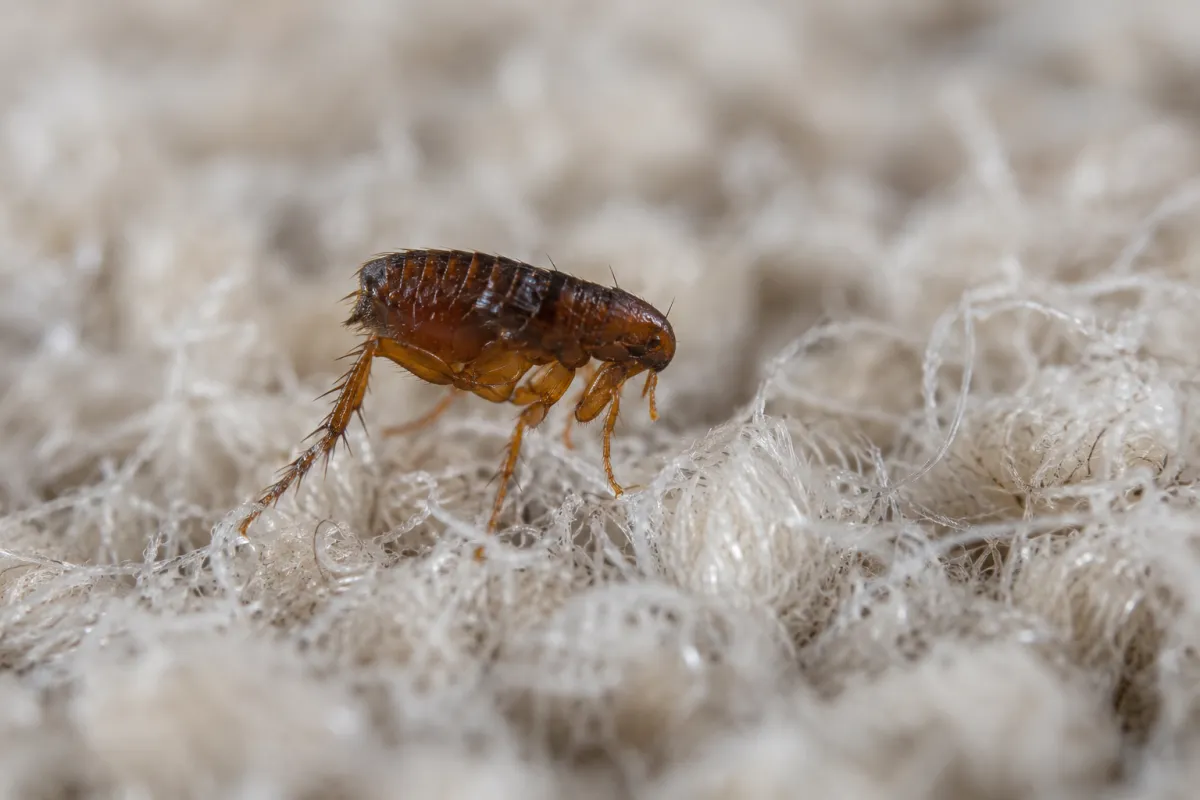
Fleas live on the blood of warm-blooded animals. There are many types of flea, and each prefers its own animal "host", but they will feed on other types of animal, including humans. The human flea and the dog flea are now rare in this country, and we are usually bitten by cat fleas.
What fleas look like
- Adult fleas are brown and about 3 mm long.
- They live on an animal or close by, often in pet bedding.
- Their bodies are flattened, so they can move through hair quickly.
- They have large rear legs, so they can jump to and from an animal.
The flea life cycle
- Flea eggs are very small and white.
- Fleas lay their eggs on an animal or nearby, in bedding, carpets or furniture.
- The young fleas that hatch normally feed on flea droppings, which contain blood.
- After two to three weeks they turn into a pupa (pod), and they can stay at this stage for up to nine months.
- Adults then come out and feed on the animal. If there has not been an animal available for a long time, many adults may come out at the same time.
Why fleas are a problem
- Fleas can carry diseases that affect humans.
- Their bites are unpleasant and show as a tiny dark red spot in a red lump. Our guide to flea bites explains more.
How we get rid of fleas
We treat fleas as part of our flea treatment service. When we do, we will:
- visit your property to find out the size of the problem
- treat the property by spraying the areas where the fleas are
- explain what we have done and tell you what you can do to help stop the problem in the future
Getting ready for treatment
The treatment will work best if you:
- vacuum all carpets, furniture and pet bedding thoroughly before the visit
- empty the vacuum cleaner bag into a bin liner outside the house, or use a new bag
- make sure floors are as clear as possible, and move furniture away from the walls
- check your pet for fleas and treat it as your vet tells you
After treatment
The treatment we use works for about six weeks, and you may need more treatments.
You may still see fleas for some weeks after the treatment, because it does not affect the eggs or early stages of the flea life cycle. Adults and larvae will die soon after the treatment, and emerging adults and larvae will die off when they come into contact with it.
How to prevent fleas
To control fleas:
- Wash or dry clean all clothing and bedding likely to have fleas in them.
- Leave cleaning the treated carpets for seven to ten days, then vacuum and clean your carpets often.
- Check your pets often, and if you find fleas, treat them as your vet tells you.
- Clean or change pet bedding often.