Clothes moths in wardrobes and carpets
How to find where clothes moths are breeding, treat each kind of item, clear carpets and rugs, and store woollens so it doesn't happen again.
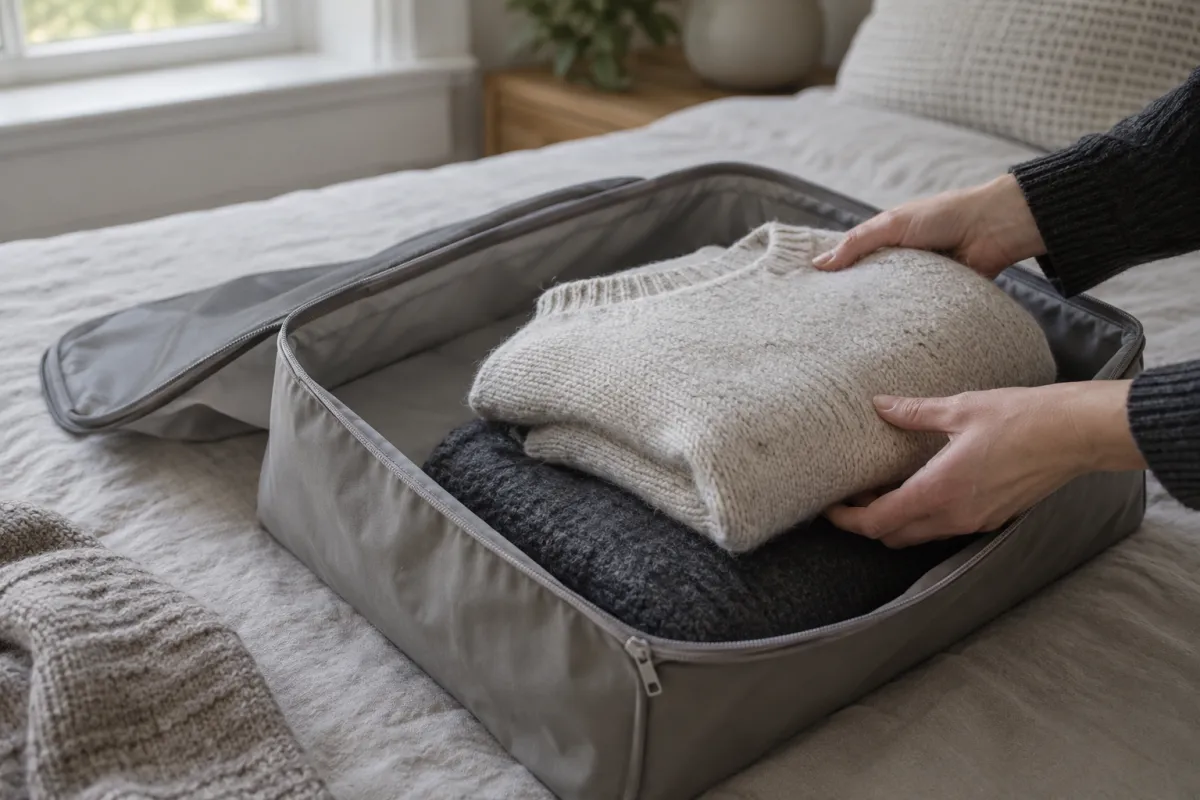
Clothes moths rarely announce themselves. The first sign is usually a hole in a favourite jumper or a bald patch in a rug, by which time the larvae have been feeding for months. Getting rid of them means finding every place they're breeding and dealing with each item in the right way, not just swatting the moths you see.
Why moths pick some clothes and not others
Clothes moth larvae feed on keratin, the protein in wool, cashmere, silk, fur, felt and feathers. Keratin alone isn't a great diet, though. They do much better on fabric that also carries traces of sweat, skin, hair or food. That's why the damage so often starts at collars, cuffs, underarms and the front of a jumper where something was spilt.
Darkness and stillness matter just as much. Larvae avoid light and disturbance, so the riskiest items are the ones you rarely touch:
- coats and suits that hang at the back of the wardrobe for a season
- knitwear in a bottom drawer, or worn once and put back unwashed
- wool blankets and throws in a blanket box or under the bed
- rugs under furniture, and carpet behind doors or under radiators
- boxes of clothes or textiles in the loft or a storage unit
Things you wear and wash every week are rarely attacked.
Finding where they're breeding
Moths spread from a source, so look further than the wardrobe where you saw them.
- Use pheromone traps to narrow it down. Put one in each room you suspect, away from open windows. The room with the most catches after a couple of weeks is where to search hardest. The traps only catch males, so treat them as a guide, not a fix.
- Check the floor of the wardrobe and the gap underneath it, where fluff and fallen fibres collect.
- Look at anything made of natural fibre that sits still: felt pads, wool wall hangings, upholstered chairs stuffed with wool or horsehair, feather cushions and old fur collars.
- Don't forget the loft. Stored textiles and old bird nests are both common sources, and moths move down from there.
Signs you've found it include creamy white larvae, silk tubes or little cases, grains of droppings the same colour as the fabric, and thinned, grazed patches.
Treating each kind of item
Sort everything from the affected area into three piles and deal with each before it goes back.
Washable items
Wash at the highest temperature the care label allows. Where it's safe for the fabric, tumble dry on a warm setting as well, as heat kills eggs and larvae.
Dry-clean only
Dry cleaning kills every stage, from eggs to larvae. Keep the items in their sealed bags afterwards, until the wardrobe has been cleaned.
Delicate, vintage and large items
For things that can't be washed or dry-cleaned, freezing works. Take the item outdoors first and brush it firmly with a clothes brush, especially along seams, folds and under collars, to dislodge eggs and young larvae. Airing in daylight helps too, as larvae avoid light. Large feather duvets, tapestries and valuable pieces are best taken to a specialist cleaner.
Throw away anything too badly damaged to be worth saving, sealed in a bag for the outside bin.
Carpets and rugs
Carpet damage starts where feet and vacuums don't reach: along the edges by the skirting, under beds and sofas, behind doors and under radiators.
- Move the furniture and vacuum the whole floor, using a crevice tool along the edge of the carpet.
- Turn rugs over. Vacuum the back, the floor underneath and the fringe, then shake or beat the rug outside.
- Vacuum the stairs along the sides of each tread, where fluff collects.
- Empty the vacuum into a sealed bag in the outside bin straight away, as it may contain live larvae and eggs.
- Keep it up weekly for several months, because eggs left behind keep hatching.
Bald patches won't grow back. If larvae are widespread in fitted carpet, a treatment of the affected areas after a thorough vacuum is usually the most reliable way to clear them. Our moth control page explains what that involves.
Storing clothes safely
The right storage keeps moths out of clothes you aren't wearing.
- Clean everything first. Wash or dry-clean wool and silk before it goes away, even if it looks clean.
- Seal it. Strong, zipped storage bags or lidded plastic boxes with a good seal keep moths out. Cardboard boxes, suitcases and open shelves don't.
- Check stored items every few months. Open them in good light, shake them out and look at the seams.
- Keep the wardrobe moving. Wear, air and rearrange your woollens through the year rather than leaving them in one place.
If the moths you're seeing are in the kitchen rather than the bedroom, they're a different species. See our guide to pantry moths. Our household pests page lists the other fabric pests we deal with, including carpet beetles.
If moths keep coming back after a full clear-out, call us on 020 7112 8473.