Pantry moths in kitchen cupboards
Moths in the kitchen and webbing in the oats? How to find where pantry moths hide, clear the cupboard properly and keep them out.
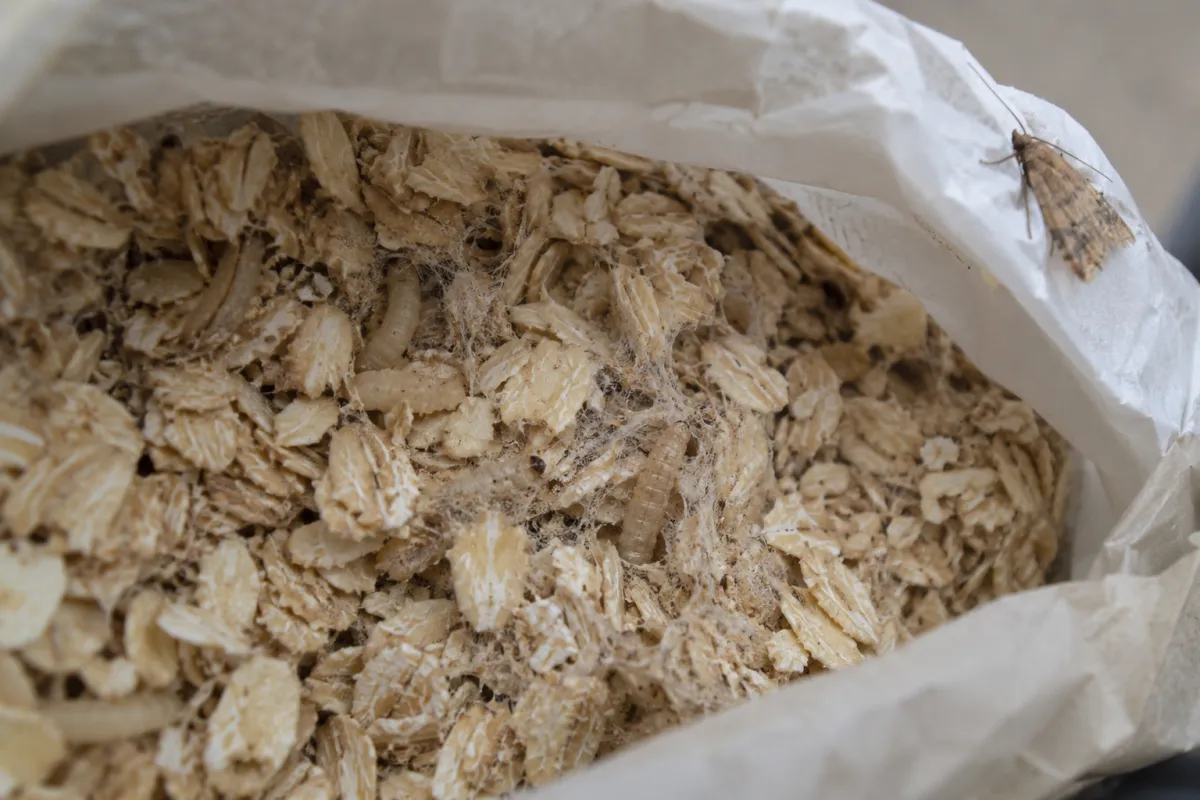
Small moths fluttering out of the kitchen cupboard in the evening, webbing in the oats, a caterpillar crawling across the ceiling. These are pantry moths, and they're one of the most common insect problems in UK kitchens. They're harmless to people, but they spoil food and can be surprisingly hard to shift, because the stage you need to find is rarely where you'd look.
Which moth is it?
The usual culprit in homes is the Indian meal moth. At rest it's about 1 cm long, with its wings folded along its back. The wings are two-tone: pale greyish-cream nearest the head, then coppery reddish-brown for the outer half or more. It flies in a fluttering zigzag, mostly at dusk.
Two others turn up less often:
- Mediterranean flour moth. A little larger and grey, with wavy dark lines across the wings. It's more of a problem in bakeries and food stores than in homes.
- Brown house moth. Bronze-brown with darker flecks. Its larvae scavenge on all sorts, from crumbs and dried food to fluff and fabric, so it can turn up in kitchens and bedrooms alike.
Small, plain golden moths that run from the light in the bedroom are clothes moths, a different problem. See our guide to clothes moths.
What the larvae eat and where they hide
Adult pantry moths don't eat. They live for a week or two, mate and lay eggs on or near food. The caterpillars do the damage. They're creamy white with a brown head and grow to just over 1 cm. As they feed, they spin silk that binds the food into clumps and leaves fine webbing across the top of the packet.
They'll feed on almost any dry food:
- oats, muesli, cereals and flour
- rice, pasta, couscous and pulses
- nuts, seeds and dried fruit
- chocolate, cocoa and biscuits
- spices, dried herbs and dried chillies
- dry pet food and bird seed
The part most people miss is what happens next. When a larva is fully grown, it usually leaves the food and wanders off to spin a cocoon somewhere tucked away. That might be the hinge of the cupboard door, the gap under a shelf lip, the screw holes for shelf pegs, the thread of a jar lid, the top edge of the cupboard or a corner of the ceiling. That's why you find caterpillars on the walls and ceiling, and why moths keep appearing after you've thrown the food away.
In a warm kitchen, the whole cycle from egg to adult can take as little as a month or so. In a cool room it takes longer.
A clear-out that works
Half measures mean starting again in a month, so do the whole job at once.
- Empty the cupboard, and any others nearby with dry food in them.
- Check every item, including unopened packets. Larvae can chew through thin plastic and cardboard, and get in through folds. Look for webbing, clumps, larvae and small holes.
- Bin anything infested, sealed in a bag and put straight in the outside bin.
- Freeze what you're unsure of. A week in the freezer kills eggs and larvae in food you want to keep.
- Vacuum the cocoon spots. Use a crevice tool on the hinges, shelf-peg holes, shelf edges, corners, the top of the cupboard and the nearby ceiling corners. Check the threads of jar lids too.
- Wash down shelves and doors with hot, soapy water, and let everything dry before restocking.
You don't need to spray insecticide in your food cupboards. Removing the food and the cocoons is what solves it.
Keeping watch for the next few weeks
Some cocoons will be in places you missed, so expect a few more moths for the next few weeks. That doesn't mean the clear-out failed.
- Use a pheromone trap made for food moths. The lure is different from clothes moth traps, which won't catch them. Put it near the cleaned cupboard, following the pack's instructions. A steady fall in catches shows the problem is ending.
- Swat or vacuum any adults you see, and check the hinges and ceiling corners again each week.
- Repeat the clean if larvae turn up on the walls again.
Stopping them coming back
- Decant dry food into glass jars or rigid containers with tight seals as soon as you get it home.
- Buy smaller amounts of the foods you use slowly, such as nuts, spices and specialist flours.
- Keep pet food and bird seed in sealed bins, away from the kitchen cupboards.
- Check bulk bags and gifted food hampers before they go into the cupboard.
Pantry moths often share the cupboard with beetles and mites. Our guide to flour mites and other food cupboard pests helps you identify those. Our household pests page lists the other moths we deal with, and our moth control page explains how professional treatment works.
If pantry moths keep coming back after a full clear-out, call us on 020 7112 8473.