Moth control in East London
It is the larvae of clothes moths, not the adults, that eat holes in wool, silk, cashmere, fur and carpets. They feed out of sight in dark, undisturbed places such as under furniture, in wardrobes and along carpet edges. We survey the problem, identify the pest and recommend treatment for the affected areas, along with steps to protect your belongings.
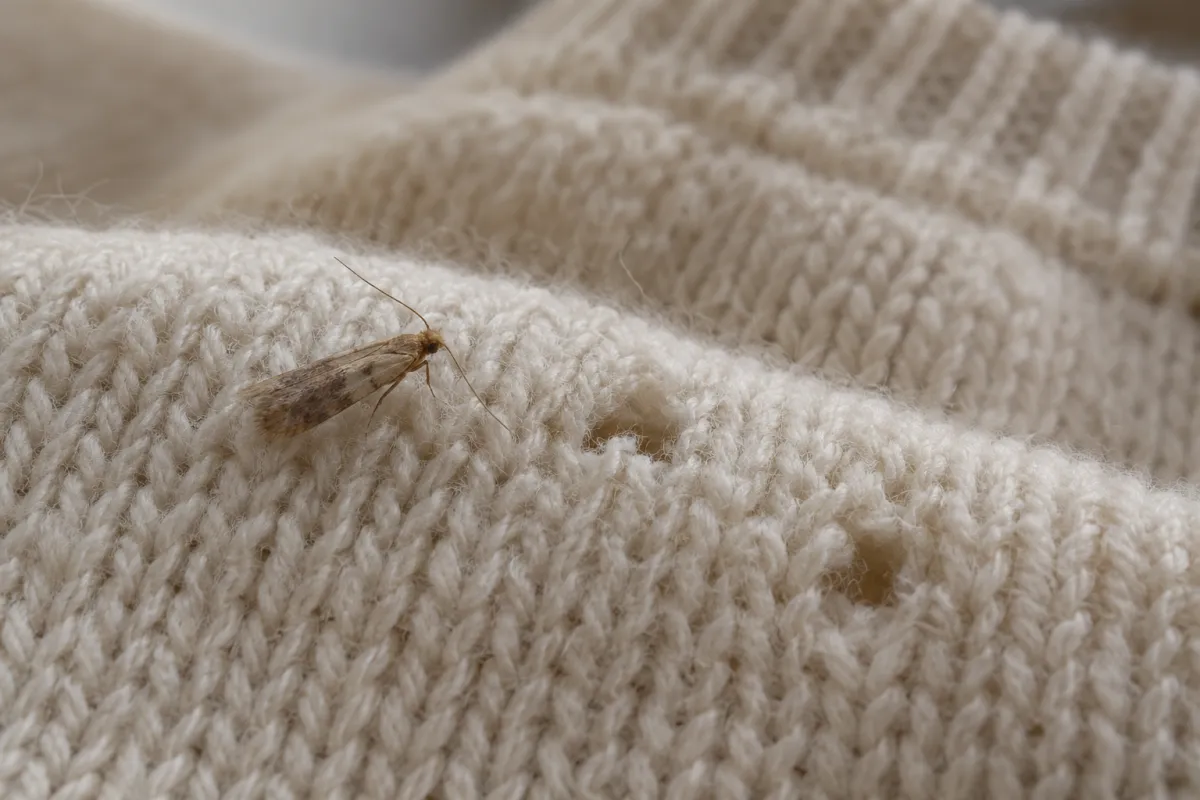
What moths look like
Common clothes moths are small and slim, a plain, shiny golden straw colour with a tuft of gingery hair on the head. Case-bearing moths are duller, greyish-brown with a few faint dark spots, and their larvae carry a little silk case made from the fabric they're eating. A moth in the kitchen with two-tone wings, pale at the front and coppery at the back, is a food moth, not a clothes moth.
- Size
- Adults 6–7 mm; larvae up to about 10 mm
- Colour
- Plain golden straw; larvae creamy with brown heads
- Breeding
- Around 40 to 50 eggs per female
- Lifespan
- Adults a few weeks; larvae months or longer
- Diet
- Larvae eat wool, silk, fur, feathers and felt
Signs of moths
Holes in natural fibres
Small, irregular holes in wool, cashmere, silk or felt, often in garments that have not been worn for a while.
Bare patches in carpet
Thinning or bald areas in wool carpets and rugs, usually at the edges, under furniture or behind doors.
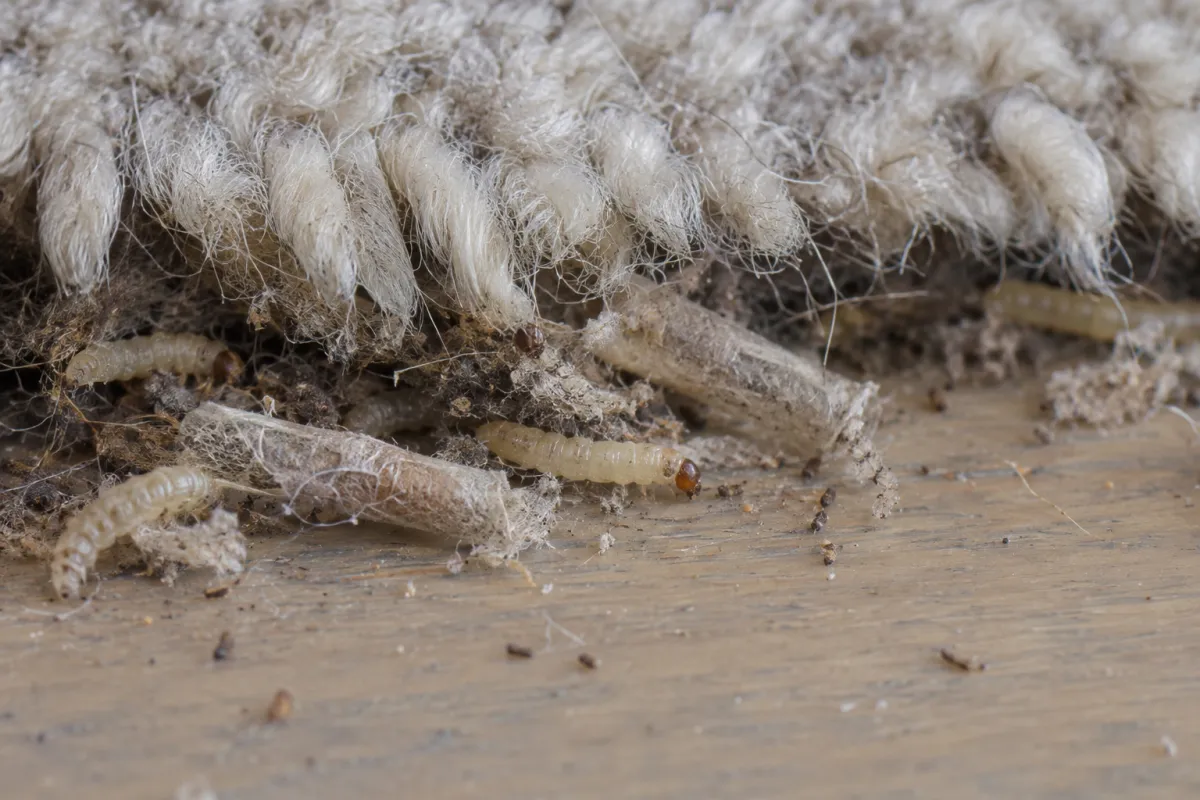
Larvae and cases
Creamy white caterpillars up to about 10 mm long, silken tubes or small cases on fabric, and gritty droppings.
Moths avoiding light
Small, straw-coloured moths about 6–7 mm long that run or flutter into dark corners rather than flying towards lights.
Webbing in food
Silk webbing, clumped grains or larvae in cereals, nuts, dried fruit or pet food, a sign of food moths such as the Indian meal moth.
Life cycle and breeding
Adults live only a few weeks and never eat. The larvae are the long stage, feeding for anything from a couple of months to over a year depending on warmth and food, so a problem can build quietly before you see a single moth.
Eggs
A female lays around 40 to 50 tiny eggs straight onto the fabric, somewhere dark and undisturbed. They usually hatch within a week or two in a warm home, longer in the cold.
Larvae
This is the stage that does the eating. Larvae graze on wool, silk, fur and feathers, spinning silk tubes or, for case-bearers, a little case as they go.
Pupae
A fully grown larva spins a cocoon, often in a seam, a crease or the gap between carpet and skirting. The adult usually comes out within a few weeks.
Adults
Adults don't feed. The ones you see fluttering are mostly males looking for a mate, while females tend to stay put and lay.
Where moths live and how they get in
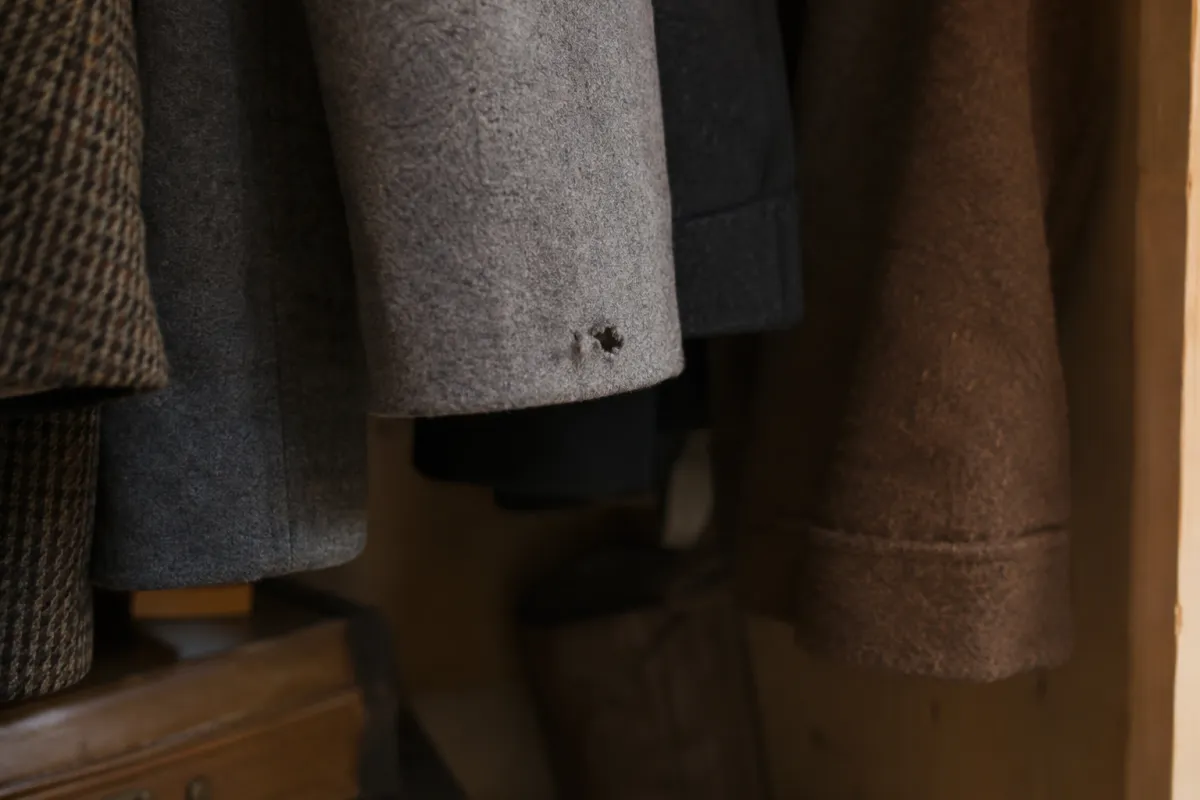
Clothes moths stick to dark, quiet places where natural fibres sit undisturbed: the back of the wardrobe, drawers of knitwear, under beds and heavy sofas, along carpet edges and in loft storage. On clothes, collars, cuffs and underarms are often hit first. They'll also live on fluff, pet hair and feathers, and in old bird nests in the loft.
- In second-hand clothes, vintage rugs and old furniture stuffed with wool or horsehair.
- On boxes of clothes, blankets or rugs brought back from a loft, garage or storage unit.
- From old bird nests in the loft or eaves, where moths can breed before moving into the house.
- Adult males fly short distances, so they can drift in from a neighbour's home or through an open window.
Why it matters
In a home or rented flat
Moth larvae can quietly ruin clothes, carpets, rugs and upholstery, and the damage is often found only when an item comes out of storage. An infestation spreads between rooms and wardrobes if the source is not found.
For landlords and businesses
For landlords, moth damage to fitted wool carpets can lead to disputes and replacement costs between tenancies. Clothing shops, carpet and upholstery retailers, and businesses storing textiles or dry food can lose stock to moth larvae.
How moth control works
Survey and identification
We confirm whether clothes moths, food moths or carpet beetles are responsible and find where the larvae are feeding.
Preparing the rooms
Before treatment, vacuum thoroughly, especially along carpet edges and under furniture, and wash, dry-clean or bag affected clothing.
Treating affected areas
Treatment is applied to the carpets, soft furnishings, wardrobes and storage areas where larvae are active.
Follow-up and prevention
We advise on monitoring, storage and cleaning routines, and on whether a further treatment is needed as remaining eggs hatch.
What you can do yourself
Go through everything
Empty the affected wardrobe or drawer and check each item in good light, especially ones you haven't worn in a while. Look at seams, collars and under lapels for larvae, silk or droppings.
Bag the damaged pieces
Put anything with damage or larvae straight into a sealed bag so it can't spread to clean clothes. Deal with it before it goes back, rather than moving it to another wardrobe.
Freeze what you can't wash
Woollens that can't take a hot wash can go in a sealed bag in the freezer for a week or two, which kills eggs and larvae. Let the bag warm up before you open it, so condensation doesn't form on the wool.
Look under rugs
Turn rugs over and check the underside and the floor beneath, and look under furniture that hasn't moved in years. Larvae often feed where you never walk.
Prevention
- Wash or dry-clean wool and silk clothing before storing it, as moths prefer fabric with traces of sweat or food.
- Store seasonal clothes and blankets in sealed bags or boxes.
- Vacuum under beds, sofas and along carpet edges regularly, including under furniture that is rarely moved.
- Air and shake out stored clothes, rugs and throws every few months.
- Use pheromone traps to monitor for adult moths so a problem is spotted early.
In heated homes clothes moths can breed all year, but adults are most often noticed from late spring to early autumn.
Common myths
Myth: Cedar or lavender will keep moths away.
The truth: They may put adult moths off a little, but they won't kill eggs or larvae already in your clothes, and the scent fades quickly.
Myth: Moths won't touch anything synthetic.
The truth: Larvae can't digest pure synthetics, but they'll chew through blends and stained synthetic fabric to get at the wool or food residue.
Myth: No moths flying means the problem's gone.
The truth: Larvae can feed for months before any adults appear. Keep checking the usual spots for a while after you've dealt with them.
Questions about moths
Is it moths or carpet beetles damaging my carpet?
Both cause similar damage to wool carpets and clothing. Carpet beetle larvae are small, brown and hairy, often called woolly bears, while clothes moth larvae are creamy white and spin silken tubes or cases. Carpet beetles often come in from old bird nests in the roof, so identifying the pest shows where to look for the source.
Do pheromone traps get rid of moths?
No. They attract and catch male moths, which makes them useful for spotting an infestation and checking progress, but females still lay eggs. They work best alongside cleaning and treatment of the affected areas.
Why do I have moths when my home is clean?
Clothes moths look for dark, undisturbed places with natural fibres, such as under heavy furniture or at the back of a wardrobe. They also favour items with traces of sweat or food, so a clean home can still have a problem in stored clothing.
What are the moths in my kitchen cupboard?
They are likely food moths such as the Indian meal moth, whose larvae feed on cereals, nuts, dried fruit, flour and pet food. Throw away infested packets, clean the cupboard thoroughly and store dry food in sealed containers.
Further reading
Related services
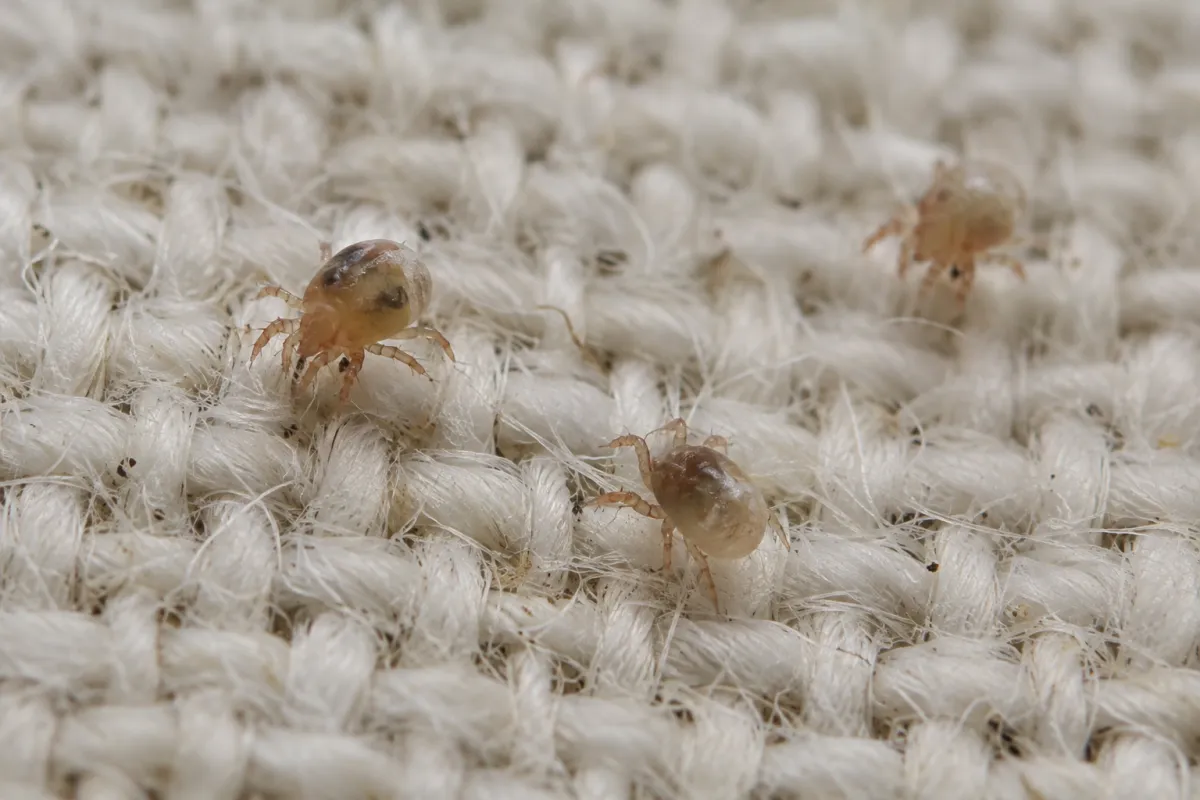 Mite controlIdentify flour, bird and clover mites and other stored product pests, then deal with the source.
 Flea treatmentTreatment for fleas in carpets, furniture and bedding, with pet care and preparation advice.
 Fumigation servicesSpace treatment for widespread insects in rooms, lofts and storerooms that can be cleared and closed.
Let’s talk about the problem.
Tell us what you’ve seen, the property type and your postcode.