Rodent damage to wiring, pipes and insulation
Why rats and mice chew cables, pipes and insulation, how to recognise damaged wiring, and what to do about repairs, insulation and insurance.
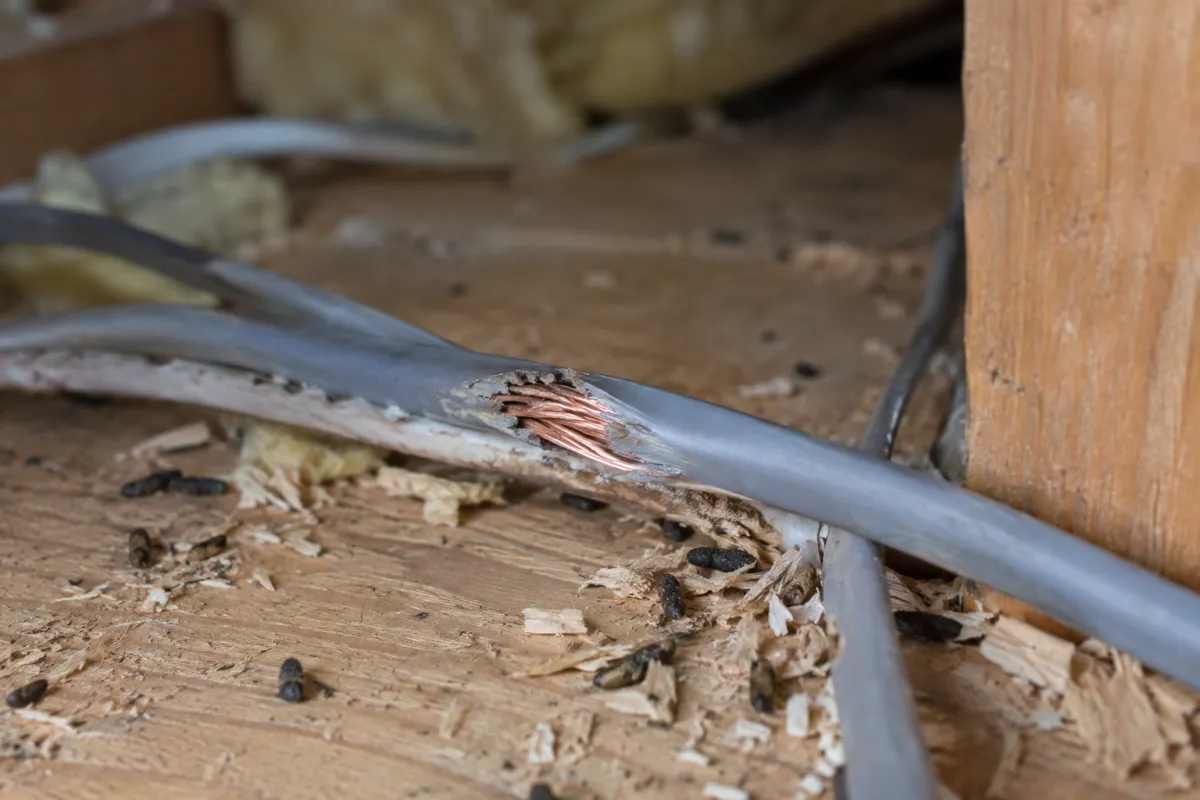
Rats and mice gnaw constantly. Their front teeth never stop growing, and chewing hard materials keeps them worn down. Cables, pipes and insulation happen to run along the same routes rodents use through a building, so they get chewed simply because they're in the way. The damage is usually hidden in lofts, under floors and behind appliances, and some of it can be dangerous.
What rodents chew, and where
- Electrical cables. The PVC sheath on household wiring is easy to gnaw. Check lofts where lighting cables run across the joists, under floors where cables pass through the joists, and behind the fridge, freezer and washing machine, where flexes and plugs sit against the wall.
- Plastic pipes. Plastic waste pipes and push-fit plastic water pipes can be gnawed through, causing slow leaks under floors and behind units. Washing machine and dishwasher hoses are common targets.
- Lagging and insulation. Rodents strip foam pipe lagging and tunnel and nest in mineral wool. Flattened, soiled insulation keeps less heat in, and bare pipes in a cold loft are more likely to freeze in winter.
- Timber and boards. Joists, skirting boards, door edges and the backs of kitchen units are gnawed to widen gaps and open up new routes.
Rats and mice aren't the only culprits. In lofts, grey squirrels chew cables and timber too, and they're usually heard during the day rather than at night.
Recognising damaged wiring
Gnawed cable has rough, uneven edges with small parallel tooth marks, unlike the clean cut of a blade. In worse cases the coloured inner insulation or bare copper is showing. Other warning signs include:
- a circuit that keeps tripping at the consumer unit for no obvious reason
- lights that flicker, or sockets and fittings on one circuit that stop working
- a burning or hot plastic smell, or scorch marks near a cable
- a dead rodent lying next to a cable
If you can see exposed wires, don't touch them. If it's safe to get to, switch off the affected circuit at the consumer unit and leave the area alone.
Getting it checked and repaired
Chewed wiring should be inspected and repaired by a registered electrician. Taping over the damage isn't a safe repair, because the cable may be weakened along a longer stretch than you can see. If you've found damage in more than one place, ask for an Electrical Installation Condition Report (EICR), which checks the whole installation rather than one cable.
Landlords in England already have to have the electrics in privately rented homes inspected and tested at least every five years. Rodent damage found between inspections still needs putting right promptly.
For damaged pipes, turn the water off at the stopcock if there's a leak, and call a plumber. If you smell gas, leave the property and call the National Gas Emergency Service on 0800 111 999 straight away.
While repairs are being done, ask whether cables on known rodent routes can be run in metal conduit or trunking, and have the holes where cables pass through walls and floors sealed properly afterwards.
Insulation, clean-up and insurance
Insulation that's been nested in or soaked with urine should be bagged and replaced rather than patched. Wear gloves, long sleeves and a dust mask, as mineral wool irritates the skin and lungs. Replacing it is a good time to bring loft insulation up to the recommended depth of around 270 mm, and to check the pipe lagging, since gaps left by rodents can lead to frozen pipes.
Many home insurance policies exclude damage caused by vermin, although some cover the consequences, such as a fire or an escape of water. Take photos of the damage and read your policy wording before repairs start.
Stopping it happening again
Repairs won't last while rodents are still active. Deal with the infestation first, then seal the gaps that cables and pipes pass through, as these are often the routes rodents use between rooms. In shops, kitchens and offices with false ceilings and cable trunking, regular checks of those spaces catch damage early, and our guide to rodents in food businesses covers the daily habits that help. The rodent control page explains how rats and mice are identified and treated, and our guide to rodents gives more background.
If you've found chewed cables or pipes and think rodents are still active, call Mighty Pest Control on 020 7112 8473.