Rodents in food businesses
How rats and mice use a food business, the daily checks that keep them out, what to do if you find droppings and how treatment works around food.
A mouse dropping on a shelf or a rat seen in the yard is a serious matter for any restaurant, takeaway, café, shop or food store. Rodents contaminate food with droppings, urine and hair, gnaw through packaging, and leave evidence that inspectors and customers notice. Most food businesses that get rats or mice aren't dirty. They're warm, full of food and deliveries, and often in older buildings with plenty of hidden routes.
How rats and mice use a food business
Mice usually live inside the premises. They nest in the warm voids behind and under equipment, in hollow counters, cable trunking, false ceilings and stockrooms, and they rarely travel far from food. A few mice in a dry store can go unnoticed for weeks.
Rats more often live outside, in the yard, the bin store, the drains or a neighbouring building, and come in to feed. They're drawn by waste, grease and back doors propped open during service, and they'll gnaw through a worn door seal or a plastic vent to get in.
In East London, many food businesses sit in parades with cellars, shared voids and flats above. Rodents travel between units through those spaces, so a problem next door can quickly become yours.
Daily habits that keep rodents out
- Deliveries. Check sacks, boxes and pallets before they go into storage. Look for gnawed corners, droppings and urine stains, and refuse anything that's been contaminated.
- Storage. Keep stock on shelving or racking, off the floor and a little away from the wall so you can see behind it. Decant opened dry goods into lidded containers, and rotate stock so nothing sits untouched at the back.
- Doors. Keep external doors shut. If a back door has to stay open for ventilation, fit a screen door or a bristle strip, and replace worn thresholds.
- Waste. Use lidded bins inside, empty them at the end of every service, and keep the bin store swept with the lids closed. Don't leave bags outside overnight waiting for collection.
- Close-down. Pull out lighter equipment where you can and clean under and behind it. Don't leave food out overnight, including staff food and snacks.
- A torch check. Make a quick look in the dry store, under counters and behind equipment part of opening up. Fresh droppings, gnawed packaging or a stale smell are far easier to deal with on the first day.
If you find signs during service
- Stop using the affected area and move or cover any food nearby.
- Throw away food or packaging that's been gnawed or soiled. Don't try to trim or salvage it.
- Clean and disinfect the surfaces and equipment involved before using them again.
- Note what was found, where and when, and tell whoever is responsible for pest control.
- Get a pest controller in promptly.
Make sure staff know that droppings should be reported, not just swept into the bin.
What treatment looks like in food premises
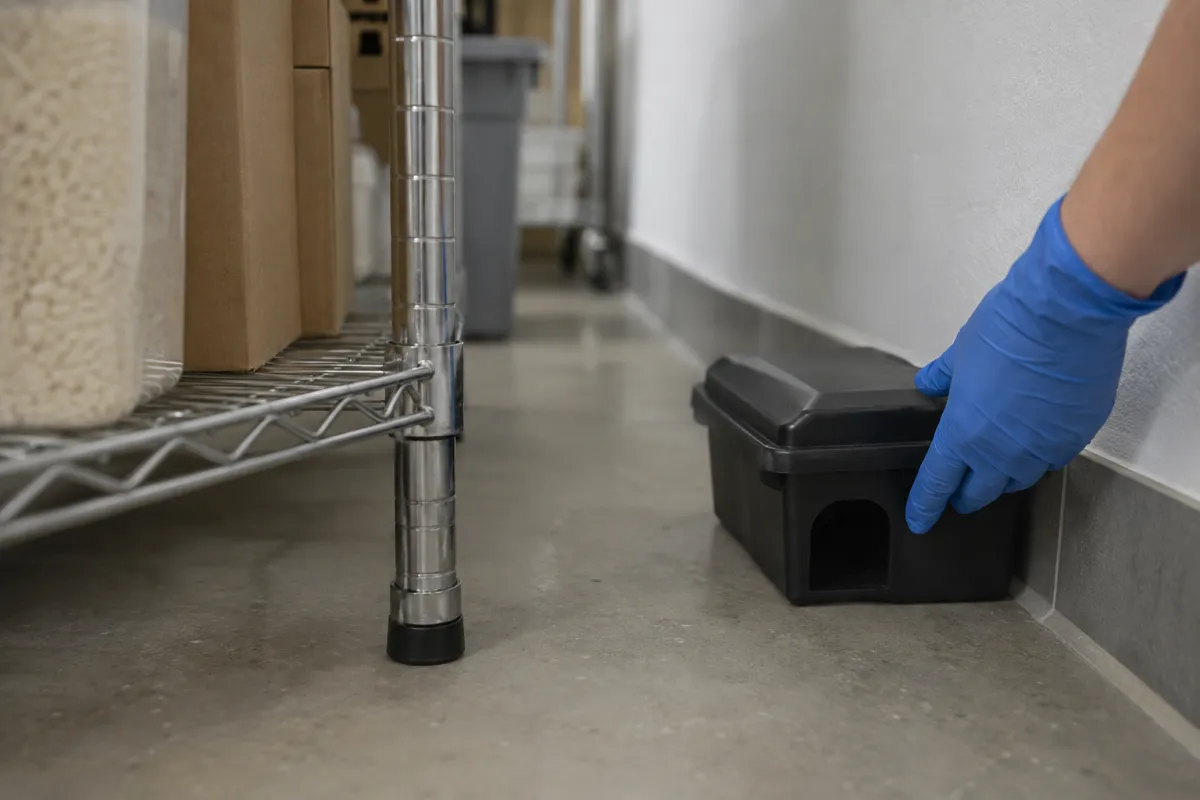
Rodent treatment in a food business is planned around food safety. Rodenticide is normally kept in secured, tamper-resistant bait stations along perimeter walls, in the yard and around bin stores, away from where food is prepared. Inside food rooms, traps or non-toxic monitoring blocks are often used instead, so no poison is near open food. Each point is usually numbered on a site plan and checked on every visit, which builds up a record of where activity is.
Proofing is the long-term fix. That means bristle strips on doors, mesh over vents and air bricks, sealing holes where gas, water and cables enter, closing off hollow plinths and counter bases, and repairing defective drains and floor gullies. In leased premises, check early with the landlord who is responsible for structural proofing, because gaps in shared areas and neighbouring units need fixing too.
In kitchens where rodents have been active for a while, chewed cables behind fridges and in ceiling voids are common. Our guide to rodent damage to wiring, pipes and insulation explains what to check.
When to call
Any sign of rodents where food is stored or prepared needs prompt action, and working out whether you have rats, mice or both comes first. The rodent control page explains how each is identified and treated, and our guide to rodents covers the health risks they bring.
If you run a food business and have found signs of rats or mice, call Mighty Pest Control on 020 7112 8473.