Ant treatment in Waltham Forest
Treatment for black garden ants and Pharaoh's ants, aimed at the colony rather than the trail. We cover homes, rented properties and businesses across Waltham Forest, including Leyton, Lea Bridge, Leytonstone and Cann Hall.
Where ants turn up in Waltham Forest
Victorian and Edwardian terraced streets in Walthamstow, Leyton and Leytonstone
Paved back yards, gaps under door thresholds and cracks in old render give garden ants an easy route from nest to kitchen in older homes.
Market stalls, cafés and food shops in Walthamstow High Street, Leyton and Leytonstone
Sugary ingredients, spills and open stock draw ants into cafés, bakeries and food stores, where Pharaoh's ants in particular pose a contamination risk.
Streets bordering Epping Forest in Chingford, Highams Park and Leytonstone
Open grassland and sunny banks support many garden ant nests, and homes that back onto them often see trails and flying ants each summer.
Semi-detached houses with gardens in Chingford and Highams Park
Nests under patio slabs, along flower beds and at lawn edges bring garden ants close to back doors and kitchen windows.
Signs to look for
Ant trails
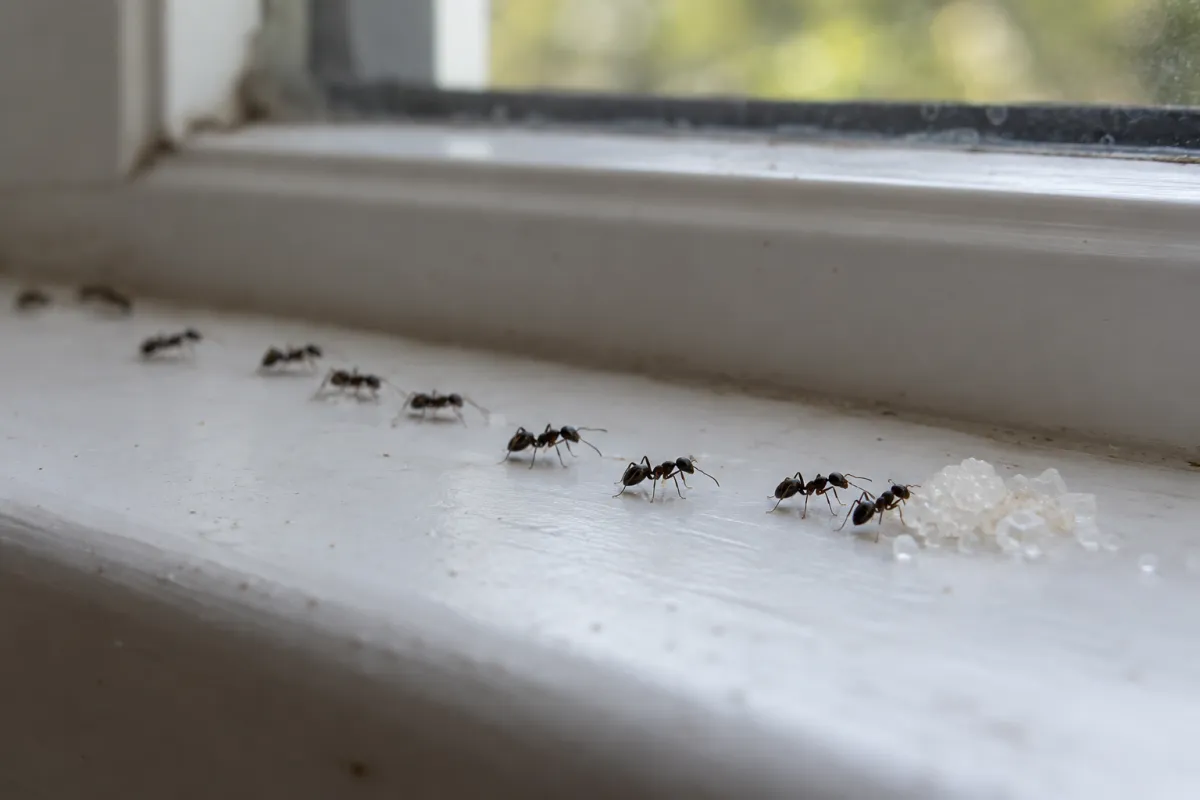
Lines of ants running along skirting boards, worktops or windowsills towards food, pet bowls or bins.
Small soil piles
Little heaps of fine soil between paving slabs, along walls or at the edge of a lawn, marking nest entrances.
Flying ants
Winged ants emerging in large numbers on a warm, humid summer day, showing a mature nest nearby.
Tiny pale ants indoors
Yellowish-brown ants around 2 mm long in warm rooms, bathrooms or around heating pipes, which may be Pharaoh's ants.
How it works
Tell us what you’ve seen
Call or email with the pest, the type of property and your postcode. A technician can explain the process before anyone visits.
Find the source
The visit starts with the signs: identifying the pest, where it is nesting and how it is getting in.
Treat the problem
Treatment uses professional-use products and methods chosen for the pest and the property, with clear safety advice.
Keep it from coming back
You get advice on proofing and hygiene. Businesses can choose one-off visits or a regular service programme.
Local pages in Waltham Forest
Further reading
Let’s talk about the problem.
Tell us what you’ve seen, the property type and your postcode.