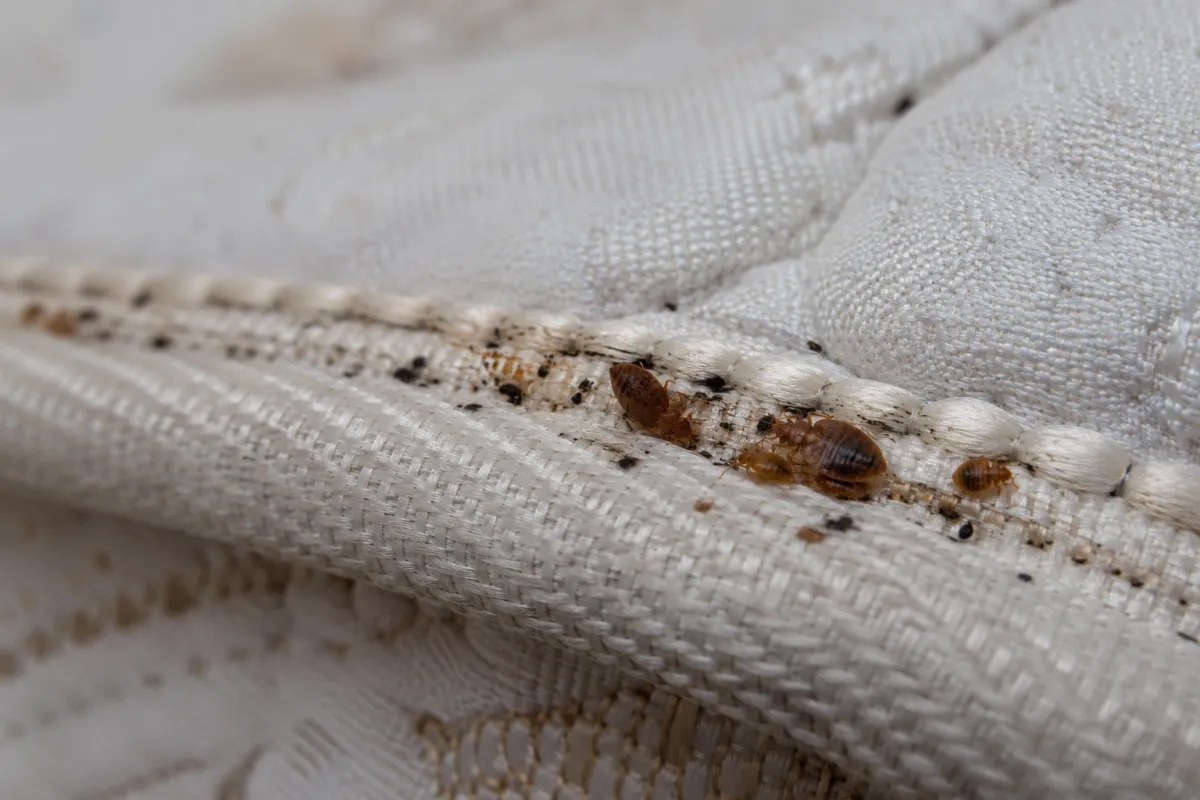
Bed bugs are the original vampires. They will feed on the blood of any living being, be it humans, dogs, cats, birds, mice, guinea pigs or hamsters.
Bed bug facts
- Bed bugs can eat up to seven times their own weight in blood, but they can easily go without feeding for up to 15 months.
- Although itchy and nasty-looking, a bed bug bite is painless, because components in their saliva act as an anaesthetic. People often go for weeks without noticing or reacting.
- Bed bugs are masters at hiding. During the day, they stay out of sight inside appliances, in cracks and crevices, behind skirting boards or in picture frames.
- They only come out at night, when the carbon dioxide we breathe out during sleep tells them it's safe to come out.
What bed bugs look like
Adult bed bugs look like a small brown disc, up to 6 mm long. They are wingless, but their legs are well developed and they can crawl up most vertical surfaces.
Their elongated eggs are cemented into cracks or crevices close to their hosts, which for bed bugs are humans. The early stages of the bed bug (nymphs) are tiny, which makes them hard to see with the naked eye.
Life cycle
Female bed bugs lay 1–12 eggs a day (an average of 5 a day) and up to 500 in their lifetime. The eggs are covered in a sticky, glue-like material and are laid on wood and paper surfaces or inside cracks and crevices. They hatch in about 10–17 days at room temperature.
Newly hatched nymphs need a blood meal straight away in order to moult. After five moults they reach maturity, but the nymph stage can last much longer if there is no food.
Bed bugs can survive for a maximum of 400 days without food, depending on the temperature and humidity, and produce several generations a year.
How bed bugs feed
Both nymphs and adults feed at night and hide in dark crevices during the day, although it's not uncommon for hungry bugs to take a blood meal whenever a host is nearby.
- They find their hosts using heat and carbon dioxide sensors.
- They can tell which hosts are human through smell receptors on their antennae and mouthparts.
- After piercing the skin with their sharp beaks, they inject an anticoagulant fluid that lets them draw blood.
- Nymphs finish feeding within 3 minutes, while adults may take 10 to 15 minutes to become engorged with blood.
- After feeding, they look for a place to hide, where they leave faecal spots (digested blood).
Where bed bugs hide
Common hiding places include:
- mattress seams
- beneath covers
- crevices in the bedstead
- the joints of bed frames
- inside upholstery
- behind skirting boards
- the wooden joints of box springs
- inside window and door frames
- floor cracks
- under loose wallpaper
- curtain pleats
- ceiling mouldings
- inside furniture and appliances
- any objects made of wood, paper or fabric
People can sometimes pick up bed bugs in theatres, buses, trains, hospitals, schools and hotel rooms, and then bring them home on clothing, furniture or luggage. Our guide to bringing bed bugs home from travel and second-hand furniture covers this in more detail.
Signs of bed bugs
Tell-tale signs of an infestation include:
- blood stains from dead bugs
- dark spots of droppings on bedding, mattresses, clothing and walls
- eggshells and shed skins near their hiding and feeding places
- a musty smell, which comes from their scent glands
Why control bed bugs
Bed bug bites cause red, irritating marks or lumps. Not everyone reacts to the bites, but some people develop a more severe skin reaction and can have disturbed sleep.
Bed bugs are not known to spread diseases. However, they can cause irritation and distress.
Health effects of an infestation
Although there is little evidence that bed bugs can transmit diseases to humans, there are several health effects that people may experience from an infestation:
- Young children and elderly people living in heavily infested places may develop anaemia.
- Allergens present where bed bugs live may make asthma symptoms worse.
- Because bed bugs are wrongly linked to poverty and dirt, an infestation can have a significant psychological impact.
- Bed bugs can be passed from one person to another, and people who already have them at home may feel isolated from friends and family.
- Infestations can have a considerable financial impact, since treating a home for bed bugs often involves throwing away infested furnishings, clothes and other belongings.
- Some people put themselves and their families at great risk by trying to get rid of an infestation with dangerous substances.
Bed bugs and your business
Bed bugs can also ruin an organisation's reputation. If clients and customers come across bed bugs in premises you manage, they are likely to complain, ask for a refund and talk about your company negatively, and they'll be unlikely to want to do business with you again.
Inspecting for bed bugs
Recent studies indicate that most bed bugs live in or near the bed, so a thorough inspection is needed before any treatment is applied.
- Focus on the mattress, box spring, headboard and bed frame.
- Check all the seams of the mattress and the pleats of bed linen.
- Bed bugs can crawl into tiny cracks and crevices to digest their meals, so look inside window and door frames, in electrical boxes and in cracks in plaster.
- Don't forget to check furniture, clothing, wall hangings, paintings, curtain pleats and behind loose wallpaper.
If you find signs of bed bugs, our bed bug removal service explains what professional treatment involves.
How to prevent bed bugs
Here are some tips to help you prevent future infestations:
- Don't bring home second-hand furniture, mattresses, clothes, electronics or appliances without inspecting them first, no matter how good they look.
- When you come home from holiday, always inspect your luggage to make sure bed bugs from the hotel room haven't attached themselves to it.
- Wash and dry bed sheets, linen, pillowcases, blankets and clothes at high temperatures to kill any bugs.
- Organise your belongings to reduce clutter, which often gives pests an ideal hiding place.
- At the launderette, don't put your laundry basket directly on the floor or near the bins, and inspect chairs and folding tables before using them.
- Use a mattress encasement to protect your mattress and box spring, and tape up any holes or tears in the fabric or plastic covering.