Bed bug bites and what else they could be
What bed bug bites usually look like, what else could be causing them, how to look after your skin and how to find out for certain.
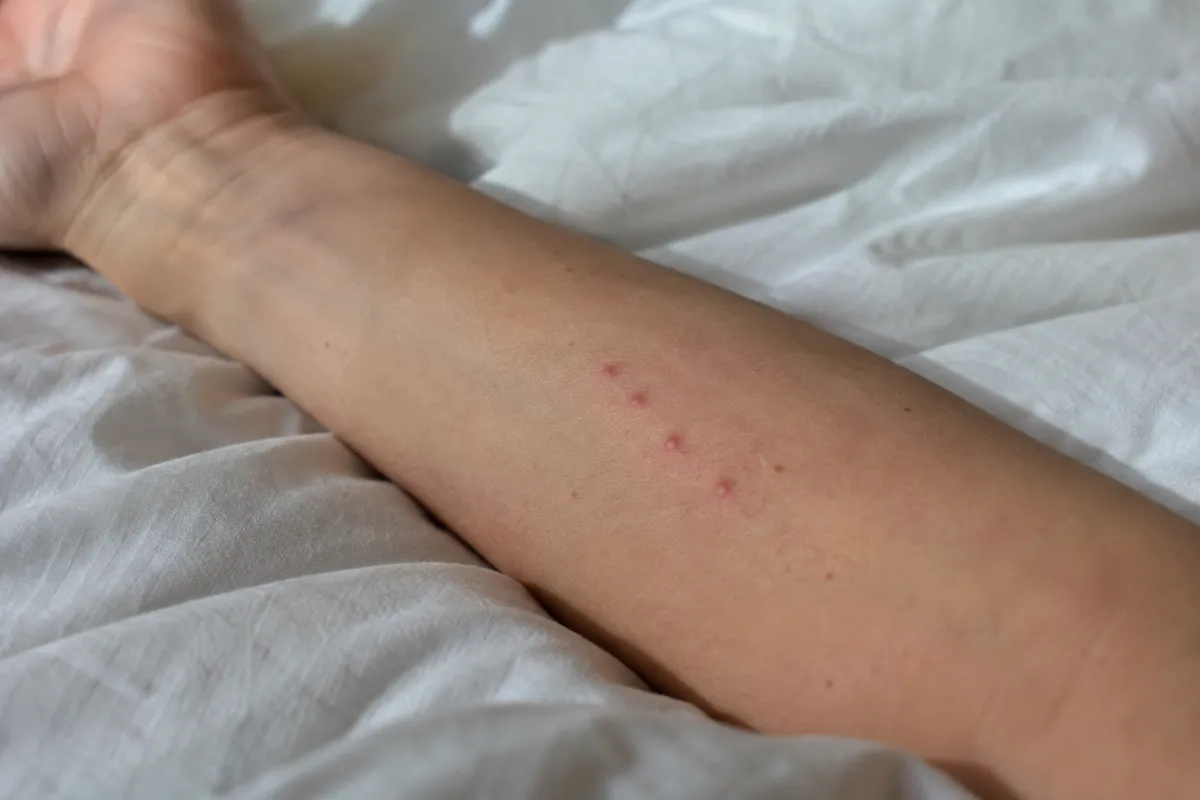
You wake up with a row of itchy red spots and the first thought is bed bugs. It might be, but plenty of other things leave marks that look the same, and some people with bed bugs never get a mark at all. This guide covers what bed bug bites usually look like, what else could be causing them, how to look after your skin and how to find out for certain.
What bed bug bites usually look like
Bed bugs feed on skin that's uncovered while you sleep, so bites tend to turn up on the face, neck, shoulders, arms and hands. A few things often stand out:
- Lines and clusters. Bites are often in a short row or a small group, where a bug has fed, moved along a little and fed again.
- Raised, itchy bumps. On white skin they're usually red or pink. On brown or black skin they may look brown, purple or red, and can be harder to see.
- No pain at the time. The bite itself isn't felt, so you only find the marks in the morning or later in the day.
- A slow start. Some people react within hours, others a day or more later. That makes it hard to link the bites to a particular night or place.
Reactions vary a lot. Two people can share a bed, and one gets itchy lumps while the other shows nothing. A few people get larger swellings or blisters.
Why bites alone can't confirm it
Because reactions vary so much, bites are the weakest evidence of bed bugs. Marks in a line point towards them but don't prove it, and a bite-free partner doesn't rule them out. Only finding the insects, or the dark spots, shed skins and eggs they leave, confirms it.
What else it could be
Flea bites
Flea bites cluster around the ankles and lower legs, because fleas jump up from the floor. You can also get them on your forearms if you've been holding a pet. They often appear during the day, after walking across a carpet or sitting on the sofa. If you have a cat or dog, or have just moved into a home where pets lived, see our guide to flea bites.
Mosquitoes and other biting insects
Mosquito bites are usually single, puffy and scattered rather than in neat lines, and come with summer and an open window.
Bird mites
If birds have been nesting in the eaves or roof, tiny mites can wander indoors once the young have left. Their bites can appear anywhere, and you may see the mites themselves as fast-moving specks near windows, ceilings or light fittings.
Carpet beetle larvae
The small, hairy larvae of carpet beetles don't bite, but their hairs can irritate the skin of some people. The result is an itchy rash that looks a lot like bites.
Scabies and skin conditions
Scabies is caused by a mite that lives in the skin and spreads through close skin contact. It causes intense itching that is often worse at night, with a rash that can spread across the body. It isn't a pest control problem: a pharmacist can recommend treatment, and everyone in the household needs treating at the same time. Hives, heat rash and reactions to a new washing powder can also look like bites. If nothing turns up in the bed, it's worth asking a pharmacist.
Looking after the bites
Most bed bug bites clear up on their own in a week or so.
- Wash the area with soap and water.
- Hold something cool, such as a clean, damp cloth, against the bites to ease the itch.
- Try not to scratch. Broken skin can become infected.
- A pharmacist can suggest something to ease the itching, such as a mild steroid cream or an antihistamine.
- Speak to a pharmacist or call NHS 111 if a bite gets more painful, swollen or red, if the redness is spreading, or if you feel unwell.
Call 999 straight away if anyone has signs of a severe allergic reaction, such as difficulty breathing or swelling of the face, lips or throat.
How to find out for certain
Start with a diary. Each morning for a week, note where the new bites are, who has them and where everyone slept. Bites that only appear after nights in one bed point strongly at that bed.
Then check the bed at night. An hour or two before dawn, switch on a torch and look along the mattress seams, the edges of the base and the headboard. Bed bugs are most active then and easiest to catch in the open. In daylight, look for the dark spots, pale skins and pearly eggs described in our bed bug guide.
If you find something, stick it to clear tape so it can be identified, and see our bed bug treatment page for what happens next. If you think the bugs came home in a suitcase or on second-hand furniture, our guide to bed bugs from travel and second-hand furniture covers what to check next.
If you've found signs and want them confirmed, call us on 020 7112 8473 to arrange an inspection.