Bed bugs in rented flats: a guide for tenants and landlords
Bed bugs in a rented flat affect tenants and landlords alike. How to confirm them, what each side should do, and how to prepare the flat for treatment.
Bed bugs are one of the most stressful pests to deal with in rented housing. They spread easily between flats in the same building, they can be hard to spot early, and it isn't always obvious who should arrange treatment. Tenants and landlords both have a part to play, and the problem is usually solved faster when they work together from the start.
How to confirm it's bed bugs
Adult bed bugs are flat, oval, reddish-brown and about 5 mm long, roughly the size of an apple seed. After feeding they swell and look darker and more rounded. Young bed bugs (nymphs) are smaller and paler, and the eggs are white and only about 1 mm long. Bed bugs don't fly or jump. They crawl, and hide in cracks close to where people sleep.
Look for:
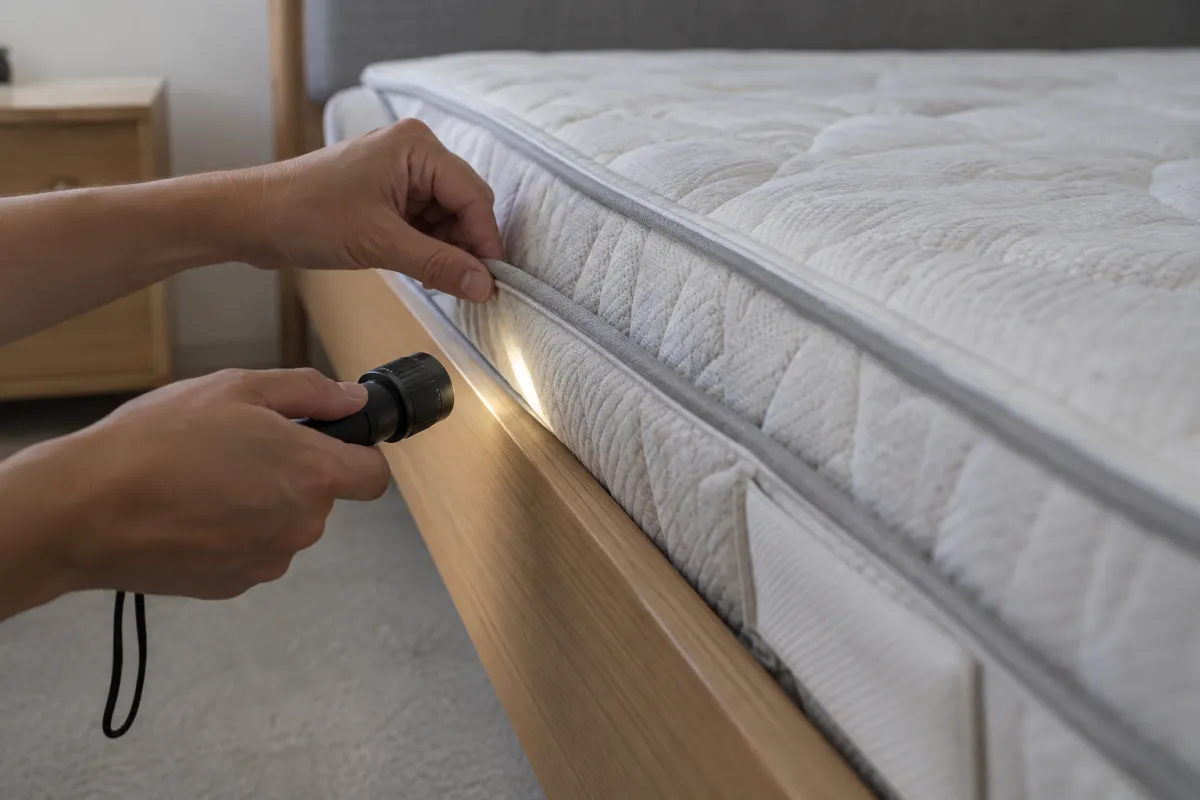
- small black or dark brown spots on mattress seams, the bed frame and headboard, which are droppings and smudge if wiped with a damp cloth
- small rusty or red smears on sheets and pillowcases
- pale, empty shed skins
- live bugs in mattress seams and piping, in the joints of the bed frame, behind the headboard, along skirting boards and around plug sockets near the bed
- a sweet, musty smell in heavier infestations
Bites on their own are not a reliable sign. Many people don't react to bed bug bites at all, and bites from other insects can look similar. If you have pets, it's worth ruling out fleas.
Bed bugs are not a sign of a dirty home. They arrive in luggage, clothing and second-hand furniture, and in blocks of flats they can move between homes through gaps in walls and floors and along pipework.
If you're a tenant
- Tell your landlord or letting agent in writing as soon as you suspect bed bugs. Include photos of what you've found and where. Reporting early makes treatment easier and gives a clear record of when the problem was first noticed.
- Keep sleeping in your usual bed. Moving to the sofa or another room often spreads bed bugs further through the flat.
- Don't throw out your mattress or furniture straight away. Carrying unwrapped items through stairwells and communal areas can spread bed bugs to other flats, and new furniture can be infested again if the bugs are still there. If something has to go, wrap it fully in plastic first.
- Avoid over-the-counter sprays. They can drive bed bugs into walls and neighbouring rooms, which makes professional treatment harder.
- Wash and dry what you can. Wash bedding and clothes at 60°C and tumble dry on a hot setting for at least 30 minutes, then keep them in sealed bags until treatment is finished.
If you're a landlord
- Respond quickly. Bed bugs rarely go away on their own, and in a shared building they can spread to other flats. The longer treatment is delayed, the more there usually is to treat.
- Arrange a professional inspection to confirm the problem and how far it has spread. In a block or a house in multiple occupation, it's often worth checking neighbouring rooms or flats at the same time, because treating one unit alone can leave a source next door.
- Give your tenant clear preparation instructions and agree access dates in advance. Treatment usually involves more than one visit, because eggs can hatch after the first.
- Keep records of reports, inspections, treatments and follow-up visits.
- Check between tenancies. Look over mattresses, bed frames and furnished items before new tenants move in, and be cautious with second-hand furniture. An empty flat is not automatically clear: bed bugs can survive for months without feeding.
Who is responsible for treatment?
There isn't one answer that fits every case. Responsibility usually depends on the tenancy agreement and the circumstances, such as:
- whether the bed bugs were present before the tenant moved in
- whether they have spread from another flat or a shared part of the building
- whether they appear to have arrived with the tenant's own belongings
- whether the property is let furnished, and who supplied the affected items
If you can't agree, your local council's environmental health or private housing team can advise, and many councils publish guidance on pests in rented homes. Whatever is decided about cost, it helps both sides to get treatment under way rather than let the infestation grow while the details are settled.
Preparing the flat for treatment
Good preparation makes a real difference to how well treatment works. Most treatments involve:
- bedding, curtains and clothing from affected rooms washed at 60°C, dried on hot and bagged
- clutter cleared from floors and from under beds, so edges and surfaces can be reached
- mattresses, carpets and skirting boards vacuumed, with the vacuum contents sealed in a bag and put in an outside bin straight away
- beds pulled slightly away from walls
- access agreed in advance for every room, and for any neighbouring flats being inspected
Your pest controller should give you instructions specific to the treatment being used, whether insecticide, heat or a combination, and tell you how long to keep out of treated rooms afterwards. You can read more about how treatment works on our bed bug removal page.
Whether you're a tenant or a landlord, if you think there are bed bugs in a flat, you can call Mighty Pest Control on 020 7112 8473 or use our contact page to arrange an inspection.