Bringing bed bugs home from travel and second-hand furniture
How to check a hotel room, protect your luggage, unpack safely at home and check second-hand beds and sofas before they come through the door.
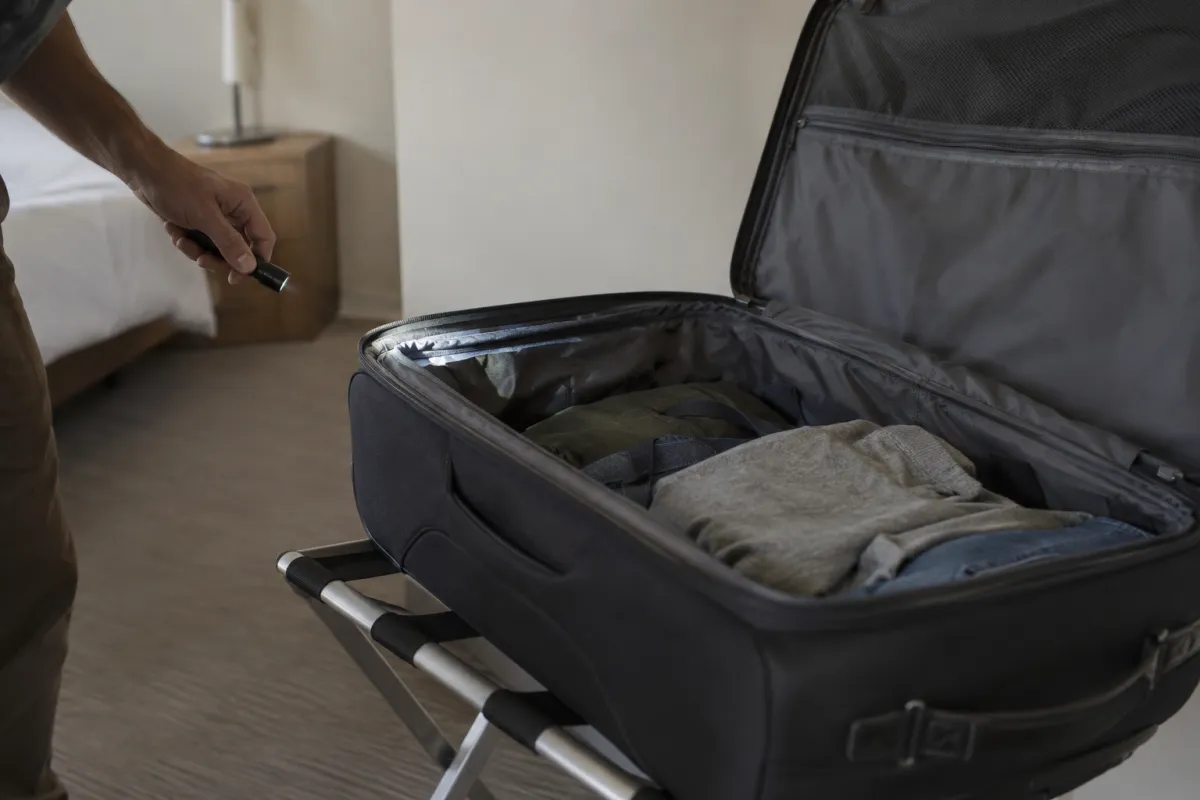
Most bed bug problems start with something carried in: a suitcase back from a trip, a bag from a hostel, or a sofa that seemed too good to pass up. Bed bugs can't fly or jump. They hitch a ride. A few habits when you travel, and a careful look before furniture comes through the door, stop most of them at the start.
Checking a hotel or holiday room
Do the check before you unpack, while the room is still tidy.
- Put your case in the bathroom first. A tiled floor with few hiding places is the safest spot while you look round.
- Pull back the sheets at the head end. Use your phone torch along the mattress piping, the labels and the corners, and down the sides of the base.
- Check the headboard. Bugs often gather behind it because it sits close to sleeping heads. If it's fixed to the wall, shine the torch down the gap.
- Look at the bedside tables. Check the joints, the drawer runners and any screw holes.
- Check the luggage rack. Look at the straps and where the legs join the frame, as cases from other guests sit there every week.
You're looking for live bugs, pale shed skins and clusters of small dark spots. If you find any, tell reception, show them a photo and ask for a different room. Ideally not one directly beside, above or below, because bugs move between neighbouring rooms.
Keeping your luggage safe while you stay
Even a room that looks clear can have a few bugs tucked away, so make your luggage hard to get into.
- Keep the case zipped and on the luggage rack, pulled a little away from the wall, or on a hard floor in the bathroom.
- Never put the case on the bed, and don't stack clothes on the floor or the spare bed.
- Live out of the case rather than the drawers and wardrobe.
- Keep worn clothes in a sealed bag inside the case, so they can go straight in the wash at home.
- Hard-shell cases have fewer seams for bugs to hide in than soft fabric ones.
The same goes for sleeper trains, coaches and hostels: keep bags closed and off the floor.
Unpacking when you get home
If you come home with bed bugs, the aim is to stop them reaching your bedroom.
- Unpack somewhere with a hard floor, such as the kitchen or hallway, not on the bed or bedroom carpet.
- Take the clothes straight to the washing machine, including ones you didn't wear. Wash at 60°C where the label allows, then tumble dry on a hot setting.
- Deal with what can't be washed. Dry items can go in the tumble dryer on hot for at least 30 minutes. Some things can be frozen instead: seal them in a bag and leave them for at least four days in a freezer running at -18°C.
- Check the empty case in good light, especially the zip tracks, seams, lining, wheel housings and handle channels. Vacuum it inside and out, and put the vacuum contents in a sealed bag in the outside bin.
- Store the case away from the bedroom. Under the bed is the worst place for it.
Second-hand beds, sofas and furniture
Some second-hand items carry far more risk than others. Beds, mattresses, divan bases, headboards, sofas and upholstered chairs come first, because bugs live in them. Bedside tables and wooden furniture with joints and cracks come next. Plain metal, glass or plastic pieces are low risk, but still give them a look.
Check before anything comes inside, ideally on the pavement or in the van.
- Turn it over. Many sofas and divan bases have a thin fabric cover underneath, and bugs love the space behind it. Look along the staples and the edges.
- Check the seams, piping and zips on cushions and mattresses, and the folds where the back meets the seat.
- Look into joints, screw holes and cracks in frames and drawers.
- Ask to see it in person before buying online, and check it in daylight. Photos won't show the seams.
Beds and sofas left on the street are best avoided altogether, however good they look. They're often there because someone was getting rid of a problem. Furniture that's been in a garage or storage unit isn't safe just because it's been empty. Adult bed bugs can go months without feeding.
If you think some came home with you
Keep sleeping in your own bed. Moving to another room just gives the bugs a second room to settle in. Keep anything from the trip that hasn't been washed sealed in bags.
Check the bed, headboard and furniture beside it every few days for the next few weeks. Eggs usually take one to two weeks to hatch, and young bugs are pale and tiny at first, so one clear check doesn't settle it. If you have itchy bites but haven't found any bugs, our guide to bed bug bites explains what else could be causing them. Our bed bug guide shows the hiding places to check, and our bed bug treatment page explains what's involved if you do find them.
If you find signs and want them checked, call us on 020 7112 8473.