Squirrel control in Barking and Dagenham
Survey and advice for grey squirrels in lofts, roofs and eaves, with a plan to stop the damage. We cover homes, rented properties and businesses across Barking and Dagenham, including Barking, Barking Riverside, Upney and Becontree.
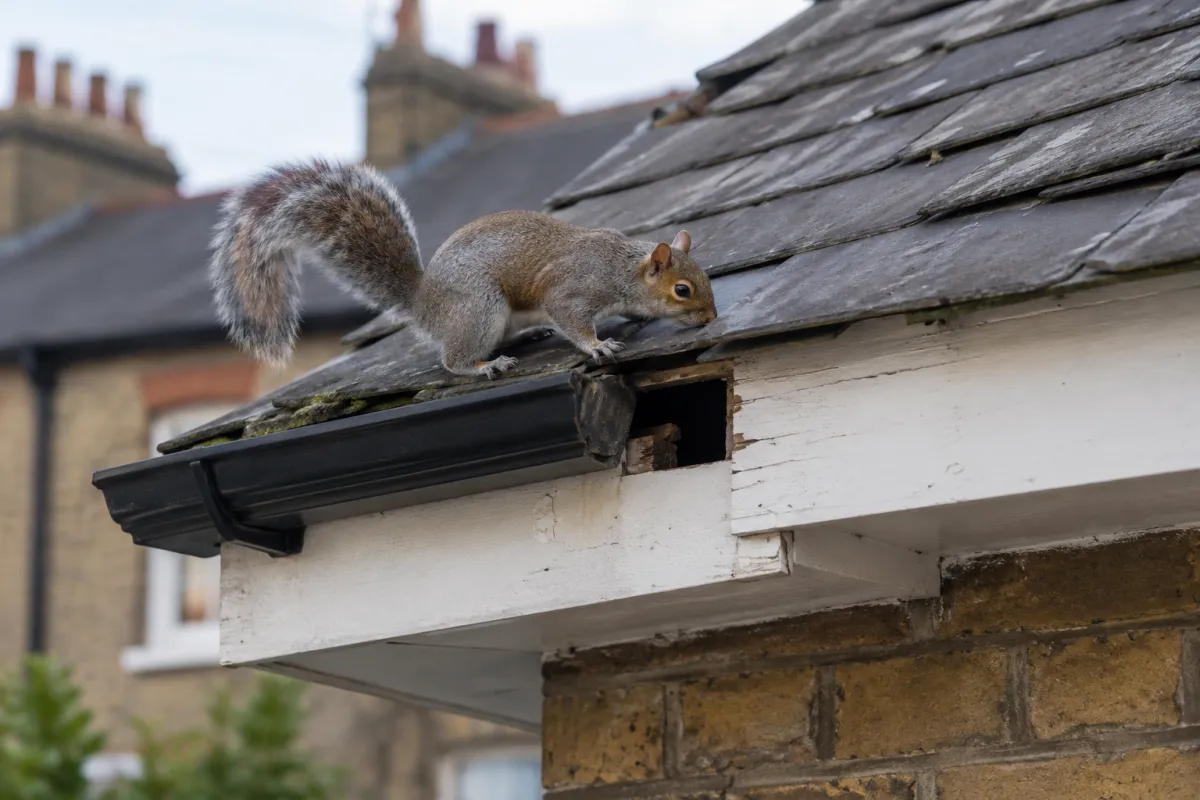
Where squirrels turn up in Barking and Dagenham
Victorian terraces and interwar cottage estates in Barking, Becontree and Dagenham
Continuous rooflines and shared lofts let squirrels enter at one weak eave and travel above several houses along the row.
Semi-detached houses with gardens in Chadwell Heath and Upney
Bird feeders, fruit trees and branches close to the roof draw squirrels into gardens and give them an easy route onto the house.
New apartment blocks in Barking town centre and Barking Riverside
Low-rise blocks with timber fascias and mature trees close by can let squirrels into the roof voids above top-floor flats.
Homes near parks and country parks in Dagenham, Becontree and Chadwell Heath
Mature trees in parks and along woodland edges support large squirrel populations that spread into the roofs of nearby homes.
Signs to look for
Daytime loft noise
Thumping, scratching and scampering overhead, mostly in the early morning and late afternoon. Rats and mice are usually heard at night instead.
Holes at the roofline
Chewed gaps in fascia boards, soffits or at the eaves, sometimes with fresh wood chips on the ground below.
Damaged loft contents
Shredded insulation, gnawed timber and stored boxes, and bulky nests made from insulation, leaves and paper.
Chewed cables and pipes
Stripped cable insulation or gnawed pipes in the roof space, which can create a fire or leak risk.
How it works
Tell us what you’ve seen
Call or email with the pest, the type of property and your postcode. A technician can explain the process before anyone visits.
Find the source
The visit starts with the signs: identifying the pest, where it is nesting and how it is getting in.
Treat the problem
Treatment uses professional-use products and methods chosen for the pest and the property, with clear safety advice.
Keep it from coming back
You get advice on proofing and hygiene. Businesses can choose one-off visits or a regular service programme.
Local pages in Barking and Dagenham
Further reading
Let’s talk about the problem.
Tell us what you’ve seen, the property type and your postcode.