Cockroaches in flats and tower blocks
Why blocks of flats suit cockroaches, why one flat can't be treated alone, and what residents, landlords and managing agents can each do.
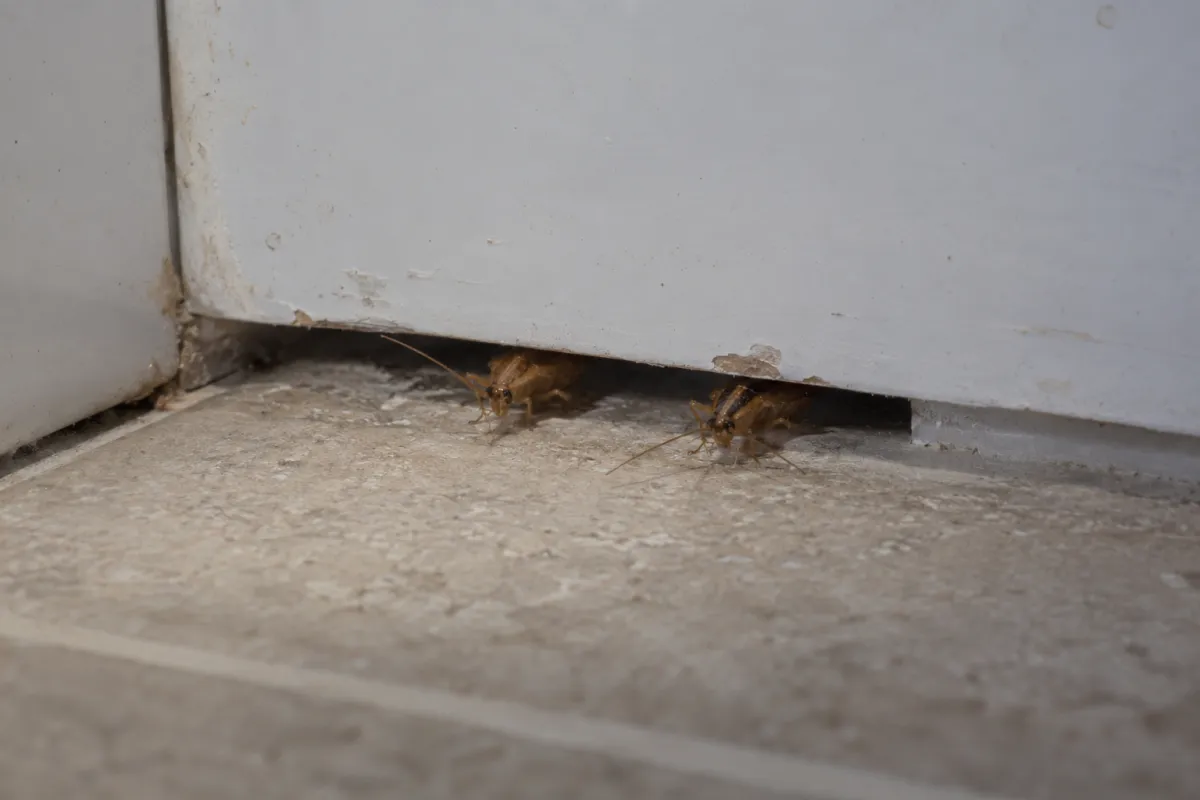
Cockroaches in a block of flats are rarely just one household's problem. The building itself gives them warmth, water and hidden routes from one home to the next, which is why a flat can be spotless and still get them, and why treating one flat on its own so often fails. This guide is for residents, landlords and managing agents.
Why blocks of flats suit cockroaches
In many blocks, kitchens and bathrooms are stacked above one another and share the same runs of pipework.
- Service risers and boxed-in pipes. The boxing in the corner of a kitchen or bathroom often hides a void that runs the full height of the building, linking every flat in the stack.
- Gaps where pipes pass through. Where waste, water and heating pipes go through floors and walls, the holes are often bigger than the pipes, leaving a gap a cockroach can walk through.
- Communal heating. Many estates have heating and hot water pipes that run warm all year, keeping ducts and voids at just the temperature German cockroaches like.
- Hidden voids. The spaces behind kitchen plinths, under baths and behind units connect to the pipe runs and are rarely cleaned or seen.
- Shared areas. Bin stores, refuse chutes and plant rooms offer food and shelter outside anyone's front door.
German cockroaches are the usual problem in the upper floors, because they follow warmth through the building. Oriental cockroaches are more often found in basement and ground-floor flats, coming up from drains and under-floor spaces. Our guide to German or Oriental cockroaches explains how to tell which you have.
Why treating one flat often isn't enough
If cockroaches are living in a riser or in the flats either side, treating one home only clears that home for a while. The ones nearby simply move back in. Worse, some sprays repel cockroaches. They can push the insects out of the treated flat into the neighbours', so the problem moves around the building rather than going away.
So treatment in blocks works best when it's planned around the building. Start with a survey of the affected flat and the ones above, below and either side, plus any sharing the same riser. Then treat every flat with cockroaches over the same few days.
What you can do in your own flat
You can't control the whole building, but you can make your flat harder to live in and harder to get into.
- Seal the gaps around pipes. Look under the sink, behind the washing machine and where pipes enter the boxing. Small gaps can be filled with a suitable sealant or filler. If you rent, ask your landlord first.
- Clean behind the plinths. Many kitchen plinths clip off. Vacuum the dust, crumbs and grease underneath, as this is a favourite feeding and hiding spot.
- Keep sinks and drains topped up. Run water into unused sinks and floor drains each week, and put plugs in at night if you live on a lower floor.
- Use sticky traps to keep track. Place a few under the sink, behind the fridge and near the boxing, and note the date and number caught.
Avoid using household sprays and bug bombs. They tend to push cockroaches deeper into the walls and next door.
Who to tell and what to record
Report cockroaches in writing to whoever manages your home: the council or housing association if you're a social tenant, your landlord or letting agent if you rent privately, and the managing agent if you're a leaseholder and the problem involves shared areas. Pests are one of the hazards councils can assess in rented homes, and your council's environmental health or housing team can advise if a report goes unanswered.
A short log makes your report much stronger:
- dates, times and rooms where you've seen cockroaches
- photos of live insects, droppings or egg cases
- sticky trap catches over a week or two
- whether neighbours have mentioned seeing them too
It also helps to talk to neighbours. Several reports at once make it clear the problem belongs to the building.
For landlords and managing agents
A joined-up plan usually works better than treating flat after flat as complaints come in.
- Survey by stack, not by complaint. Map which flats share risers and service runs, and check them together.
- Coordinate access. Write to residents in advance with the dates and simple preparation steps, such as emptying the cupboards under the sink. One missed flat can undo the rest.
- Include communal areas. Bin stores, chute rooms, plant rooms and basement voids need checking and, where needed, treating.
- Fix the building. Seal pipe penetrations and repair leaks and damaged drains. If fire-stopping or plumbing work is planned, it's a good time to close those gaps.
- Plan for follow-up and monitoring. Egg cases hatch after the first visit, so plan repeat visits and monitoring over the following months.
- Keep records of which flats were surveyed, treated or refused access, so you know where to look if cockroaches return.
Our cockroach control page explains what a treatment visit involves, and our cockroach guide covers prevention in more detail.
If you manage a block or live in one and need cockroaches looked at, call us on 020 7112 8473.