German or Oriental cockroach?
Size, colour, wings, nymphs, egg cases and where you found it. How to tell the two common cockroaches apart, and why it changes the treatment.
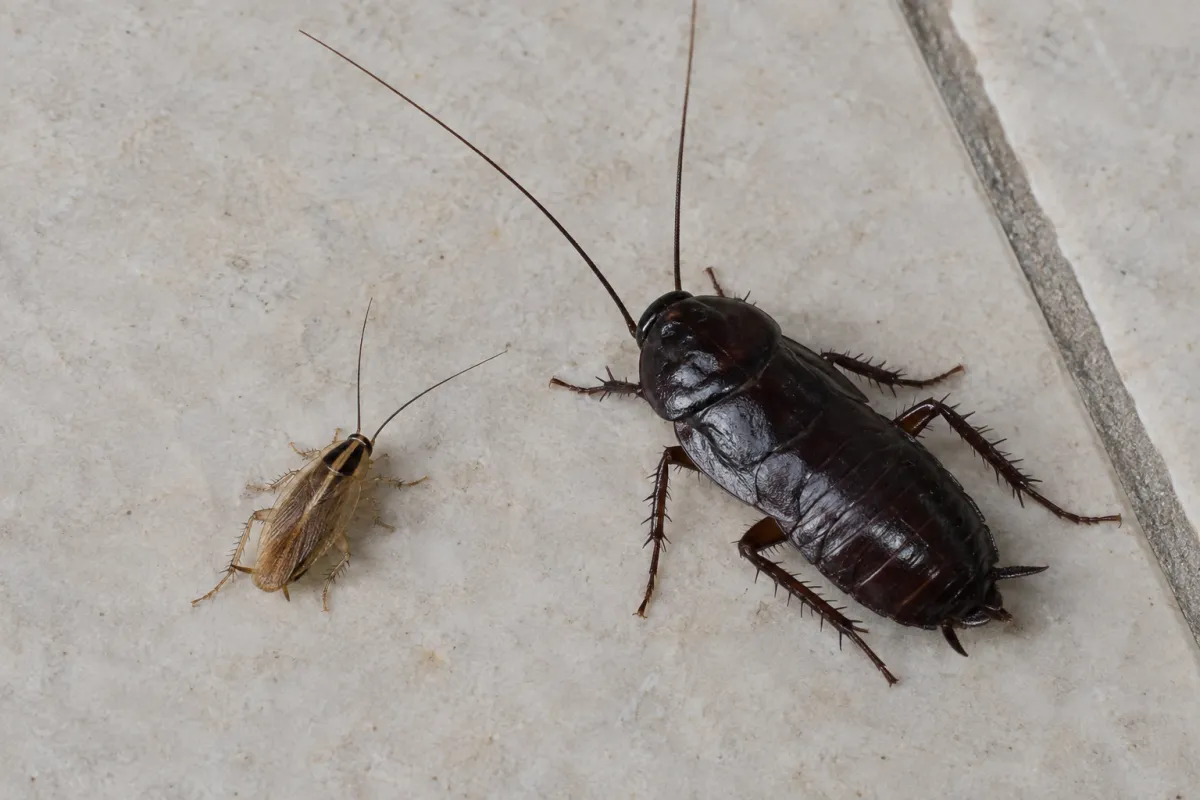
Almost every cockroach problem in East London homes and businesses comes down to one of two species: the German cockroach or the Oriental cockroach. They live in different places, breed at different speeds and come in by different routes, so knowing which one you have tells you where to look and which treatment will work.
The quick comparison
If you've got one in front of you, or in a clear photo, these points settle it most of the time.
German cockroach
- Small, around 10–15 mm, about the length of a fingernail.
- Light tan to yellowish-brown, with two dark stripes running lengthways on the shield behind the head.
- Both males and females have full wings that cover the body, though they rarely fly.
- Fast and jittery. It runs for cover the moment a light goes on, and can climb smooth surfaces such as tiles and glass.
Oriental cockroach
- Bigger, around 20–24 mm, and noticeably chunkier.
- Dark brown to almost black, with a glossy, oily shine.
- Males have wings that stop short of the tip of the body. Females have only small stubs, so they can look wingless. Neither can fly.
- Slow and sluggish, and can't climb smooth surfaces, which is why they end up stuck in baths and sinks.
Look at the young and the egg cases
Nymphs and egg cases are often easier to find than adults.
German nymphs are small, dark brown to almost black, with a single pale stripe down the middle of the back. People often mistake them for a different insect. Seeing them means German cockroaches are breeding.
Oriental nymphs look like small versions of the adults, dark reddish-brown to black and wingless.
German egg cases are light brown, about 6–9 mm long and ridged like a tiny purse. The female carries hers sticking out from the end of her body until the eggs are almost ready to hatch. If you see a cockroach carrying one, it's almost certainly German.
Oriental egg cases are darker, reddish-brown to black and around 10 mm long. The female drops or glues hers in a sheltered spot near food, usually within a day or two of forming it. They can take around two months to hatch, longer when it's cool. That's one reason Oriental nymphs can keep appearing long after the adults have gone.
Where you found it is a big clue
Even without a good look at the insect, the place and time often give it away.
- High up, warm and inside things. Behind the fridge, inside the microwave, under the hob, in the dishwasher's kick plate or in an upper cupboard. That's German behaviour. They live where warmth and food are close together, at any height and on any floor of a block.
- Low down, cool and damp. Around floor drains, under the bath panel, in the cellar, on a ground-floor kitchen floor at night, or stuck in the bath. That's Oriental behaviour. They stay at ground level and come up from drains and under floors.
- Season. German cockroaches are seen year-round in heated rooms. Oriental adults are seen most from late spring through summer, often wandering in under a back door on warm evenings.
Other cockroaches you might come across
A few other species turn up now and then.
- Tawny and dusky cockroaches. Small native species that live outdoors in leaf litter, woodland and gardens in southern England. One may wander or fly in during summer, but they don't breed indoors and aren't an infestation.
- American cockroach. Large, around 40 mm, reddish-brown, with a pale yellowish band around the edge of the shield behind the head. It's occasionally found in heated buildings, ducts and sewers, but it's uncommon here.
- Brown-banded cockroach. Small, like a German, but with two pale bands across the body instead of stripes behind the head. It's rare in the UK.
Our cockroach guide has more on the American and brown-banded species.
Why the species changes the treatment
German cockroaches breed fast, and the female keeps her eggs protected until they hatch. Treatment focuses on the many small, warm hiding places inside a kitchen: hinges, unit voids, appliance casings and the gaps around pipework. Lots of small bait placements work better than a few large ones, and follow-up visits are part of the plan from the start. They also arrive in deliveries and second-hand appliances, so check what comes in.
Oriental cockroaches are slower to build up, but harder to cut off at the source. Treatment concentrates at ground level: drains, floor gullies, under-floor voids, the base of walls and the gaps around waste pipes. Repairing a broken drain or sealing gaps where pipes come through the floor matters as much as the insecticide. Because their egg cases hatch over a long period, monitoring needs to run for longer.
In blocks of flats, both species can spread between homes, so how the building is linked up matters too. Our guide to cockroaches in flats and tower blocks covers that. For what a treatment visit involves, see our cockroach control page.
If you're still not sure which you have, catch one on a sticky trap, take a clear photo beside a coin and call us on 020 7112 8473.