Cluster flies in lofts and windows
Why cluster flies gather in lofts and upper windows every autumn, whether they're a problem, and what helps keep their numbers down.
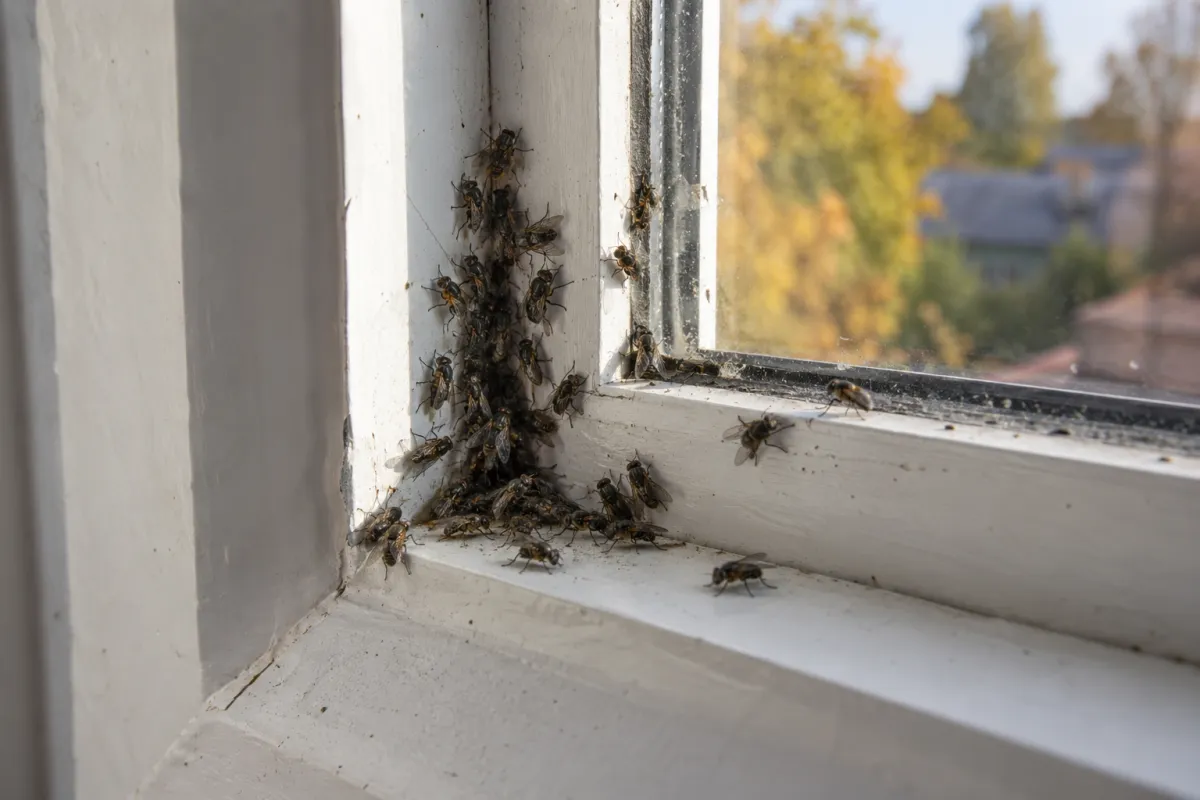
If dozens of slow, dull flies gather at a loft or bedroom window every autumn, or crawl out sleepily on a sunny day in February, you're almost certainly dealing with cluster flies. They don't breed indoors and aren't attracted to food or rubbish, so the usual advice about bins and drains won't help. They're simply using your house as a place to spend the winter.
How to recognise cluster flies
- a little larger than a house fly, at around 8 mm long
- dark grey, with fine golden hairs on the thorax that can rub off on older flies
- wings that overlap neatly over the back when resting, where a house fly's sit slightly apart
- slow, clumsy flight, often buzzing at the glass or spinning on their backs on the windowsill
- gathered in groups in corners, around window frames, in the loft and around light fittings in upper rooms
A large mass of them can give off a faint, sweetish smell.
Why they choose your house
Cluster flies spend the summer outdoors. Their larvae live in the soil and feed on earthworms, so the flies are most common near lawns, parks, playing fields and open grassland. Homes beside green space tend to see the most.
From late August into October, the adults look for somewhere sheltered to spend the winter. They're drawn to walls that catch the afternoon sun, usually south- and west-facing, and often to taller buildings that stand out. They crawl in through tiny gaps at the eaves, under tiles, around window frames and through air vents, then settle in lofts, wall voids and unused rooms. The same houses tend to be chosen year after year.
On mild days in winter and early spring, the flies wake up, head for the light and end up at the windows of the rooms below, often coming through gaps around the loft hatch and ceiling lights. In spring the survivors try to get back outside.
Are they a problem?
Cluster flies aren't a hygiene risk in the way house flies and bluebottles are, because they don't breed or feed indoors. The problems are:
- the numbers, which can run to hundreds or even thousands in one loft
- flies crawling into bedrooms and loft conversions on mild days
- heaps of dead flies in the loft and on sills, which can attract larder beetles and carpet beetles that feed on dead insects
- the smell of a large cluster
What you can do
- Vacuum them up. Empty the bag or canister into an outside bin straight away, or live flies may crawl back out.
- Clear away the dead. Vacuum dead flies from the loft, sills and window tracks at the end of winter, so there's nothing left for beetles to feed on.
- Stop them coming down. Fit a draught strip around the loft hatch. Gaps around ceiling roses, downlights and pull cords in top-floor rooms are common routes too, but sealing around electrical fittings is a job for an electrician.
- Fit screens. Fly screens on loft and upper windows you open in late summer keep some out.
- Seal what you can around window frames and at the eaves in late summer, before they arrive. You won't close every gap in a roof, so this reduces numbers rather than stopping them.
- Use a light trap. An electric fly killer can help in a loft room where flies keep appearing, as they head for light.
Don't spray household insecticide over loft insulation or stored belongings. If you use a fogger or smoke product, read the label first and keep it well away from boilers, pilot lights and smoke alarms.
When professional treatment helps
If large numbers come back every year, treating the roof space in autumn, once the flies have settled, can knock down the cluster before it spreads into the house. This is usually done with an insecticide smoke or fog, so the loft needs to be accessible and anything stored there covered. It won't stop new flies arriving the following year, but an annual treatment alongside some proofing keeps numbers down.
The fly control page explains how different flies are identified and treated, and our guide to flies covers the common species. If your flies are tiny and gathering in the kitchen rather than the loft, see our page on fruit flies and drain flies.
If cluster flies fill your loft every autumn, call Mighty Pest Control on 020 7112 8473.