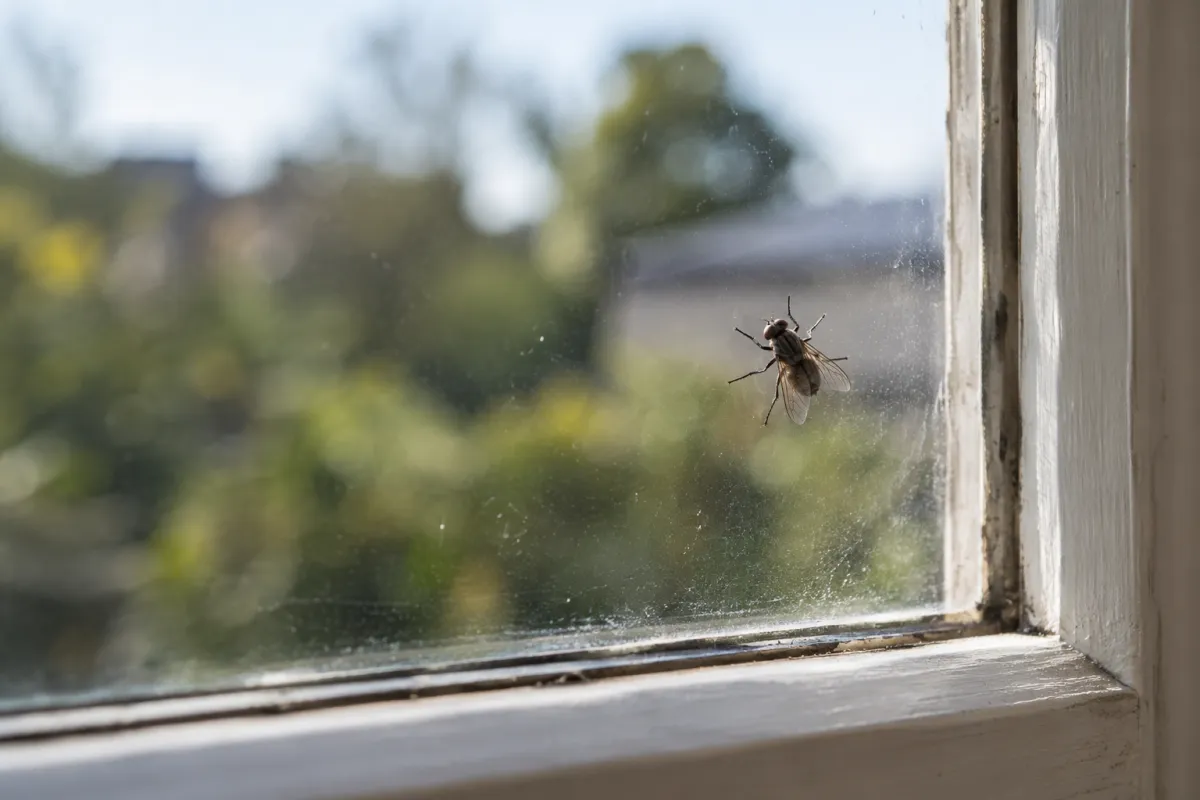
Flies are a family of two-winged polluters that are too often tolerated in our homes.
How flies contaminate food
Apart from the biting flies, all species feed by vomiting saliva onto the surface of food and sucking up the resulting liquid. As it does so, the fly contaminates the food with bacteria from its gut and its feet.
This means flies may transmit food poisoning, dysentery, typhoid or cholera in countries where these diseases occur. Flies may also carry the eggs of parasitic worms.
Why control flies
- Contamination: flies may transfer bacteria from waste or faeces to clean areas or food.
- Nuisance: flies may spread out from their main breeding areas, such as waste sites, and come into homes in large numbers. This may distress residents.
- Business reputation: flies in food premises may lose you customers.
- Legal action: a number of flies in premises may result in enforcement action by an Environmental Health Officer.
Common flies
Cluster flies
Cluster flies are dark greyish flies, about 8 mm long, with yellowish hairs on the back and overlapping wings.
- In autumn, they gather in large numbers in the upper rooms or roof spaces of houses to hibernate.
- A mass of cluster flies has a characteristic smell.
- They are sluggish in flight and a nuisance in the house.
- The larvae of one species are parasites of certain earthworms, so this species is more common in rural areas.
Our guide to cluster flies in lofts and windows goes into more detail.
Bluebottles
The bluebottle is a large, buzzing fly with a shiny, metallic blue body, 6–12 mm long.
One bluebottle can lay up to 600 eggs. In warm weather, these hatch in under 48 hours and produce maggots that can be fully developed in a week. The maggots burrow into meat or carrion as they feed on it, then pupate, often in loose soil, for about ten days before emerging as adult flies from the brown pupal case.
Like other flies, bluebottles are often found around rubbish tips, rotting animal matter, dirt and dustbins. They travel from filth to food and carry bacteria on their legs, feet and bodies.
Blow flies
Blow flies are so called because they were believed to "blow" their eggs or larvae onto exposed meat. They all like sunlight, they are all attracted to meat or carrion, and they may all be found around dustbins in hot summer weather.
Their feeding habits (they vomit onto food to soften it up) and their dirty feet infect food, especially meat products, as they feed or look for places to lay their eggs.
Their Latin names show their habits. Calliphora vomitoria, Sarcophaga carnaria and Cynomya cadaverina are just three members of the group with a great capacity for transmitting the bacteria that cause food poisoning.
How to get rid of flies
Use a trained professional pest controller. Our fly control service explains what's involved.