Fruit flies and drain flies in the kitchen
How to tell fruit flies from drain flies and fungus gnats, find where they're breeding, and clean it properly so they stop coming back.
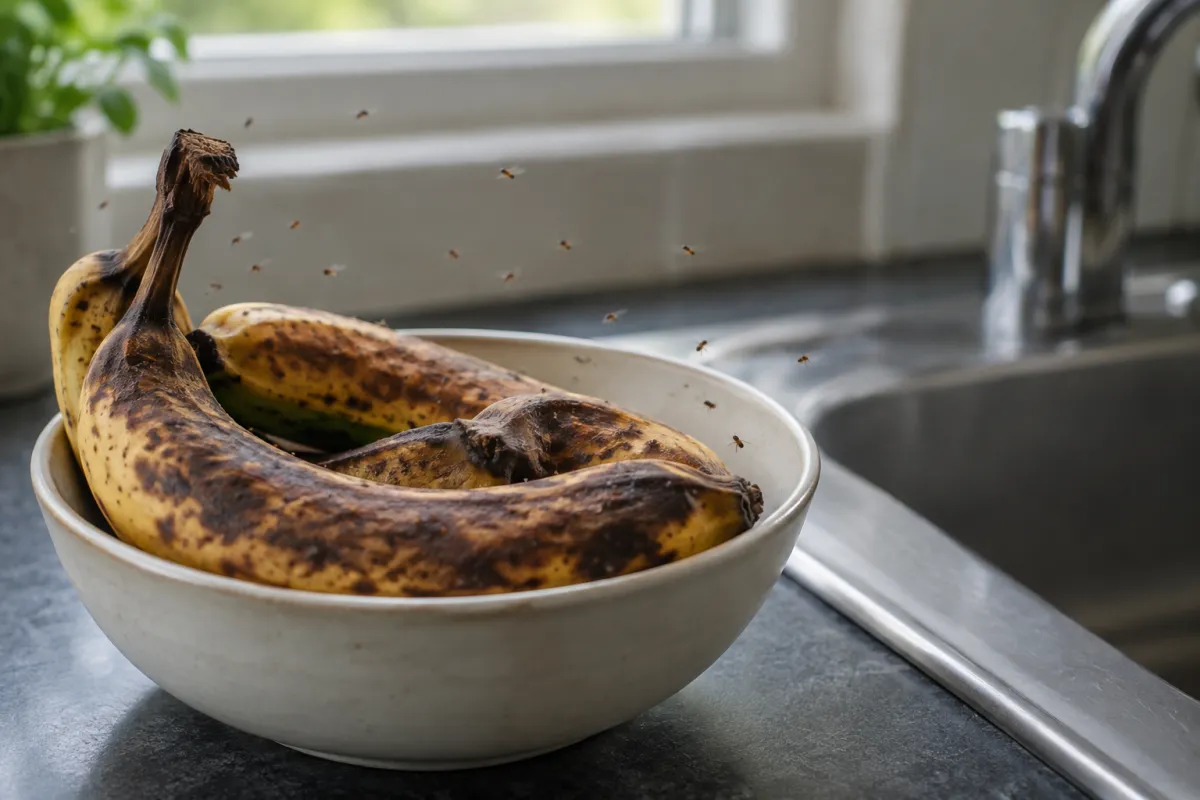
Tiny flies circling the fruit bowl or resting on the bathroom tiles are one of the most common summer pest questions. Most turn out to be fruit flies or drain flies, two small flies that breed in very different places. Spraying the adults does little, because a fresh batch is hatching somewhere nearby every day. Work out which fly you have, find where it's breeding and clean that spot properly, and the problem usually stops within a week or two.
Which fly is it?
- Fruit flies are about 3 mm long and tan or light brown, with bright red eyes. They hover slowly around fruit, wine glasses, the recycling and the food caddy.
- Drain flies, also called moth flies, are about 2–4 mm long, grey and fuzzy, with broad hairy wings held like a roof over the body, so they look like tiny moths. They rest on walls near sinks, baths and showers and make short, hopping flights.
- Fungus gnats are slim and dark, with long legs, and hang around houseplants. They breed in damp compost, so letting the top of the compost dry out between waterings usually deals with them.
- Scuttle flies are small, humpbacked flies that tend to run across surfaces rather than fly. They breed in rotting organic matter, and if they keep appearing from the floor, a broken drain underneath can be the source.
Where fruit flies breed
In a warm kitchen, a fruit fly can go from egg to adult in around ten days, and each female lays hundreds of eggs. They breed in anything sugary or starchy that's starting to ferment, so check:
- ripe and overripe fruit, including the bottom of the fruit bowl
- potato and onion sacks, where one rotten potato can keep them going
- bottles and cans in the recycling with a little juice, wine or beer left in them
- the food caddy, its lid and the bin it sits in
- spills under the fridge and cooker and around the bin
- damp mops, sponges and dishcloths
Fruit flies also arrive as eggs on fruit and vegetables from the shops, so in summer it helps to keep ripe fruit in the fridge.
Once you've cleared the source, catch the remaining adults with a little cider vinegar and a drop of washing-up liquid in a jar or saucer. The vinegar draws them in and the washing-up liquid breaks the surface, so they sink. Refresh it every few days.
Where drain flies breed
Drain fly larvae live in the slimy film that builds up inside sink and shower drains, bath and basin overflows, floor gullies, and anywhere water sits with organic matter, such as under a leaking pipe.
To find which drain they're coming from, cover each plughole overnight with clear sticky tape, sticky side down. Flies coming up from that drain will be stuck to the tape in the morning.
Then clean it properly:
- Remove the plug, strainer or trap cover and clear out hair and debris.
- Scrub the inside of the pipe and the overflow with a long, stiff drain brush to break up the film.
- Flush through with plenty of hot water.
- Use an enzyme or bacterial drain cleaner as directed, over several nights, to break down what the brush missed.
Bleach and caustic cleaners tend to run straight through without clearing the film, so the flies keep coming. Run water through unused basins, showers and floor gullies every week or so, so the traps don't dry out.
If flies keep appearing after a thorough clean, there may be a cracked pipe, a leak under the floor or a problem further along the drain, which needs a plumber or drainage contractor.
In cafés, bars and commercial kitchens
Small flies are a common problem in food businesses. Bar drip trays, glass washers, crates of empties, floor gullies under the cooking line and the space under heavy equipment are typical breeding sites. Clean gullies, drains and drip trays as part of the daily close-down, store empties away from the bar and get outside bins emptied regularly. Electric fly killers with glue boards help show whether numbers are falling.
The fly control page explains how flies are identified and their breeding sites traced, and our guide to flies covers the common species. If the flies are larger and slower and gather at upper windows in autumn, our page on cluster flies will be more useful.
If small flies keep coming back after you've cleaned, call Mighty Pest Control on 020 7112 8473.