Flour mites and other food cupboard pests
Mites, beetles, weevils and booklice in dry food: how to tell them apart, clear out an infested cupboard and store food so they can't return.
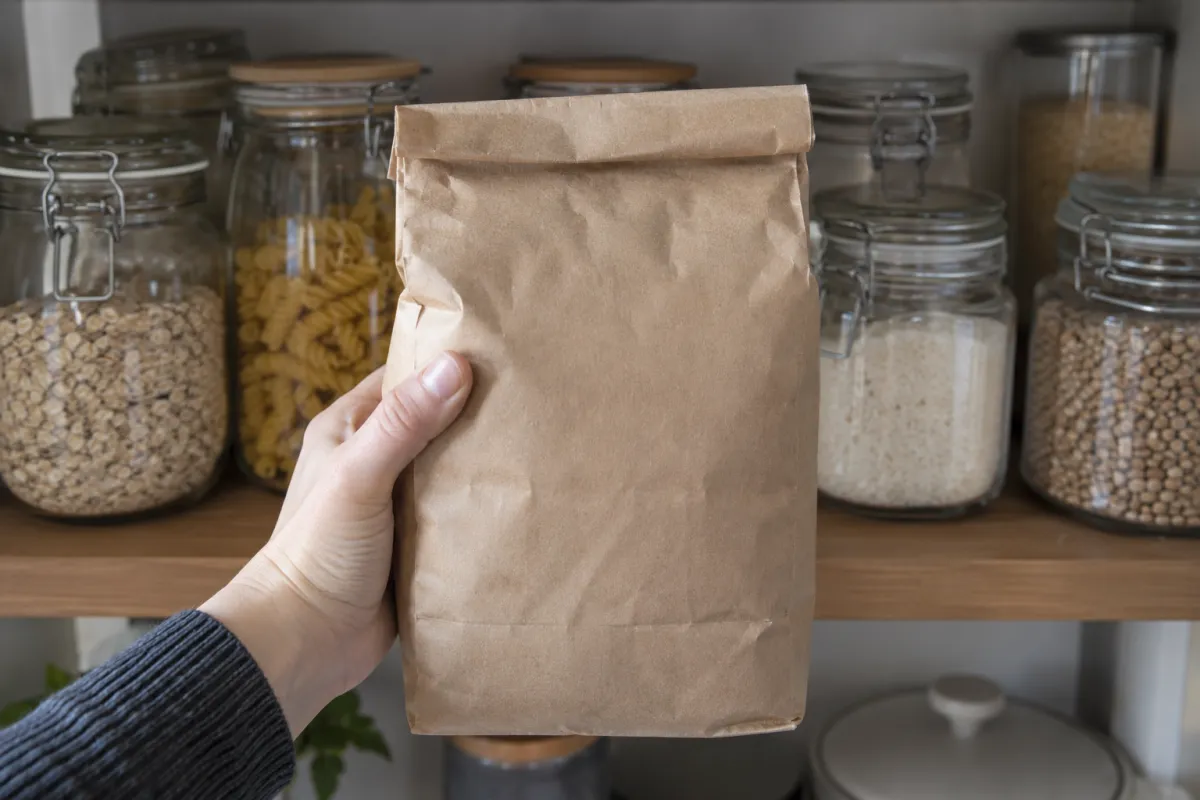
Find something moving in the flour, the rice or the cereal box and the first job is working out what it is. Several different pests live in dry food, and they don't all mean the same thing. Knowing which you have tells you how far to go with the clear-out.
Telling the cupboard pests apart
Flour mites
Barely visible pale specks that, in numbers, look like moving dust, often with a minty smell. They need damp, so they point to food that's picked up moisture.
Biscuit beetles
Small, oval, reddish-brown beetles around 2–3 mm long, with the head tucked down so it's hard to see from above. They eat almost anything dry: flour, biscuits, pasta, spices, dried herbs, stock cubes and pet food. The larvae chew neat, round holes through packaging. Adults fly, so you'll often find them on the kitchen windowsill.
Saw-toothed grain beetles
Slim, flat, dark brown beetles about 3 mm long, with six tiny teeth along each side of the body just behind the head. They feed on cereals, oats, dried fruit, nuts and chocolate, and are good at squeezing into packets through folds and gaps.
Weevils
Dark brown beetles 3–4 mm long with a distinct snout. Their larvae grow inside whole grains, so they're found in rice, wheat and whole pulses. Look for grains with small, round exit holes. Grain weevils can't fly. Rice weevils, which have four faint orange patches on the back, can.
Flour beetles
Reddish-brown, flattened beetles around 3–4 mm long. They're more often a problem in bakeries and food stores than in homes. Heavily infested flour turns greyish and develops a sharp, unpleasant smell.
Spider beetles
Small, round, shiny beetles with long legs that make them look like tiny spiders. They scavenge on spilt food and debris, often in older buildings, and can wander into cupboards from under floors.
Booklice and pantry moths
Booklice are tiny, pale, soft-bodied insects that scuttle quickly over damp packets and shelves. They feed on mould, so they're a sign of damp rather than a food pest. If you're finding silk webbing, caterpillars or small moths, see our guide to pantry moths.
Where they come from
Most cupboard pests arrive in food. Eggs or a few insects can be in a packet before you buy it, especially in flour, rice, spices and dried fruit. Bulk sacks, bird seed and dry pet food kept in a garage or shed are common sources too.
Once inside, they spread from packet to packet. They also build up in places you rarely clean: spilt flour under a shelf lip, crumbs in the shelf-peg holes, the gap behind the bottom shelf and the space under the cupboard base behind the plinth. If you clear out the food but leave those spots, insects can keep appearing for weeks.
Clearing out an infested cupboard
Do it all in one go. A half clear-out just moves the problem to the next shelf.
- Empty the cupboard completely, and the ones either side. Check every item, including sealed packets, tins with paper labels, tea, chocolate, dried chillies and decorative jars.
- Bin anything infested. Look for live insects, holes in packaging, webbing, clumping, dust or an odd smell. Seal it in a bag and put it straight in the outside bin.
- Freeze anything you're unsure of. A week in the freezer kills insects and eggs in dry goods you want to keep. Check them again once they've thawed.
- Vacuum every corner, especially the shelf-peg holes, hinge recesses, the underside of shelf edges and the gap at the back. Lift the plinth if you can, and vacuum underneath.
- Wipe down with warm, soapy water and let the cupboard dry fully with the doors open. For flour mites, getting the cupboard dry matters more than anything else.
You don't need to spray insecticide in a food cupboard yourself. If insects keep turning up after a thorough clear-out, the source may be outside the cupboard, such as old spillage under the units, a forgotten bag of bird seed or damp in the wall.
Storing food so they can't get going again
- Use rigid, airtight containers with a seal, such as glass jars or clip-top boxes. Beetle larvae can chew through paper, card and thin plastic bags.
- Buy amounts you'll use within a couple of months, and use older stock first.
- Check new packets before they go in the cupboard, and decant bulk bags into containers straight away.
- Keep dry food away from steam and cold walls. Cupboards beside the kettle or cooker, or on a cold outside wall, are where damp builds up.
- Store pet food and bird seed separately in sealed bins, not in the same cupboard as your own food.
- Fix damp at its source, such as a leaking pipe or condensation, if a cupboard keeps feeling damp.
Food stores, bakeries and warehouses have the same pests on a bigger scale. Our stored product insects page lists the species we deal with, and our mites control page explains how these problems are assessed and treated.
If cupboard pests keep coming back after a clear-out, call us on 020 7112 8473.