Bird control in Havering
Survey and advice for pigeons fouling ledges, roofs, balconies and shopfronts, with a quote on request. We cover homes, rented properties and businesses across Havering, including Romford, Gidea Park, Hornchurch and Elm Park.
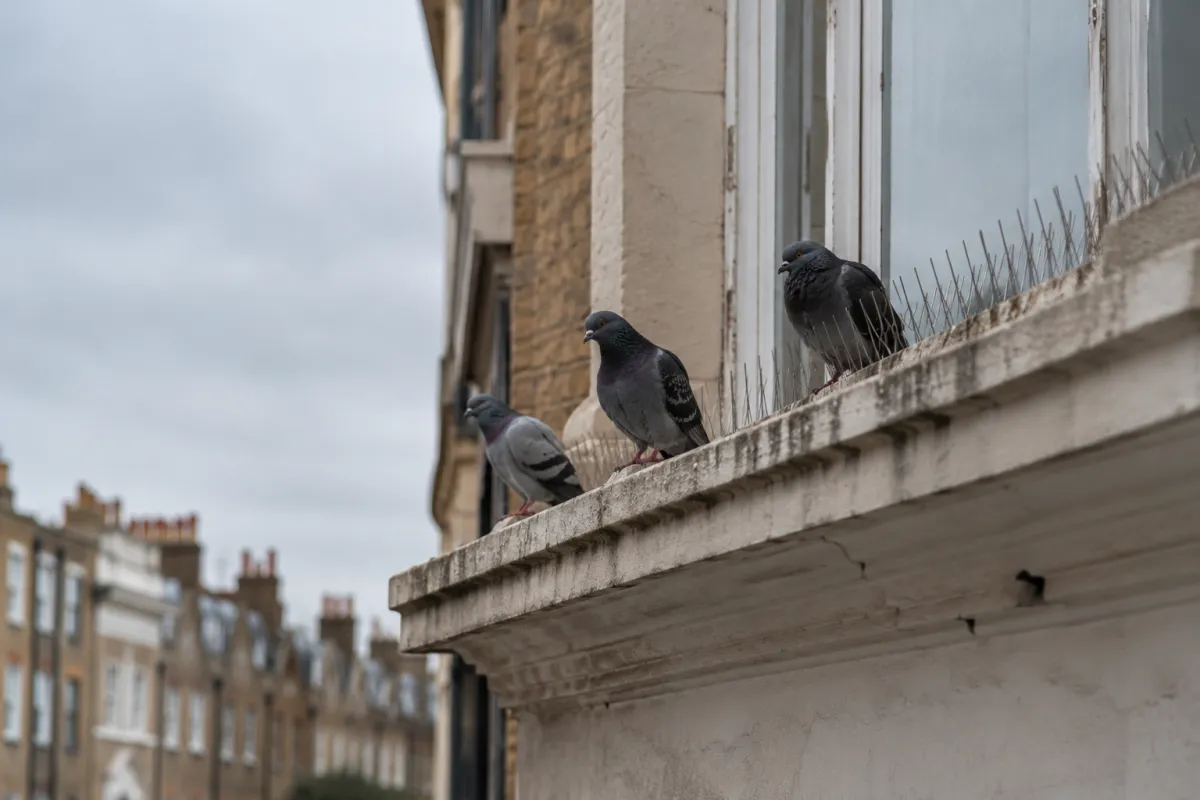
Where birds turn up in Havering
Detached and semi-detached houses with gardens in Upminster, Hornchurch and Gidea Park
Seed spilled from bird feeders and nesting space under solar panels draw pigeons to suburban homes and their gardens.
Interwar and post-war terraced houses in Harold Hill, Collier Row and Elm Park
Chimney stacks, missing roof tiles and gaps at the eaves let pigeons roost on older houses and nest inside, blocking gutters with droppings.
Market stalls, shopping centres and high streets in Romford and Hornchurch
Shop signs, canopies, ledges and warehouse roofs give pigeons places to perch, leaving droppings on shopfronts, pavements and deliveries below.
Restaurants, bars and takeaways in Romford, Hornchurch and Upminster
Spilled food around markets, takeaways and outdoor seating attracts pigeons in numbers, and droppings near entrances and deliveries are a hygiene concern.
Homes near marshes and river valleys in Rainham, Elm Park and South Hornchurch
Bridges, wharves and waterside buildings offer pigeons and gulls ledges and girders to roost on, with droppings collecting on walkways below.
Homes near country parks and farmland in Harold Hill, Collier Row and Upminster
Places where people regularly feed birds draw large flocks of pigeons, which then roost and nest on the buildings nearby.
Signs to look for
Droppings building up
Droppings collecting on window ledges, signs, balconies or the pavement below a favourite perch.
Nesting material
Twigs, feathers and debris in gutters, on ledges, behind signs or under solar panels.
Birds roosting
Pigeons gathering in the same place every day, especially under bridges, canopies and roof overhangs.
Noise in the roof
Cooing, scratching or fluttering in the roof space or behind cladding, which can mean birds are nesting inside.
How it works
Tell us what you’ve seen
Call or email with the pest, the type of property and your postcode. A technician can explain the process before anyone visits.
Find the source
The visit starts with the signs: identifying the pest, where it is nesting and how it is getting in.
Treat the problem
Treatment uses professional-use products and methods chosen for the pest and the property, with clear safety advice.
Keep it from coming back
You get advice on proofing and hygiene. Businesses can choose one-off visits or a regular service programme.
Local pages in Havering
Further reading
Let’s talk about the problem.
Tell us what you’ve seen, the property type and your postcode.