Cockroach control in Newham
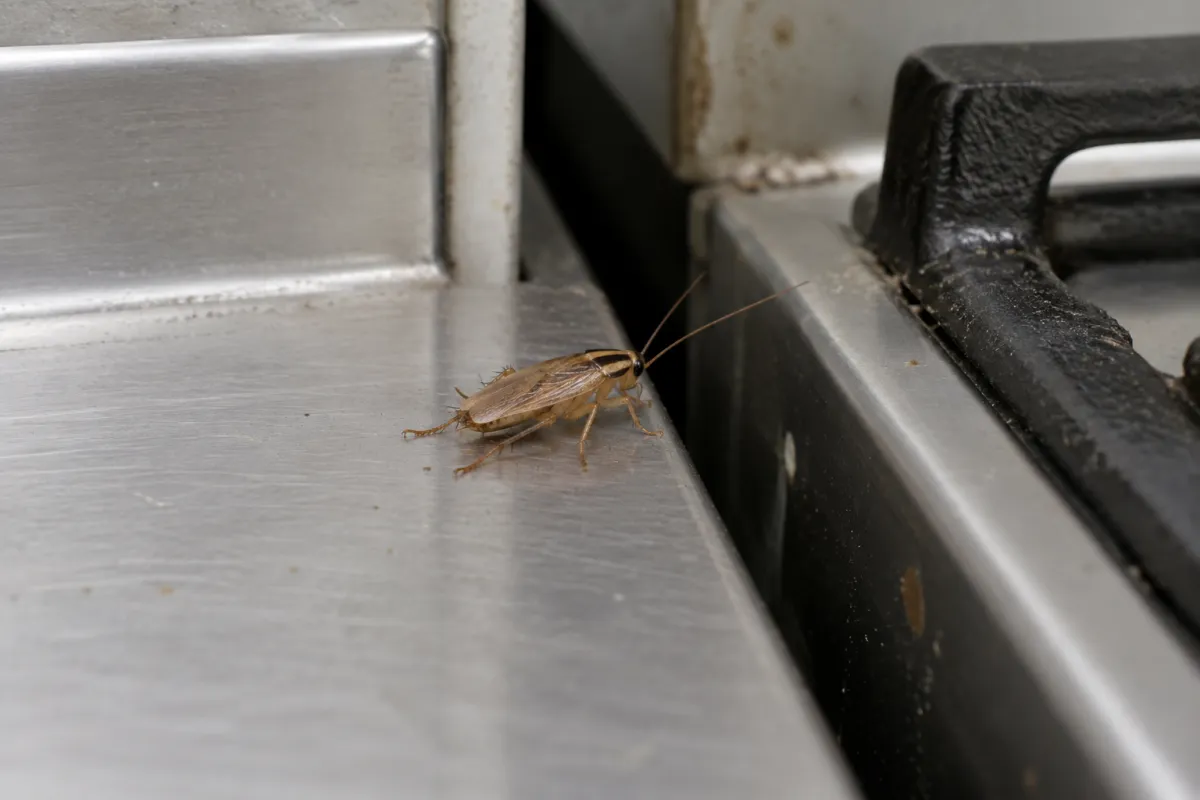
Identify and treat German and Oriental cockroaches in kitchens, flats, blocks and food premises. We cover homes, rented properties and businesses across Newham, including Forest Gate, Manor Park, Little Ilford and East Ham.
Where cockroaches turn up in Newham
Victorian and Edwardian terraced streets in Forest Gate, Manor Park and East Ham
Warm spaces behind kitchen units, old pipework and gaps under floorboards let cockroaches settle in older houses and spread between neighbouring kitchens.
New-build apartment blocks in Stratford, Canning Town and the Royal Docks
Heating ducts, service risers and pipe runs connect kitchens on different floors, which is why cockroaches in one flat often affect the whole block.
Shared houses and rented flats in Plaistow, Upton Park and Stratford
Shared kitchens, frequent tenant changes and second-hand appliances can bring cockroaches into shared houses and keep them there without a coordinated treatment.
Food shops, restaurants and market stalls in Green Street, Queen's Market and East Ham
Commercial kitchens offer the warmth, moisture and food waste cockroaches need, and a single sighting can lead to complaints or an environmental health visit.
Dockside and riverside developments in Silvertown, Beckton and Canning Town
Sewers and drains support Oriental cockroaches, which can reach ground-floor rooms and basements through damaged drains and gaps around waste pipes.
Signs to look for
Insects at night
Cockroaches scattering when a light is switched on, especially in kitchens and bathrooms. Seeing them in daylight often means a larger population.
Dark droppings
Tiny dark specks like ground pepper from German cockroaches, or larger cylindrical droppings from Oriental cockroaches, along shelves and hinges.
Egg cases
Small, brown, purse-shaped egg cases in cracks and behind units, or carried by female German cockroaches until the eggs are ready to hatch.
Shed skins
Pale, empty skins left behind as young cockroaches grow, often near warm motors, boilers or pipework.
How it works
Tell us what you’ve seen
Call or email with the pest, the type of property and your postcode. A technician can explain the process before anyone visits.
Find the source
The visit starts with the signs: identifying the pest, where it is nesting and how it is getting in.
Treat the problem
Treatment uses professional-use products and methods chosen for the pest and the property, with clear safety advice.
Keep it from coming back
You get advice on proofing and hygiene. Businesses can choose one-off visits or a regular service programme.
Local pages in Newham
Further reading
Let’s talk about the problem.
Tell us what you’ve seen, the property type and your postcode.