Rats in drains and how they get into homes
Rats indoors with no obvious way in often come from the drains. How they get in, the signs to look for and how drain faults are found and fixed.
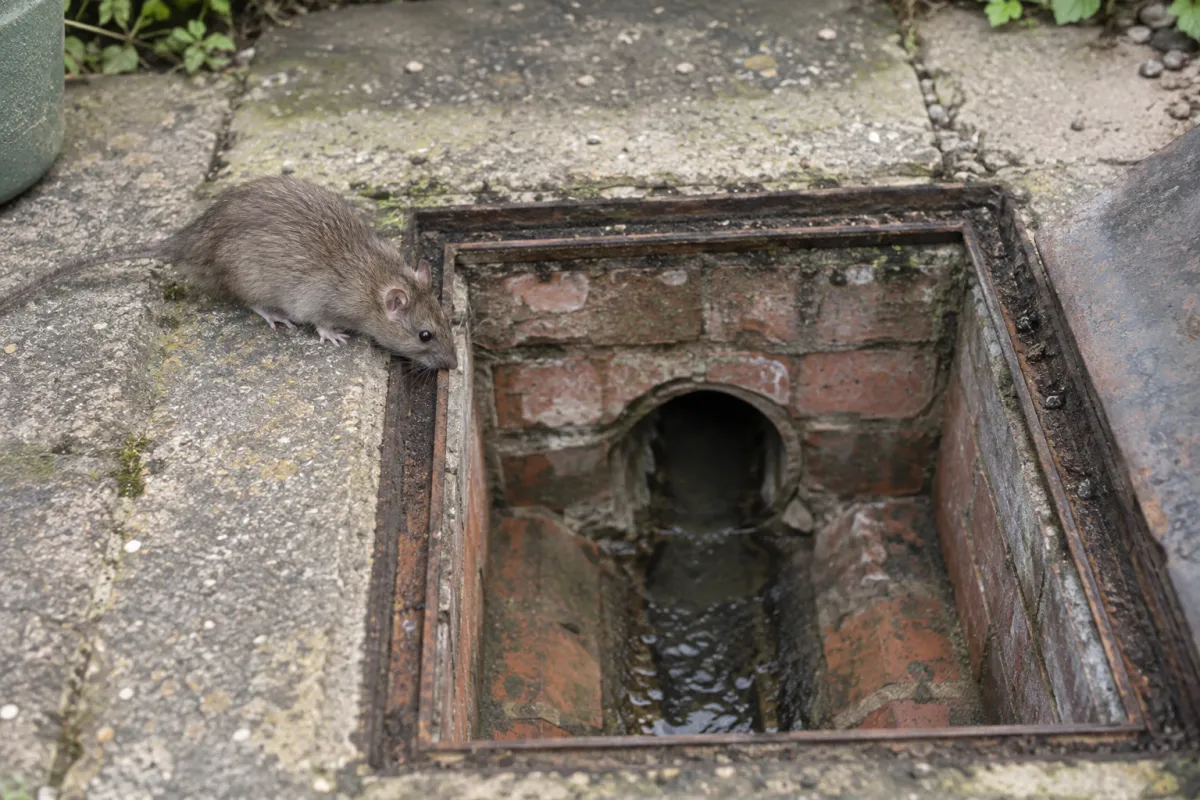
If rats keep turning up indoors and you can't find a gap in the walls, doors or air bricks, the drains are the usual suspect. Brown rats live in the sewers under East London's streets, swim well and climb inside pipes. A crack, a loose joint or a pipe left open after building work is all they need to get from the sewer into your drain, and from there under your floor.
How your drains connect to the sewer
Every toilet, sink and outside gully drains into pipes that run under the garden or yard to the public sewer in the street. On the way they pass through inspection chambers, the brick or plastic chambers under the square covers you see in yards and front gardens. Rats in the sewer can travel up any of these pipes until they find a way out.
Who repairs what depends on where the fault is. In England, pipes that serve only your property and sit within your boundary are the owner's responsibility. Since October 2011, pipes shared with neighbours, and the lateral drain running from your boundary to the sewer, have been the water company's responsibility, which in East London means Thames Water. If you rent, your landlord has to keep the drains in repair under section 11 of the Landlord and Tenant Act 1985.
How rats get from the drain into the house
- Cracked or displaced pipes. Old clay drains crack, and their joints shift with tree roots and ground movement. Rats push through the gap into the soil and burrow, often ending up under a timber floor or a patio.
- Pipes left open. When a kitchen, bathroom or outside toilet is moved or removed, the old connection should be capped. An open pipe under the floor gives rats a direct route from the sewer into the void beneath your home.
- Interceptor traps. Many Victorian houses have an interceptor trap in the last chamber before the sewer. It has a rodding arm closed with a stopper, and if the stopper has fallen out, rats can bypass the trap and come straight into your drains.
- Damaged chambers. Broken benching (the shaped base inside the chamber), crumbling brickwork or a missing cover all give rats a way out.
- Toilets. Rats can swim up through the water in a toilet's U-bend. It's rare, and usually happens in ground-floor toilets. If it does, close the lid, put something heavy on it and get help.
Signs the drains are the source
- rats get inside even though the outside walls, doors and air bricks are sound
- activity centres on the kitchen and bathroom, where the pipes are
- you hear scratching in the boxing around the soil stack or under the bath
- burrows appear beside an inspection chamber or along the line of a drain
- rats come back after every treatment, because new ones keep arriving from the sewer
- there's a sewage smell under the floor or around the yard
If you can lift an inspection chamber cover safely (they're heavy, so wear gloves and lift with your legs), look for droppings on the benching, broken brickwork and, in an interceptor chamber, a missing stopper. Put the cover back properly afterwards.
Finding and fixing the fault
You can't see inside a buried pipe, so a drainage contractor will push a CCTV camera through the drain to find the defect. Some also use smoke testing, which blows harmless smoke through the pipes and shows where it escapes.
Common repairs include:
- replacing a broken length of pipe
- relining the drain from the inside with a resin liner, often without digging
- capping redundant pipes properly
- replacing a missing interceptor stopper or rebuilding a damaged chamber
- fitting a non-return valve, which lets waste flow out but stops rats coming up from the sewer
A non-return valve only helps if the pipes between it and the house are sound, and it needs checking from time to time to make sure it isn't blocked. Some buildings insurance policies cover accidental damage to drains, so check yours before work starts.
Don't pour bleach, poison or other chemicals down the drain to kill rats, and don't block a drain or gully to keep them out. Poison on its own won't fix a drain problem either, because new rats keep arriving from the sewer until the defect is repaired.
When to get help
Rats inside with no obvious way in is a good reason to get a professional to look, because treatment and the drain repair need to happen together. The rat control page explains how treatment works and our guide to rats covers their habits. If you're also seeing burrows outside, our page on rats in the garden explains what's drawing them in.
If you think rats are coming in through your drains, call Mighty Pest Control on 020 7112 8473.