Rats or mice? How to tell which you have
Droppings, size, sounds and location usually tell you whether you have rats or mice. How to read the signs, and why the difference matters.
If you've found droppings in the kitchen or heard movement under the floor, the first question is what's causing it. In East London the answer is almost always either the house mouse or the brown rat. They leave similar kinds of evidence, but they live differently, get in differently and need a different approach. A few clues usually settle it.
Droppings: the quickest clue
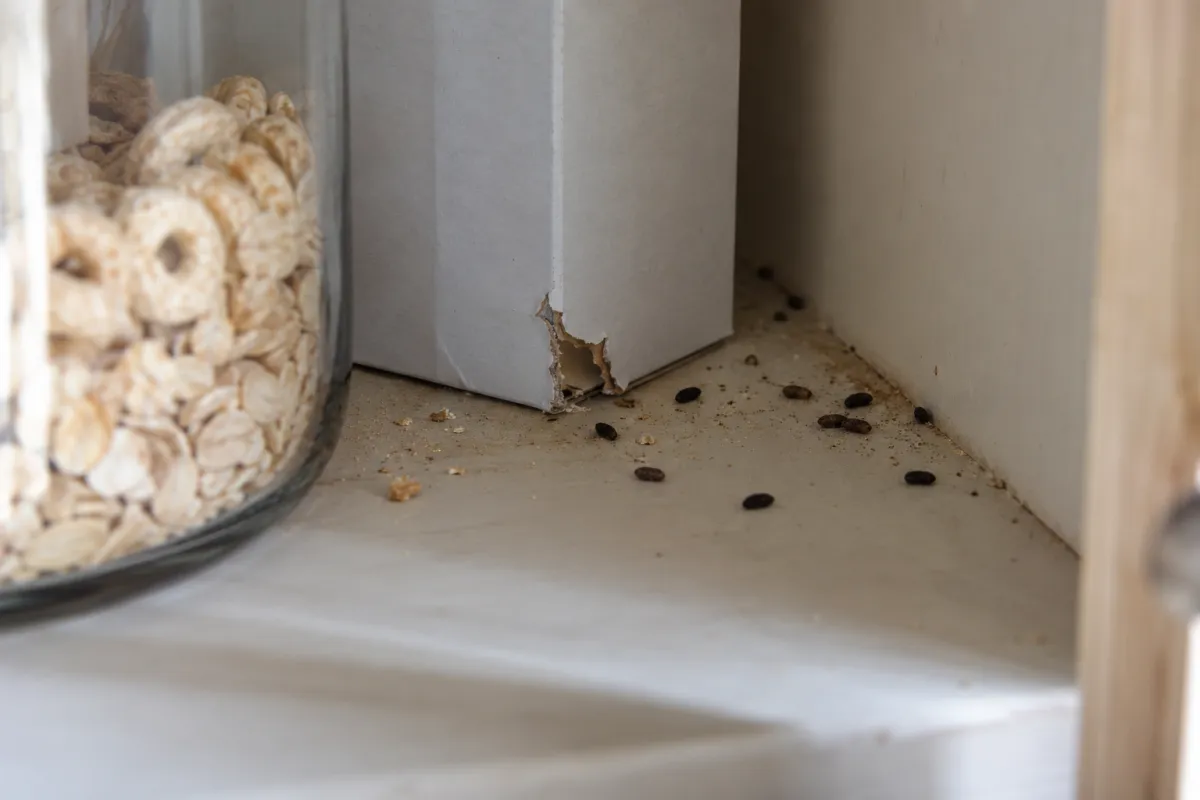
- Mouse droppings are small and thin, about 3–8 mm long, with pointed ends. They are scattered widely, often along cupboard edges, shelves and worktops, because mice drop them as they move.
- Rat droppings are much larger, typically 10–14 mm, thicker and capsule-shaped with blunter ends. Brown rats tend to leave them grouped together in the places they visit regularly.
If you're unsure, compare them with a grain of long-grain rice. Mouse droppings are around that size or smaller; rat droppings are noticeably bigger and chunkier. Wear gloves when handling or cleaning up droppings of either kind.
Size and appearance
Adult mice and rats are hard to confuse once you see them clearly. A house mouse has a body of roughly 7–10 cm, large ears, a pointed nose and a thin tail about as long as its body.
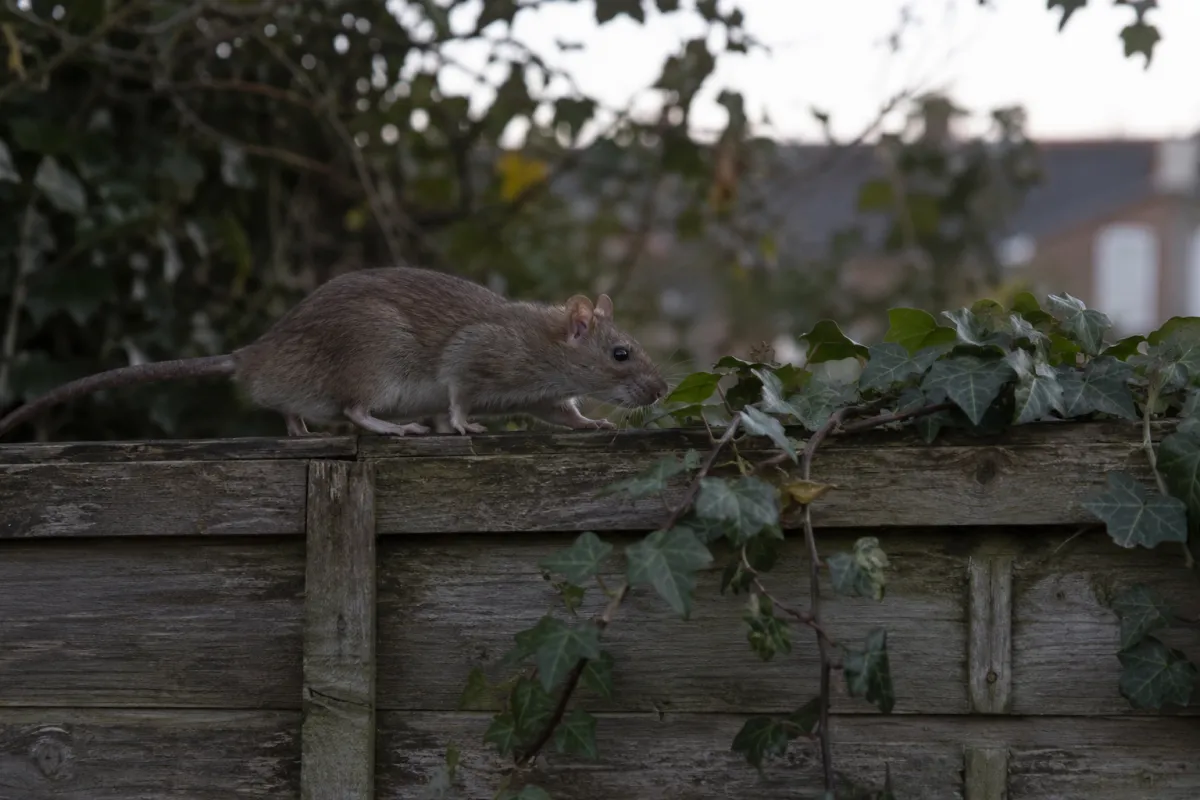
A brown rat is far bigger, with a body of around 20–25 cm before you count the tail. It has a heavier build, a blunt nose, small ears for the size of its head and a thick, scaly tail that is slightly shorter than its body.
Young rats cause the most confusion. A juvenile rat can be similar in length to an adult mouse, but its head and feet look too big for its body and its face is blunter. If the animal you saw had large ears and a delicate, pointed face, it was probably a mouse.
Where they live and how they get in
Location is often a strong clue.
Mice usually live inside buildings. They nest in wall cavities, under floors, behind kitchen units and in lofts, and in terraces and converted flats they can travel between homes through shared voids. They can squeeze through a gap of around 6 mm and get much of the water they need from their food, so they don't need to be near a water source.
Brown rats are more often based outside, burrowing in gardens, under sheds and decking, beside compost bins and along railway embankments and waterways. Look for burrow entrances roughly 6–9 cm across, with smooth, well-worn runs leading to them. Rats need to drink regularly, so they usually stay close to water. When they get into a home, it's often through a damaged drain, a broken air brick or a gap of around 15 mm or more where pipes enter the building.
Noises, gnawing and behaviour
- Sounds. Mice make light, quick scratching noises. Rats are heavier, and you may hear thumping, dragging or loud gnawing under floors, in lofts or in wall cavities.
- Gnaw marks. Mouse gnawing is small and neat. Rat gnawing is larger and rougher, and rats can chew through wood, plastic and cable insulation.
- Smear marks. Both leave greasy marks along their regular routes. Rat smears are larger and more obvious, often around the edges of holes and along the bottom of walls.
- Reaction to new objects. Mice are curious and investigate new things quickly. Rats are cautious and often avoid anything new in their environment for several days, which is one reason rat traps can appear to do nothing at first.
Why the difference matters
Getting the identification right shapes everything that follows.
- Proofing is different. Keeping mice out means finding and sealing small gaps in and around the home. With rats, the focus is often outside: drains, air bricks, burrows and cover in the garden.
- Treatment is different. The type of trap, where it goes and how long it takes to work all vary between the two, partly because of how differently they react to new objects.
- The health risks differ. Both contaminate food and surfaces and can spread bacteria such as salmonella. Rat urine can also carry leptospirosis (Weil's disease), so anything rats may have been in contact with should be cleaned carefully while wearing gloves.
If rats keep appearing inside and you can't find any gap, a defective drain is a common cause, and a drain survey may be needed to find the fault.
For more detail on how each is dealt with, see our pages on rat control and mice control. If you've seen signs of both, or you aren't sure, the rodent control page covers the two together.
If you'd like help working out what you're dealing with, call Mighty Pest Control on 020 7112 8473 and describe what you've found.