Wasp stings: what to do and when to get help
Simple first aid for wasp stings, what's normal, the warning signs of a severe allergic reaction and when to get medical advice.
Most wasp stings are painful but harmless, and settle with simple first aid within a few hours. A small number of people have a severe allergic reaction, which is a medical emergency. Knowing what's normal, what isn't and what to do in the first few minutes makes a real difference.
What to do straight after a sting
- Move away calmly. A wasp near its nest, or one that's been swatted, can release a scent that draws other wasps in, so walk away from the area rather than flapping your arms.
- Check for a sting. Wasps don't leave their sting behind, so there's nothing to remove. If you can see a sting in the skin, it was probably a bee. Scrape it out sideways with a fingernail or the edge of a bank card. Don't pinch it out with your fingers or tweezers, as that can spread the venom.
- Wash the area with soap and water.
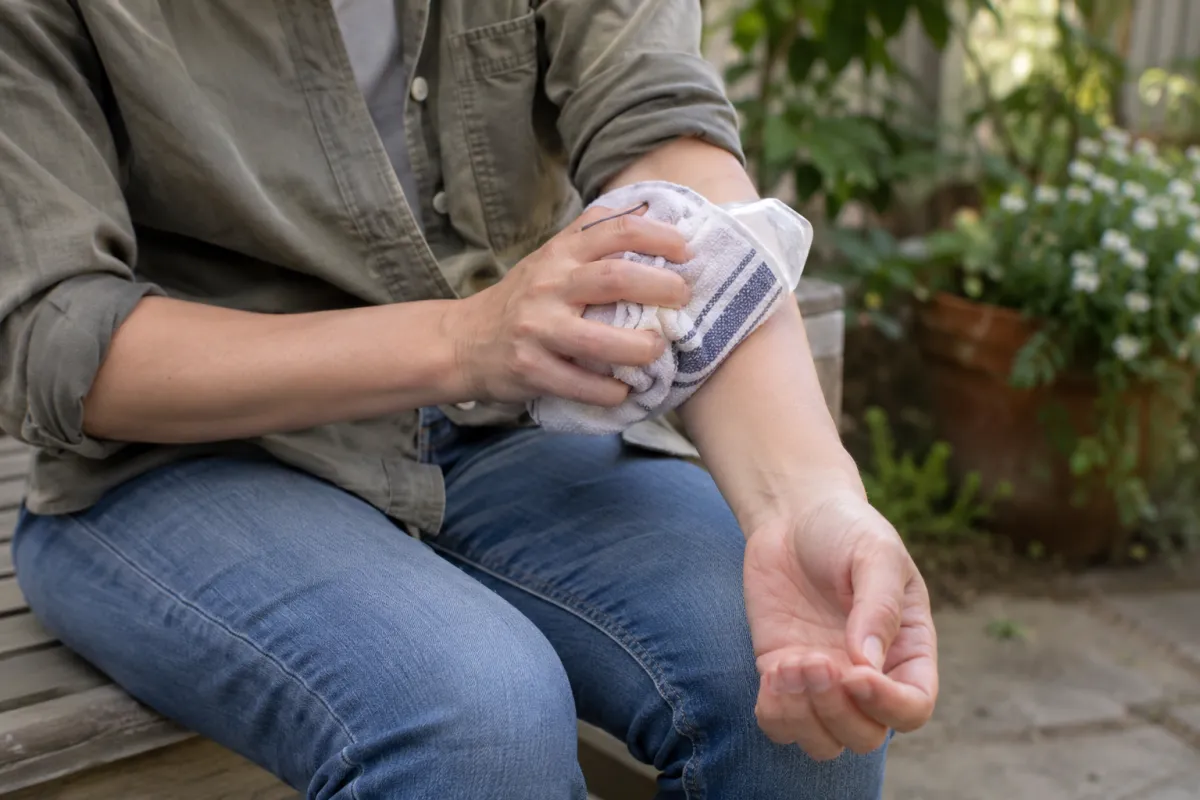
- Cool it. Hold a cold compress, such as a cloth soaked in cold water or an ice pack wrapped in a towel, on the area for at least 10 minutes. Don't put ice straight onto the skin.
- Raise it if you can, for example by resting a stung arm or leg on a cushion, to help reduce swelling.
- Take off rings and watches from a stung hand or arm before it swells.
Try not to scratch, as broken skin can become infected. Old home remedies such as vinegar or bicarbonate of soda are unlikely to help.
What a normal reaction looks like
- Usual. A sharp pain, then a red, swollen, sore patch around the sting, which usually settles within a few hours.
- A larger local reaction. Some people get a bigger area of swelling, sometimes spreading across much of a hand or forearm. It can peak a day or two after the sting and take up to a week to go down. It's uncomfortable, but usually not dangerous.
A pharmacist can advise on painkillers such as paracetamol or ibuprofen, antihistamines for itching and swelling, and creams. Children under 16 shouldn't be given aspirin.
When to call 999
Call 999 straight away if someone has signs of a severe allergic reaction, known as anaphylaxis, after a sting. These usually start within minutes:
- swelling of the lips, mouth, tongue or throat
- difficulty breathing, wheezing or very fast breathing
- a tight throat or trouble swallowing
- feeling faint, dizzy or confused, or collapsing
- skin, lips or tongue turning blue or grey
Tell the call handler you think it's anaphylaxis. If the person has an adrenaline auto-injector, use it straight away, even if you're not sure. Lie them down with their legs raised, or sit them up if they're struggling to breathe. If they're no better after five minutes and there's a second auto-injector, use it.
Many stings at once can make someone unwell even if they aren't allergic. If someone has been stung many times, especially a child or an older person, call NHS 111 for advice straight away, and 999 if they become unwell.
When to speak to a pharmacist or NHS 111
Get advice from a pharmacist or NHS 111 if:
- you've been stung in the mouth or throat, or near the eyes (call 999 if breathing or swallowing is affected)
- a large patch of skin, around 10 cm or more, becomes red and swollen
- the area shows signs of infection, such as pus, or pain, swelling or redness that keeps getting worse
- you get a high temperature, swollen glands or feel generally unwell
- the symptoms aren't starting to improve after a few days
Anyone who has had a severe reaction should ask their GP about a referral to an allergy clinic. Specialists can confirm the allergy, prescribe auto-injectors and, for some people, offer venom immunotherapy, a course of treatment that lowers the risk of future severe reactions.
Pets get stung too, often on the nose or in the mouth. If a pet's face or throat swells or it struggles to breathe, contact a vet straight away.
Avoiding stings around the home
- Late summer is the riskiest time, when worker wasps go looking for sugar. Keep drinks covered or use a straw, and check cans and glasses before you drink from them.
- Don't swat. Move away slowly instead.
- Keep bins closed and pick up fallen fruit.
- Take care mowing, strimming or cutting hedges near a possible nest.
Being stung again and again in the same part of the garden or house usually means there's a nest nearby. Make sure it's really wasps with our guide to telling wasps from bees, then see the wasp control page for how nests are treated. Our guide to wasps explains why they're at their most persistent in late summer.
If a nest near your home keeps leading to stings, call Mighty Pest Control on 020 7112 8473.