Wasp control in East London
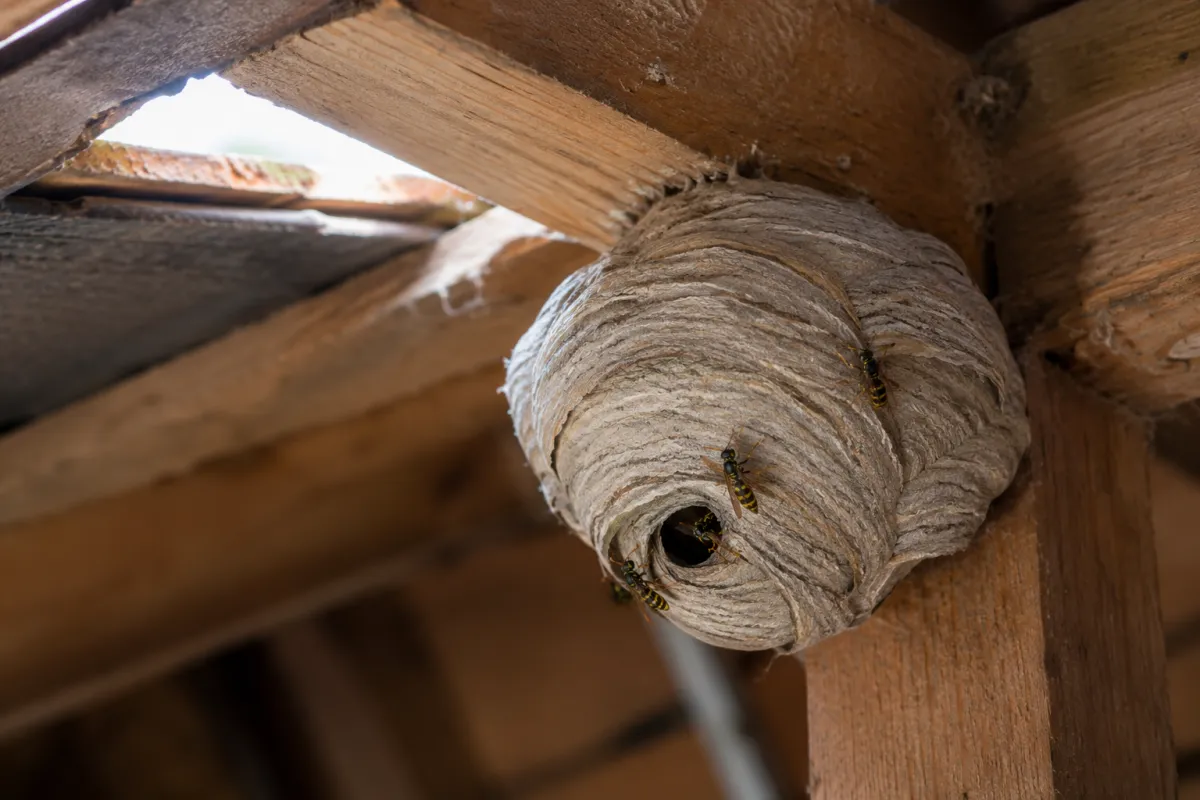
A wasp nest starts in spring as a queen's small paper ball and can reach the size of a football by late summer, holding thousands of wasps. Nests are often hidden in lofts, eaves, wall cavities and air bricks. We locate the nest, treat it with an insecticide dust or liquid, and advise on keeping clear while the colony dies off.
What wasps look like
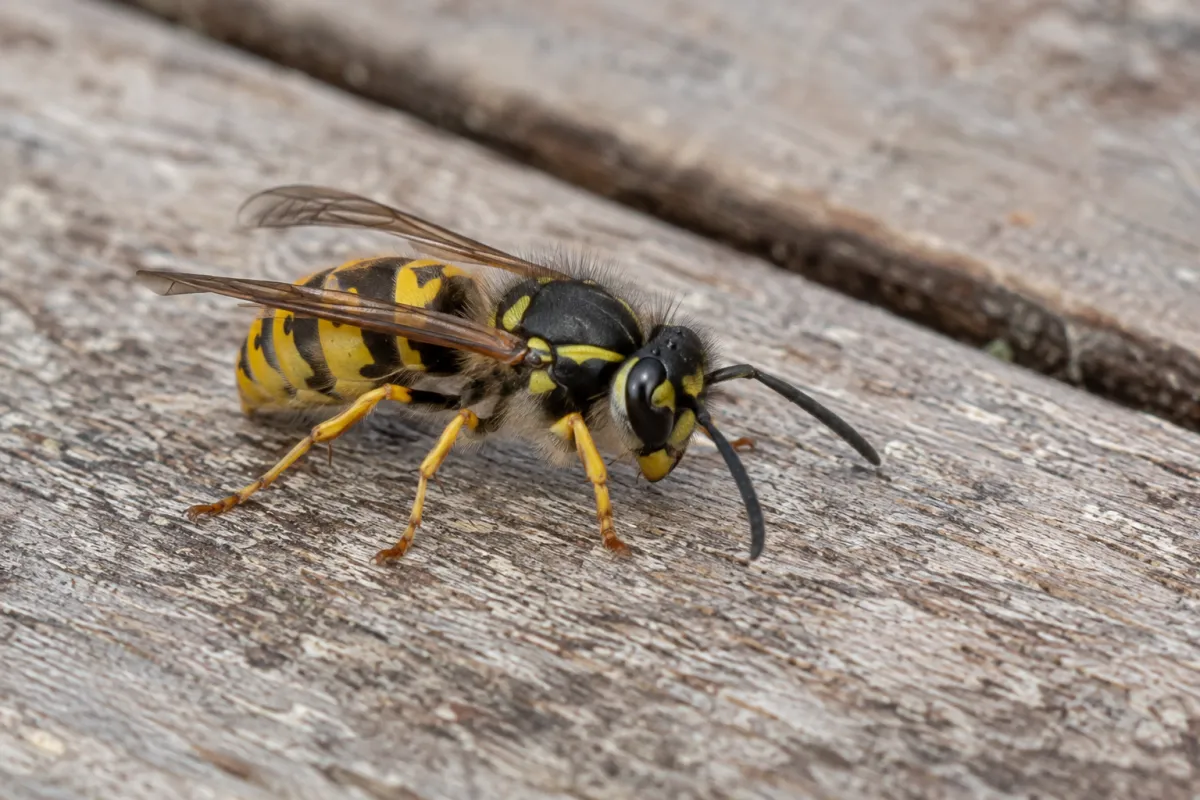
The common wasp is slim and smooth, with bright yellow and black bands, a narrow waist and dark antennae. At rest it folds its wings lengthways, so they look like two thin strips along its body. Hoverflies are often mistaken for wasps, but they have big eyes, very short antennae and a habit of hanging still in mid-air, and they can't sting.
- Size
- Workers about 12–17 mm, queens up to 20 mm
- Colour
- Bright yellow and black bands, almost hairless
- Lifespan
- Workers live a few weeks; only new queens overwinter
- Diet
- Adults eat sugar; their grubs are fed insects
- Nest
- A grey papery ball made from chewed wood
Signs of wasps
Steady flight path
A constant stream of wasps flying in and out of one spot, such as a gap under roof tiles, a vent or an air brick.
Wasps indoors
Wasps turning up again and again in the same room, often below a loft or near a window frame.
Papery rustling
A scratching or crackling noise in a wall, ceiling or loft as the colony builds and feeds.
A visible nest
A grey or buff papery ball in a loft, shed, bird box, hedge or hole in the ground.
Wood scraping
Wasps scraping at fences, sheds or garden furniture to collect wood fibre for their nest.
Life cycle and breeding
A wasp nest only lasts one season. A single queen starts it in spring, it grows all summer, and by late autumn the colony has died off, leaving only the new queens to survive the winter.
Queen wakes
Around April, a queen that has spent the winter tucked away in a shed, loft or log pile comes out and looks for a dry, sheltered spot.
First workers
She builds a small nest from chewed wood fibre and raises the first few workers herself, which takes a few weeks.
Workers take over
From then on the queen only lays eggs. The workers build, forage and defend, and the nest grows fast through June and July.
Autumn
In late summer the nest raises new queens and males. After mating, the new queens find somewhere to hibernate, and the rest of the colony dies as the weather cools.
Where wasps live and how they get in
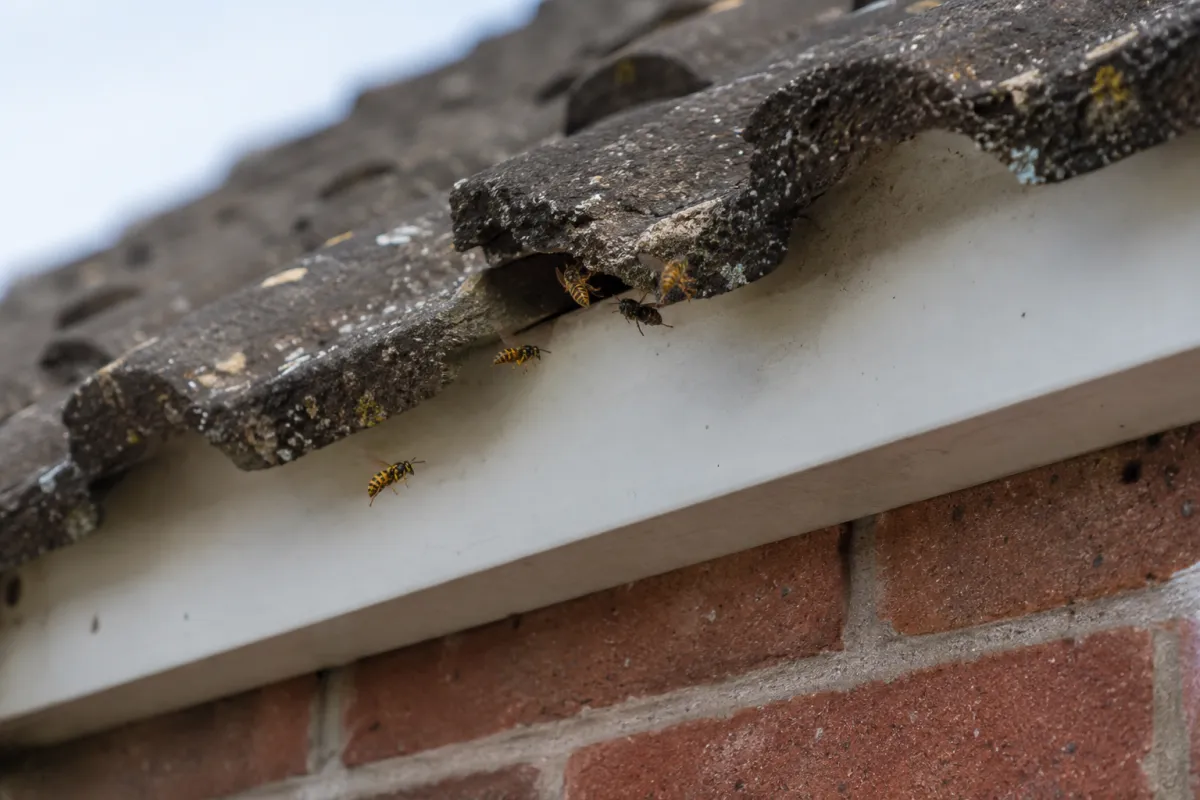
Wasps want a dry, sheltered cavity with a way in from outside. Around East London homes that usually means under roof tiles, in the eaves and loft, inside wall cavities, behind air bricks, or down an old mouse hole in the garden. In autumn, new queens hibernate in quiet corners, sometimes indoors in the folds of curtains, so a single sleepy wasp in winter doesn't mean there's a nest.
- Under roof tiles and at the eaves, where a queen finds a dry gap to start building.
- Through air bricks and vents into the wall cavity or the void under the floor.
- Down from the loft into rooms through the hatch, light fittings or gaps around downlights.
- Through open windows and doors, drawn in by sweet drinks, ripe fruit and cooking smells.
Why it matters
In a home or rented flat
Wasps defend their nest and may sting repeatedly if it is disturbed, which is serious for anyone allergic to stings. Nests in lofts and walls are often close to bedrooms, and treating them yourself can mean working at height near an agitated colony.
For landlords and businesses
Wasps around outdoor seating, bins and food counters in late summer deter customers and put staff and the public at risk of stings. Landlords and building managers also need to act on nests near entrances, windows and communal areas.
How wasp control works
Locate the nest
We follow the flight path to find the nest and check that it belongs to wasps, not bees, before any treatment.
Nest treatment
Insecticide is applied as a dust or liquid into the nest or its entrance, often without needing to go into the loft.
Colony dies off
Wasps keep flying for a short time after treatment, and the nest usually dies over the next few days. Keep clear of the entrance and do not block it.
Aftercare and prevention
Wasps do not reuse old nests, so a dead nest can usually be left in place. We advise on checking the same spots for new nests early the following spring.
What you can do yourself
Leave quiet nests alone
If a nest is at the far end of the garden or high up where nobody goes, you can leave it. It'll die off on its own in autumn.
Keep clear of the entrance
Don't spray, poke or stand in the flight path of a nest in a loft, a wall or near a door. Keep windows on that side shut, and keep children and pets away.
Don't swat
If a wasp comes near you, move away slowly instead of swatting. A crushed wasp gives off a scent that can bring others in.
Know the allergy signs
Most stings just need a cold compress. If someone's face or throat swells, or they struggle to breathe after a sting, call 999.
Prevention
- Check lofts, sheds and eaves in April and May for small, golf-ball-sized nests while they are easy to spot.
- Keep bin lids closed and rinse drinks cans and food containers before recycling.
- Pick up fallen fruit in late summer, as it attracts foraging wasps.
- Repair gaps in soffits, fascias and around pipe entries outside the wasp season to limit places a queen can start a nest.
Nests are started in April and May, grow through the summer and are largest from late July to September, when wasps are most noticeable.
Common myths
Myth: Wasps don't do anything useful.
The truth: They catch huge numbers of caterpillars, flies and other insects to feed their young, and they pollinate some plants too.
Myth: Wasps die after they sting you.
The truth: That's honeybees. A wasp's sting isn't barbed, so it can sting more than once.
Myth: Wasps attack for no reason.
The truth: Most stings happen when a nest is disturbed or a wasp is trapped or swatted. Away from the nest, a wasp is usually just looking for food.
Questions about wasps
Is it a wasp nest or a bee nest?
Wasps are slim, with bright yellow and black bands and a narrow waist, and their nests are made of grey, papery wood pulp. Bees are hairier and more rounded, and bumblebees often nest in bird boxes, compost or under sheds. Bees are important pollinators, so tell us what you are seeing before any treatment.
Will wasps come back to the same nest next year?
No. The colony dies in autumn and the nest is not reused, although a new queen may choose a similar sheltered spot nearby. Checking the same places in spring is worthwhile.
Should I block the entrance to a wasp nest?
No. Blocking the entrance can make wasps chew a new way out, sometimes into the house. It also makes a later treatment harder.
Why are there so many wasps in late summer?
By late summer the nest is at its largest and is rearing fewer larvae, so thousands of workers turn to sugary foods such as fruit and drinks. This is when wasps are most noticeable and most likely to sting.
Further reading
Related services
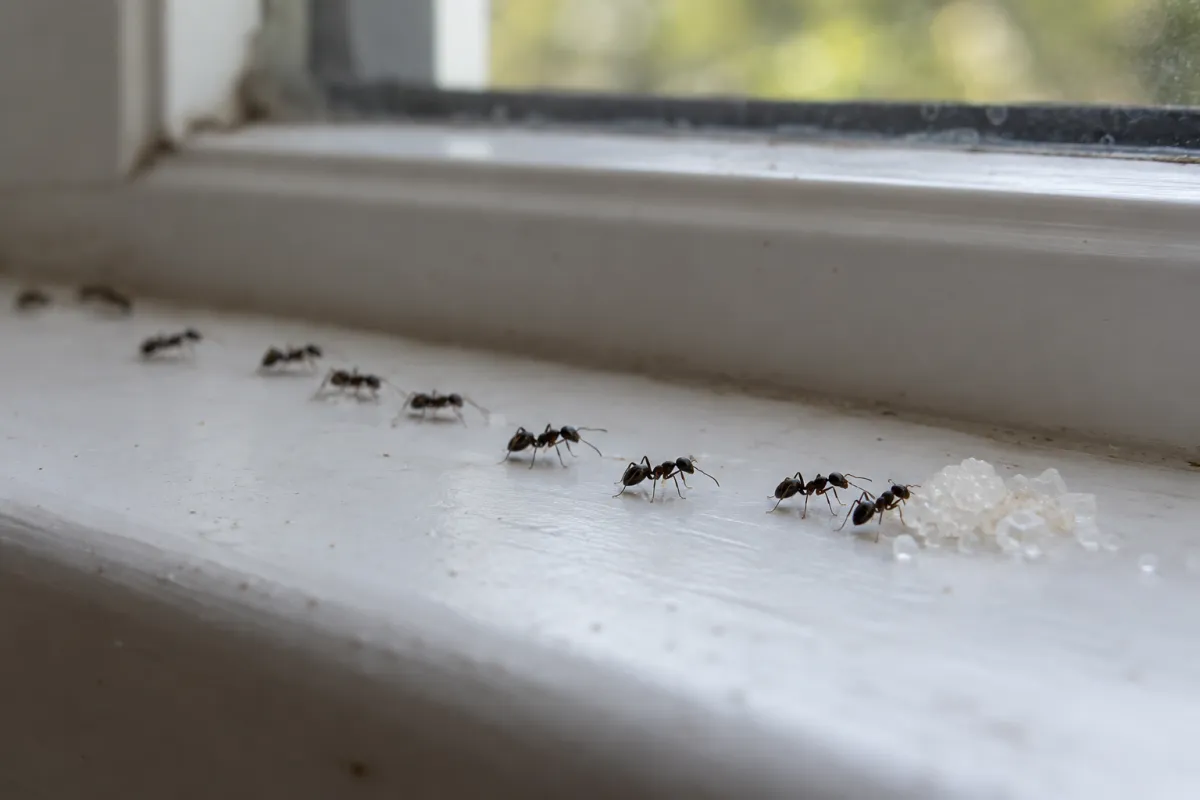 Ant treatmentTreatment for black garden ants and Pharaoh's ants, aimed at the colony rather than the trail.
 Fly controlFind where flies are breeding, from bins to lofts, and deal with house flies, bluebottles and cluster flies.
 Bird controlSurvey and advice for pigeons fouling ledges, roofs, balconies and shopfronts, with a quote on request.
Let’s talk about the problem.
Tell us what you’ve seen, the property type and your postcode.