Moth control in Hackney
Survey and treatment for clothes moths and food moths in carpets, wardrobes and stored goods. We cover homes, rented properties and businesses across Hackney, including Dalston, Shacklewell, De Beauvoir Town and Haggerston.
Where moths turn up in Hackney
Victorian terraced houses and conversions in Stoke Newington, Lower Clapton and South Hackney
Fitted wool carpets, heavy furniture and loft storage in older houses give clothes moth larvae the dark, undisturbed places they need.
Converted warehouses and new-build flats in Hackney Wick, Hoxton and Shoreditch
Warm, centrally heated flats let clothes moths keep breeding through the winter in wardrobes, under beds and in rugs.
Shared houses and rented flats in Dalston, Homerton and Stamford Hill
Fitted carpets in rooms left empty between tenancies can develop moth damage unnoticed, leading to disputes when the next tenant moves in.
Street markets and restaurant kitchens in Dalston, Hoxton and Shoreditch
Cereals, nuts, dried fruit and flour in storage attract Indian meal moths and other stored product moths, which leave webbing through affected stock.
Signs to look for
Holes in natural fibres
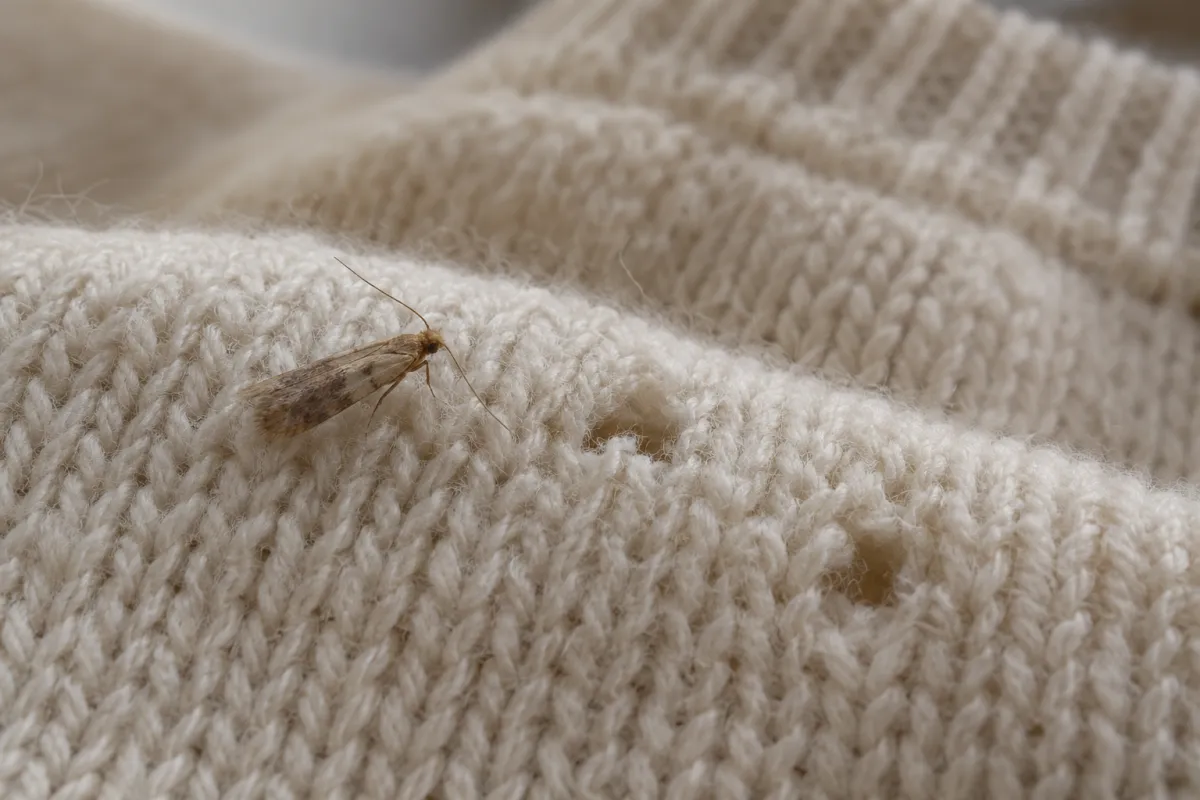
Small, irregular holes in wool, cashmere, silk or felt, often in garments that have not been worn for a while.
Bare patches in carpet
Thinning or bald areas in wool carpets and rugs, usually at the edges, under furniture or behind doors.
Larvae and cases
Creamy white caterpillars up to about 10 mm long, silken tubes or small cases on fabric, and gritty droppings.
Moths avoiding light
Small, straw-coloured moths about 6–7 mm long that run or flutter into dark corners rather than flying towards lights.
How it works
Tell us what you’ve seen
Call or email with the pest, the type of property and your postcode. A technician can explain the process before anyone visits.
Find the source
The visit starts with the signs: identifying the pest, where it is nesting and how it is getting in.
Treat the problem
Treatment uses professional-use products and methods chosen for the pest and the property, with clear safety advice.
Keep it from coming back
You get advice on proofing and hygiene. Businesses can choose one-off visits or a regular service programme.
Local pages in Hackney
Further reading
Let’s talk about the problem.
Tell us what you’ve seen, the property type and your postcode.