Wasp control in Hackney
Treatment for active wasp nests in lofts, eaves, walls, sheds and gardens. We cover homes, rented properties and businesses across Hackney, including Dalston, Shacklewell, De Beauvoir Town and Haggerston.
Where wasps turn up in Hackney
Victorian terraced houses and conversions in Stoke Newington, Lower Clapton and South Hackney
Gaps under roof tiles, loose soffits and old air bricks give queens sheltered spots in lofts and wall cavities to start a nest.
Converted warehouses and new-build flats in Hackney Wick, Hoxton and Shoreditch
Balconies, window frames, roof voids and gaps in brickwork can all hide wasp nests on low-rise and mid-rise blocks.
Shared houses and rented flats in Dalston, Homerton and Stamford Hill
Lofts and eaves in rented houses are rarely checked, so nests often go unnoticed until wasps start appearing in tenants' rooms.
Street markets and restaurant kitchens in Dalston, Hoxton and Shoreditch
Sweet drinks, fruit and open food waste draw wasps to outdoor seating, market stalls and takeaways in late summer, raising the risk of stings.
Homes near marshes, commons and parks in Homerton, Upper Clapton and South Hackney
Hollow trees, banks and old rodent holes in grassland provide natural nest sites, and workers forage widely into nearby gardens and homes.
Signs to look for
Steady flight path
A constant stream of wasps flying in and out of one spot, such as a gap under roof tiles, a vent or an air brick.
Wasps indoors
Wasps turning up again and again in the same room, often below a loft or near a window frame.
Papery rustling
A scratching or crackling noise in a wall, ceiling or loft as the colony builds and feeds.
A visible nest
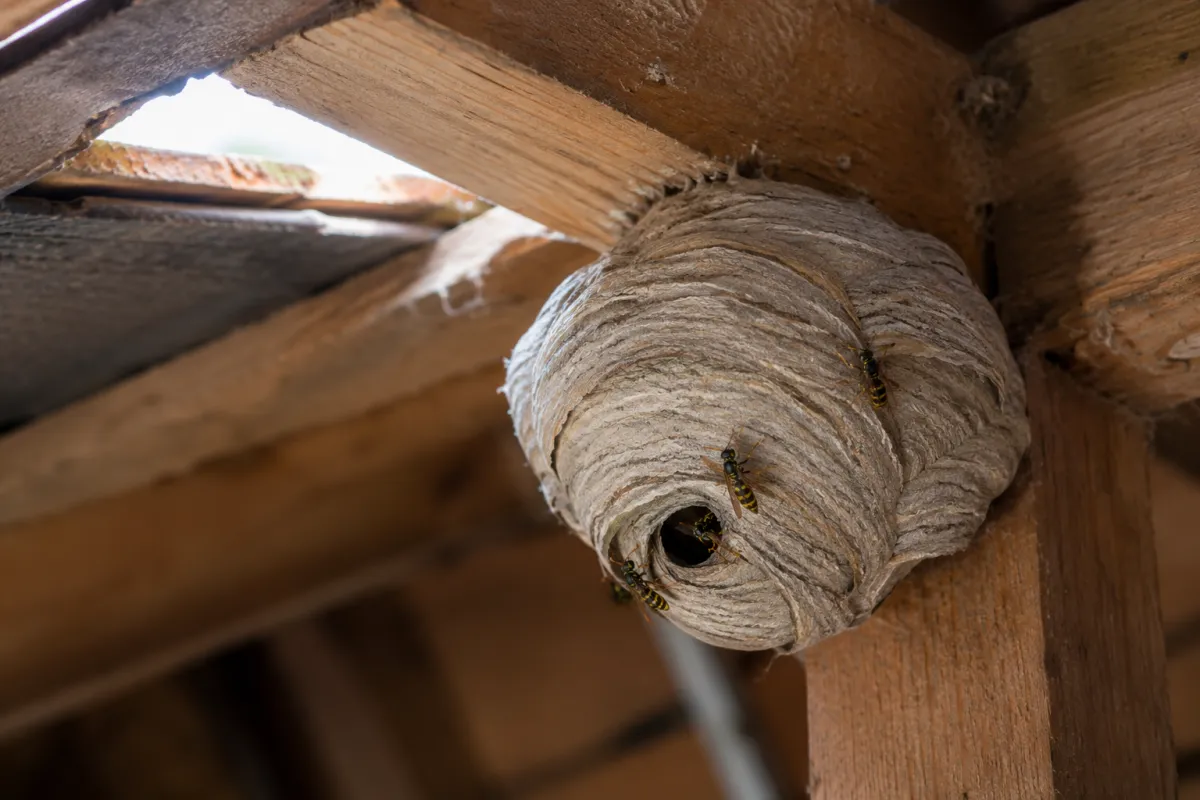
A grey or buff papery ball in a loft, shed, bird box, hedge or hole in the ground.
How it works
Tell us what you’ve seen
Call or email with the pest, the type of property and your postcode. A technician can explain the process before anyone visits.
Find the source
The visit starts with the signs: identifying the pest, where it is nesting and how it is getting in.
Treat the problem
Treatment uses professional-use products and methods chosen for the pest and the property, with clear safety advice.
Keep it from coming back
You get advice on proofing and hygiene. Businesses can choose one-off visits or a regular service programme.
Local pages in Hackney
Further reading
Let’s talk about the problem.
Tell us what you’ve seen, the property type and your postcode.