Rodent control in Hackney
Not sure if it is rats or mice? We identify the rodent first, then treat and proof the building. We cover homes, rented properties and businesses across Hackney, including Dalston, Shacklewell, De Beauvoir Town and Haggerston.
Where rodents turn up in Hackney
Victorian terraced houses and conversions in Stoke Newington, Lower Clapton and South Hackney
Connected lofts, party walls and hollow floors let rats and mice pass between neighbouring houses, so problems often affect several homes in a row.
Converted warehouses and new-build flats in Hackney Wick, Hoxton and Shoreditch
Service risers, pipe boxing and bin chutes connect floors in a block, giving rodents hidden routes from the bin store to upper flats.
Shared houses and rented flats in Dalston, Homerton and Stamford Hill
Shared kitchens, overflowing bins and unrepaired gaps give rats and mice steady food and shelter in shared houses with changing tenants.
Street markets and restaurant kitchens in Dalston, Hoxton and Shoreditch
Stored stock, food waste and warm equipment attract rats and mice to kitchens, markets and food stores, where any sign needs dealing with promptly.
Canalside homes and boat moorings in Haggerston, De Beauvoir Town and Hackney Wick
Rivers, canals and sewers support brown rat populations that move into nearby buildings through drains and gaps at ground level.
Homes near marshes, commons and parks in Homerton, Upper Clapton and South Hackney
Overgrown edges, banks and scrub shelter rats and wood mice, which move into nearby homes when food outside becomes scarce.
Signs to look for
Droppings of different sizes
Mouse droppings are thin and about 3–6 mm long, while rat droppings are thicker and around 10–14 mm. Finding both sizes can mean both pests are present.
Fresh gnaw marks
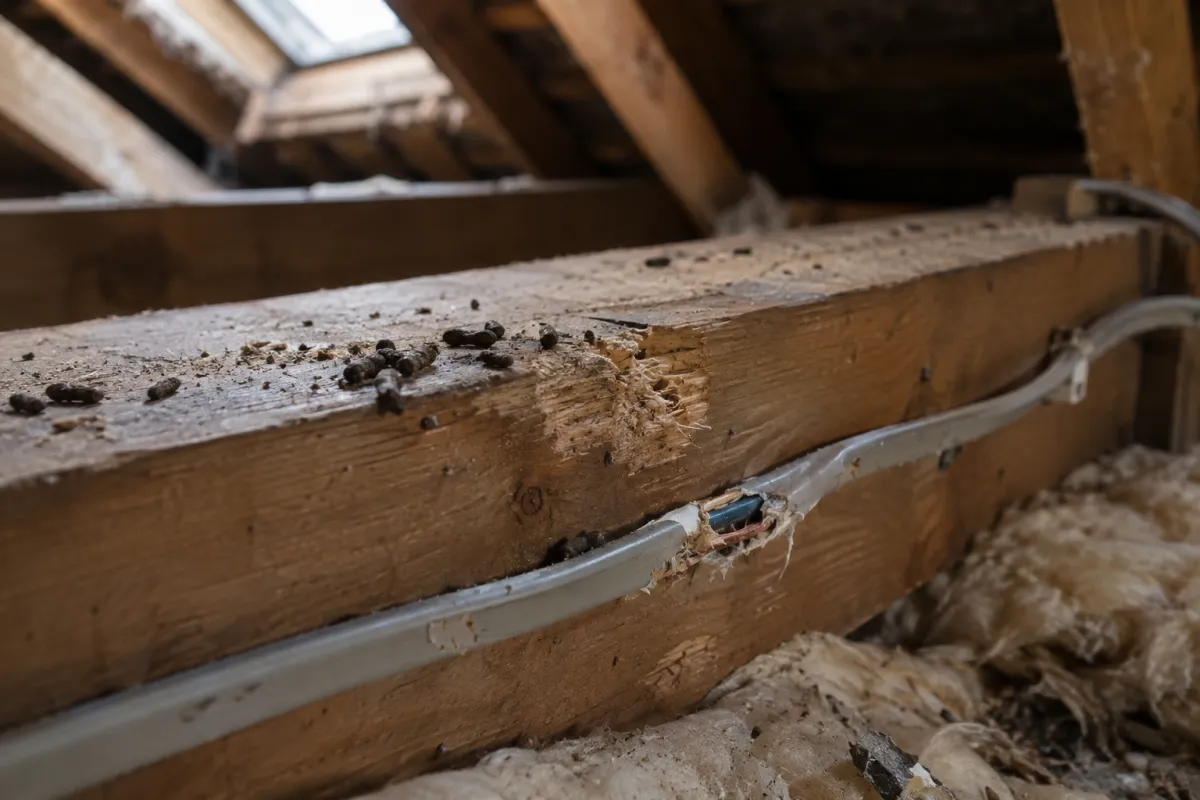
Fresh gnawing on wood, plastic or cables looks pale and clean. Larger, rougher marks suggest rats, and small, neat ones suggest mice.
Chewed cables and insulation
Stripped wiring, torn loft insulation and holes in pipe lagging often show where rodents are nesting or travelling.
Noises after dark
Scratching, scampering or gnawing sounds in ceilings, walls and under floors, usually at night.
How it works
Tell us what you’ve seen
Call or email with the pest, the type of property and your postcode. A technician can explain the process before anyone visits.
Find the source
The visit starts with the signs: identifying the pest, where it is nesting and how it is getting in.
Treat the problem
Treatment uses professional-use products and methods chosen for the pest and the property, with clear safety advice.
Keep it from coming back
You get advice on proofing and hygiene. Businesses can choose one-off visits or a regular service programme.
Local pages in Hackney
Further reading
Let’s talk about the problem.
Tell us what you’ve seen, the property type and your postcode.