Fumigation services in East London
In homes and business premises, fumigation usually means a space treatment: an insecticide dispersed as a fine mist or fog so it reaches the whole of an enclosed area. It is useful when insects are spread through a room, loft or storeroom rather than confined to one spot. The area has to be cleared and kept closed for a set time, so the work is planned around your home or business.
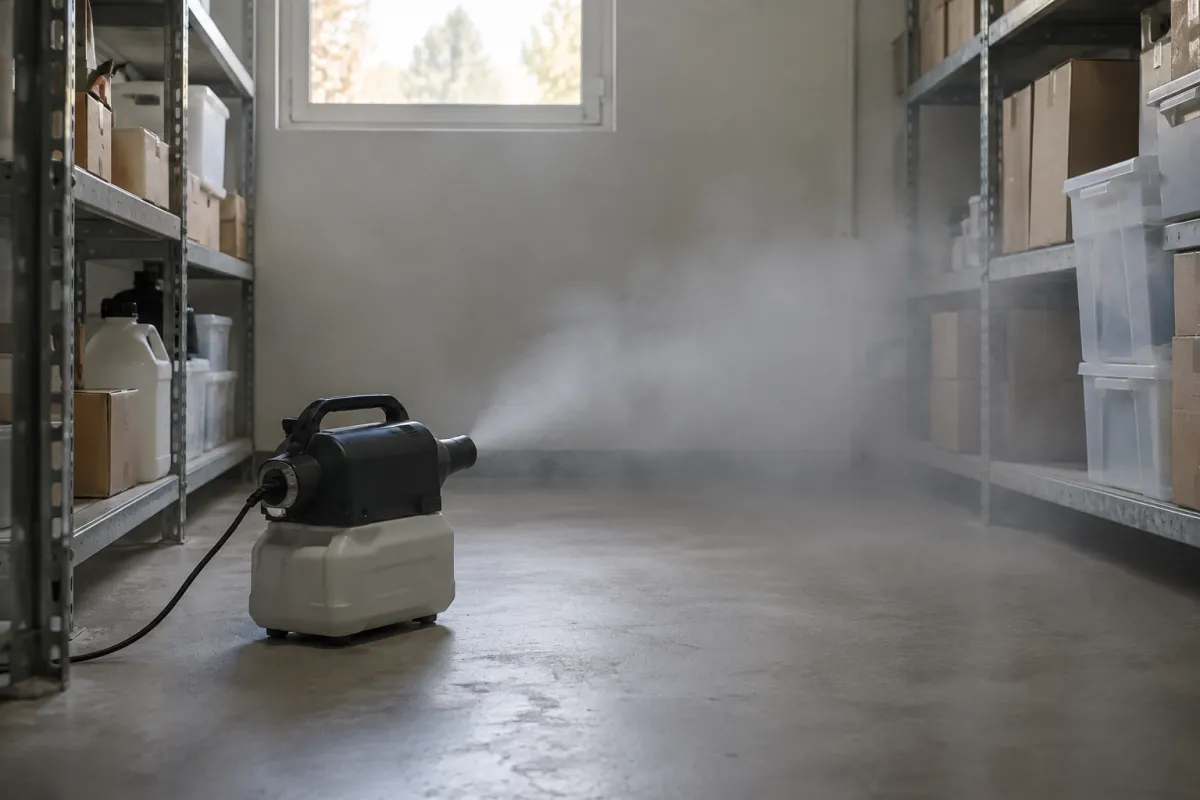
What fumigation involves
The technician uses a fogging machine that turns a liquid insecticide into droplets fine enough to hang in the air and spread right through a closed room. You and your pets won't be in the space while it runs. Afterwards the droplets settle, and the room is aired before anyone uses it again.
- Used for
- Insects spread right through a room or space
- Treats
- Flying insects and crawling ones in the open
- Area
- Closed rooms, lofts, storerooms and empty flats
- Re-entry
- Depends on the product label and technician's instructions
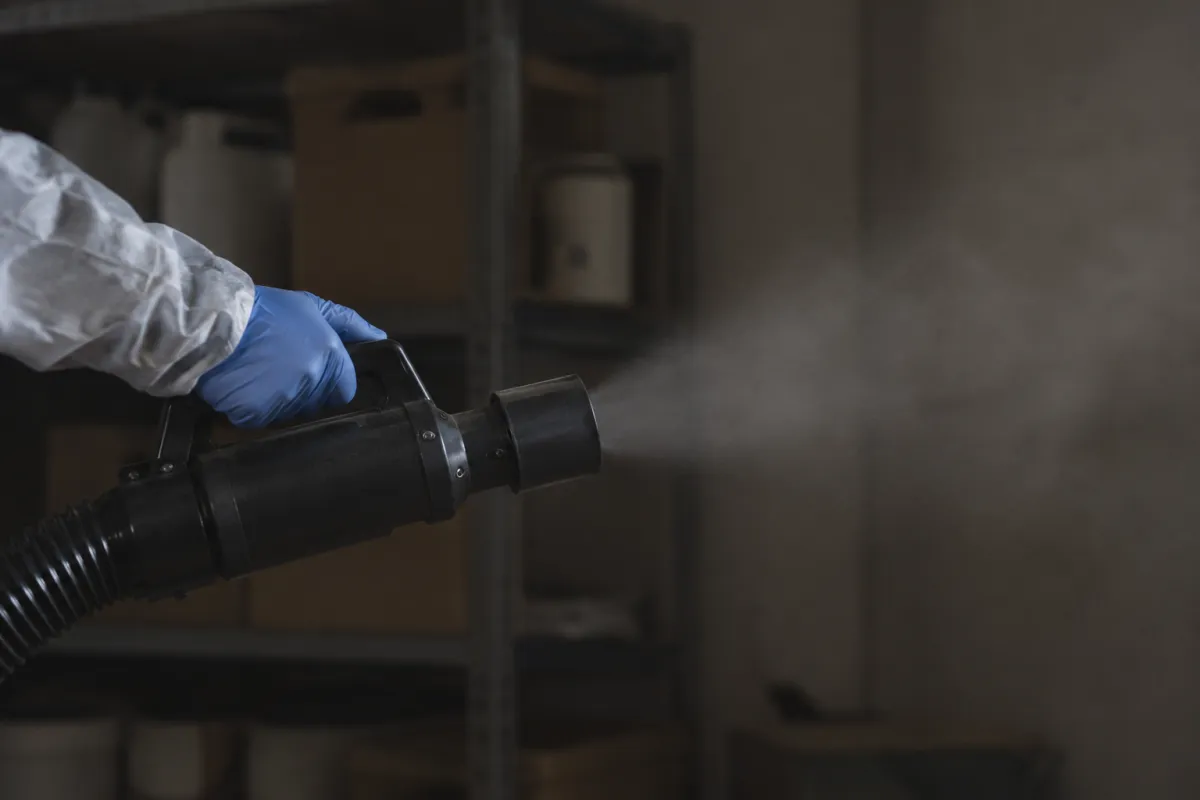
When fumigation is used
Widespread flying insects
Large numbers of flies or moths spread through a room, loft or storeroom rather than coming from one spot.
Cluster flies in lofts
Cluster flies gathered in a roof space, where a whole-space treatment can reach them in corners and gaps.
Infested storerooms
Stored product insects such as moths, beetles or weevils spread through a storeroom or warehouse space that can be emptied.
Empty properties
An empty property or room where insect activity needs dealing with before new occupants move in.
Supporting wider treatment
A heavy insect problem where a space treatment can support targeted treatment of cracks, crevices and hiding places.
How a treatment day runs
The fogging itself is only a small part of the day. Most of the effort goes into getting the space ready beforehand and airing it properly afterwards.
Before
You pack the room away using the checklist you're given, and everyone, pets included, arranges to be elsewhere. Furniture comes away from the walls so the mist can get behind it.
During
The technician, in protective kit, closes up the space and runs the fogger, working back towards the door. The space then stays shut for the time set on the product label.
Airing out
When that time is up, windows and doors are opened to clear the air. Nobody goes back in, pets included, until the technician says it's ready.
Afterwards
You unpack, wash anything that was left out, and keep an eye on things. A few insects may still turn up for a while, as ones that were hidden or still developing come out.
Where it's used and what it reaches
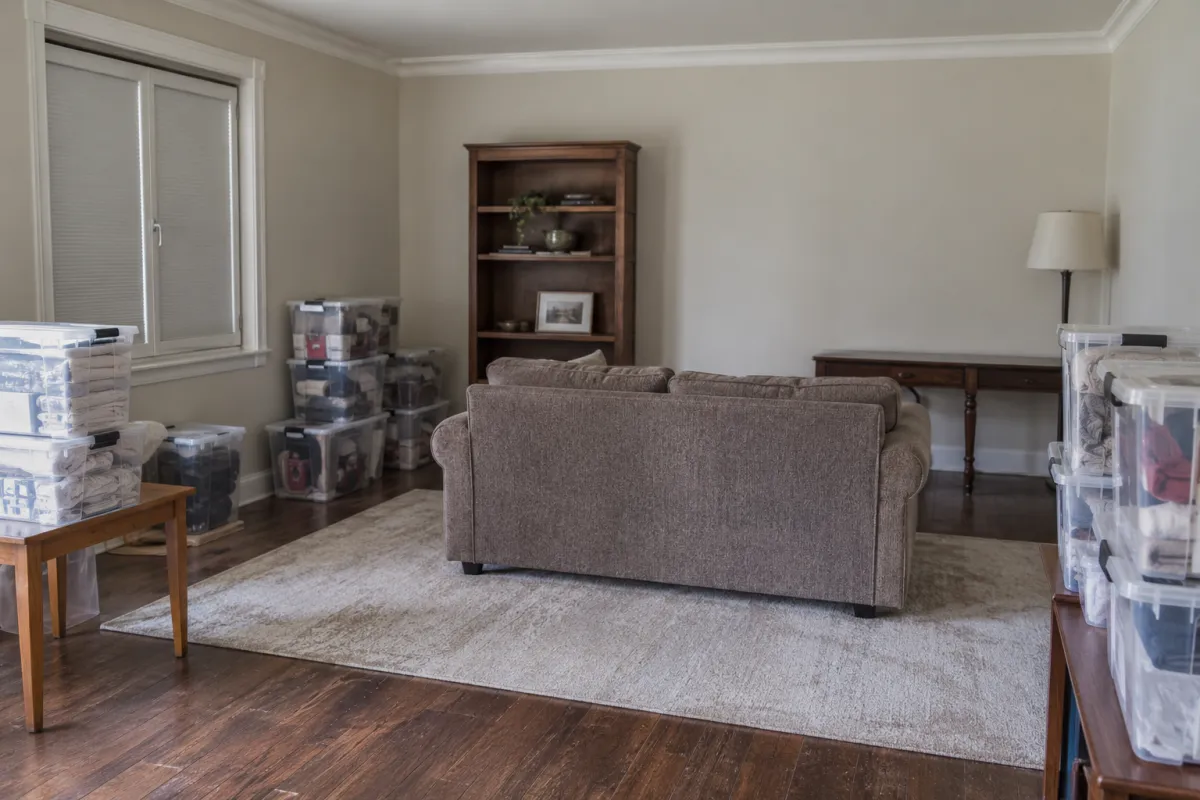
Space treatment suits closed spaces with insects spread right through them, such as a loft, storeroom, spare room or empty flat. It's less suited to rooms that can't be shut off, spaces that share open vents with a neighbour's home, or places people can't leave for the time needed. In those cases, a targeted treatment is usually the better choice.
- It reaches insects flying or resting in the open, on walls, ceilings and window frames.
- It drifts behind furniture, along skirting boards and into the corners of a closed room.
- In a loft, it gets in among the rafters and roof timbers where cluster flies gather.
- It doesn't reach far into cracks, wall cavities, upholstery or sealed boxes, so insects hidden there may need targeted treatment.
Why it matters
In a home or rented flat
Some insect problems are too spread out to deal with by treating individual spots, and a space treatment reaches areas that are hard to get to. Because the space must be empty during treatment, it is easiest to plan for lofts, spare rooms or homes between occupants.
For landlords and businesses
For food businesses, stockrooms and warehouses, a space treatment can reach insects across a whole area and be timed for when the site is closed. Food, stock and food-contact surfaces must be removed or protected first, so the work needs careful planning.
How fumigation services works
Site survey
We identify the pest and check that a space treatment suits the area, its contents and the people who use it.
Preparing the area
People and pets leave the area, food is removed or sealed, fish tanks are covered with their pumps off, and smoke detection is discussed beforehand.
Space treatment
The insecticide is dispersed through the closed area as a fine mist and left for the time set out in the product instructions.
Re-entry and follow-up
The area is ventilated before anyone goes back in, and we advise on cleaning and any follow-up needed, as eggs and pupae may survive.
Getting ready and afterwards
Pack things away
Put food, cutlery, toothbrushes, bedding, clothes and children's toys into sealed boxes or bags, or take them out of the room altogether.
Open up the room
Pull furniture a little away from the walls, and leave empty cupboards and drawers open so the mist can get inside.
Switch off flames
Turn off gas fires, pilot lights and anything with a naked flame. Follow any instructions you're given about alarms and electrics.
Coming back in
When you're told it's ready, open the windows wide for a while before you settle back in. Wash anything left out that touches skin or food, and wipe door handles and light switches.
Prevention
- Keep the treated area closed for the full time advised before ventilating it and going back in.
- Clean food preparation surfaces after treatment and before they are used again.
- Deal with the source of the insects, such as waste, damp or infested stock, so they do not build up again.
- Keep storerooms clean and rotate stock so any new infestation is spotted early.
Space treatments are used all year, with lofts often treated for cluster flies in autumn and storerooms whenever insect activity is found.
Common myths
Myth: A bug bomb from the shop does the same job.
The truth: Household foggers often miss insects hidden in cracks, and with some pests, like bed bugs, they scatter them into other rooms. A planned treatment matches the method to the pest and the space.
Myth: Fumigation means wrapping up the whole house.
The truth: Here it means filling a closed room, loft or storeroom with a fine insecticide mist. Doors and windows are simply kept shut while it works.
Myth: You'll be out of your home for days.
The truth: How long you stay out depends on the product label and the space, not a fixed rule. You'll be told before the day so you can plan around it.
Questions about fumigation
What does fumigation mean in pest control?
For homes and business premises it usually means a space treatment, where insecticide is released as a fine mist or fog to reach insects throughout an enclosed area. It suits widespread flying or crawling insects in rooms, lofts and storerooms rather than a problem in one spot.
How long do I need to stay out after fumigation?
It depends on the product and the space, as the re-entry time is set by the product instructions. The area also needs ventilating before people and pets go back in, and you will be told the timings before treatment starts.
Does fumigation kill insect eggs?
Not always. Space treatments work best on insects that are exposed at the time, so eggs, pupae and insects deep in cracks can survive. That is why a space treatment is often combined with targeted treatment or followed up later.
Can fumigation be used in a food business?
Yes, with planning. Food, stock and utensils need to be removed or sealed beforehand, and food-contact surfaces cleaned before they are used again. Treatment is usually timed for when the premises are closed.
Further reading
Related services
 Fly controlFind where flies are breeding, from bins to lofts, and deal with house flies, bluebottles and cluster flies.
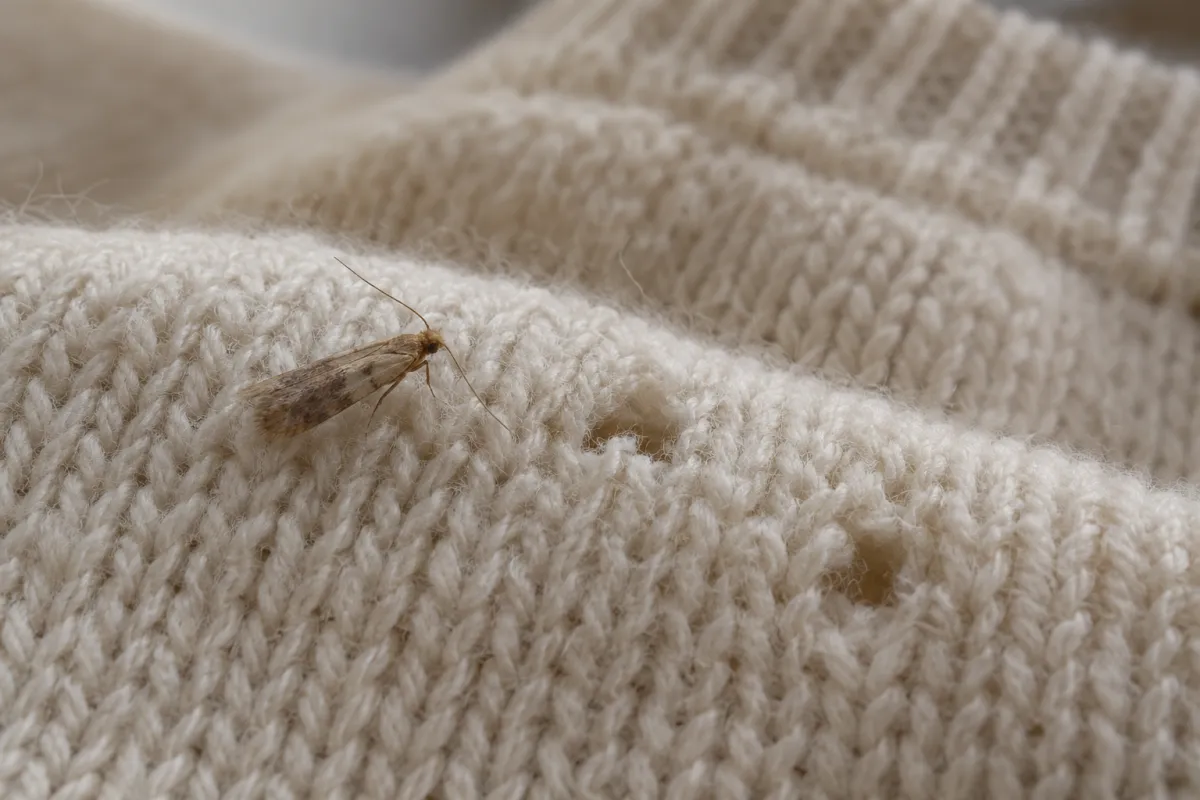 Moth controlSurvey and treatment for clothes moths and food moths in carpets, wardrobes and stored goods.
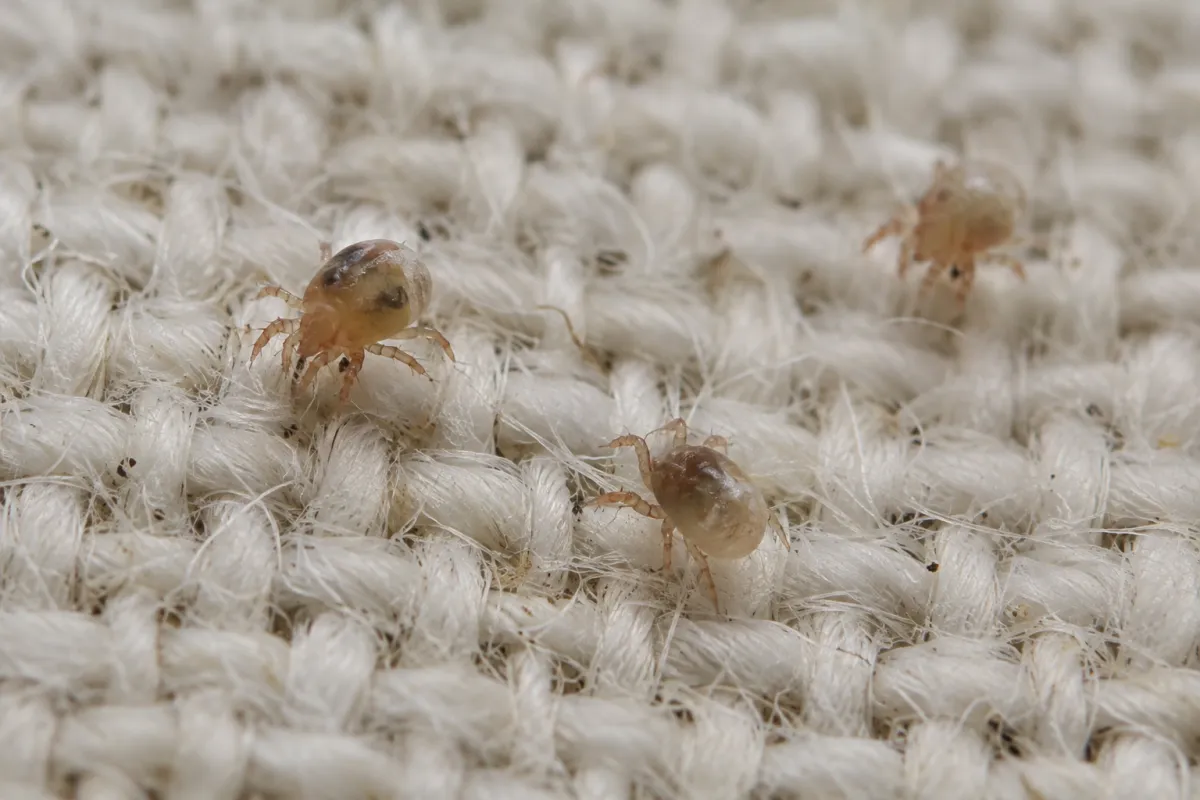 Mite controlIdentify flour, bird and clover mites and other stored product pests, then deal with the source.
Let’s talk about the problem.
Tell us what you’ve seen, the property type and your postcode.