Mice control in Havering
Find and treat mice in homes, flats and business premises, then close the gaps they use to get in. We cover homes, rented properties and businesses across Havering, including Romford, Gidea Park, Hornchurch and Elm Park.
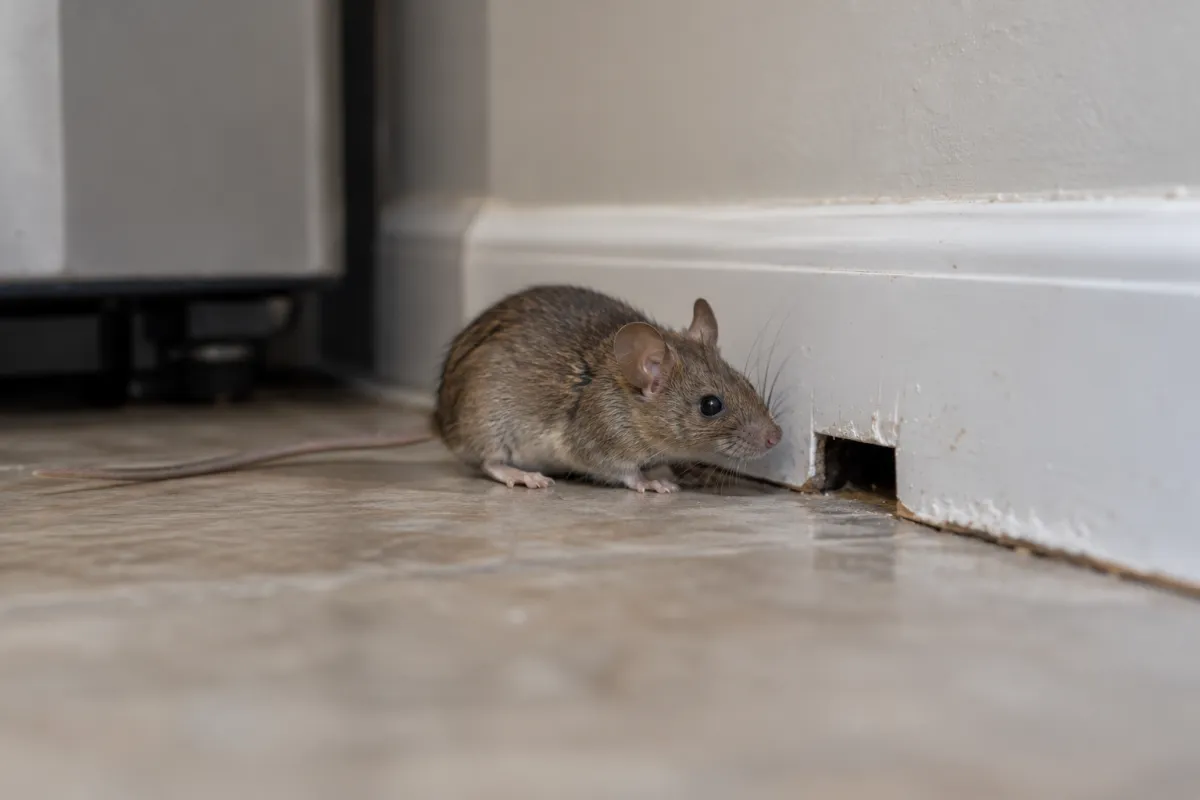
Where mice turn up in Havering
Detached and semi-detached houses with gardens in Upminster, Hornchurch and Gidea Park
Sheds, decking, compost bins and bird feeders give mice food and cover right beside the house, ready to move indoors when it turns cold.
Interwar and post-war terraced houses in Harold Hill, Collier Row and Elm Park
Shared lofts, party walls and hollow timber floors let mice travel along a whole row of houses, so neighbouring homes often share the same problem.
Market stalls, shopping centres and high streets in Romford and Hornchurch
Stockrooms, false ceilings and cable trunking give mice quiet routes and nesting spots in shops and offices, close to snacks and packaging.
Restaurants, bars and takeaways in Romford, Hornchurch and Upminster
Stored dry goods, crumbs under equipment and the warmth behind fridges and ovens make kitchens, takeaways and food stores ideal for mice.
Homes near country parks and farmland in Harold Hill, Collier Row and Upminster
Grassland and woodland edges support wood mice, which often come indoors in autumn when food outside becomes scarce and temperatures drop.
Signs to look for
Small dark droppings
Black, rod-shaped droppings about 3–6 mm long, often along skirting boards, in cupboards and behind appliances. Fresh droppings are soft and shiny.
Gnawed food packets
Small, neat holes in cereal boxes, bags of rice or pet food, with crumbs left behind. Mice nibble at many foods rather than finishing one.
Scratching after dark
Light scratching or scurrying in ceilings, walls and under floors at night, when mice are most active.
Smear marks and smell
Greasy grey marks where mice brush along walls and pipes, and a stale, ammonia-like smell in enclosed spaces such as behind kitchen plinths.
How it works
Tell us what you’ve seen
Call or email with the pest, the type of property and your postcode. A technician can explain the process before anyone visits.
Find the source
The visit starts with the signs: identifying the pest, where it is nesting and how it is getting in.
Treat the problem
Treatment uses professional-use products and methods chosen for the pest and the property, with clear safety advice.
Keep it from coming back
You get advice on proofing and hygiene. Businesses can choose one-off visits or a regular service programme.
Local pages in Havering
Further reading
- How to get rid of miceGuide
- How to get rid of mice, step by stepGuide
- Cleaning up safely after miceIn depth · 4 min read
- Mice in walls, lofts and under floorsIn depth · 4 min read
- Signs of mice in your home and what to do nextAdvice · 4 min read
- Rats or mice? How to tell which you haveAdvice · 4 min read
- Keeping mice and rats out this winterAdvice · 3 min read
Let’s talk about the problem.
Tell us what you’ve seen, the property type and your postcode.