Cleaning up safely after mice
What to wear, what to throw away and how to disinfect after mice, from droppings and urine to nests, dead mice and soiled loft insulation.
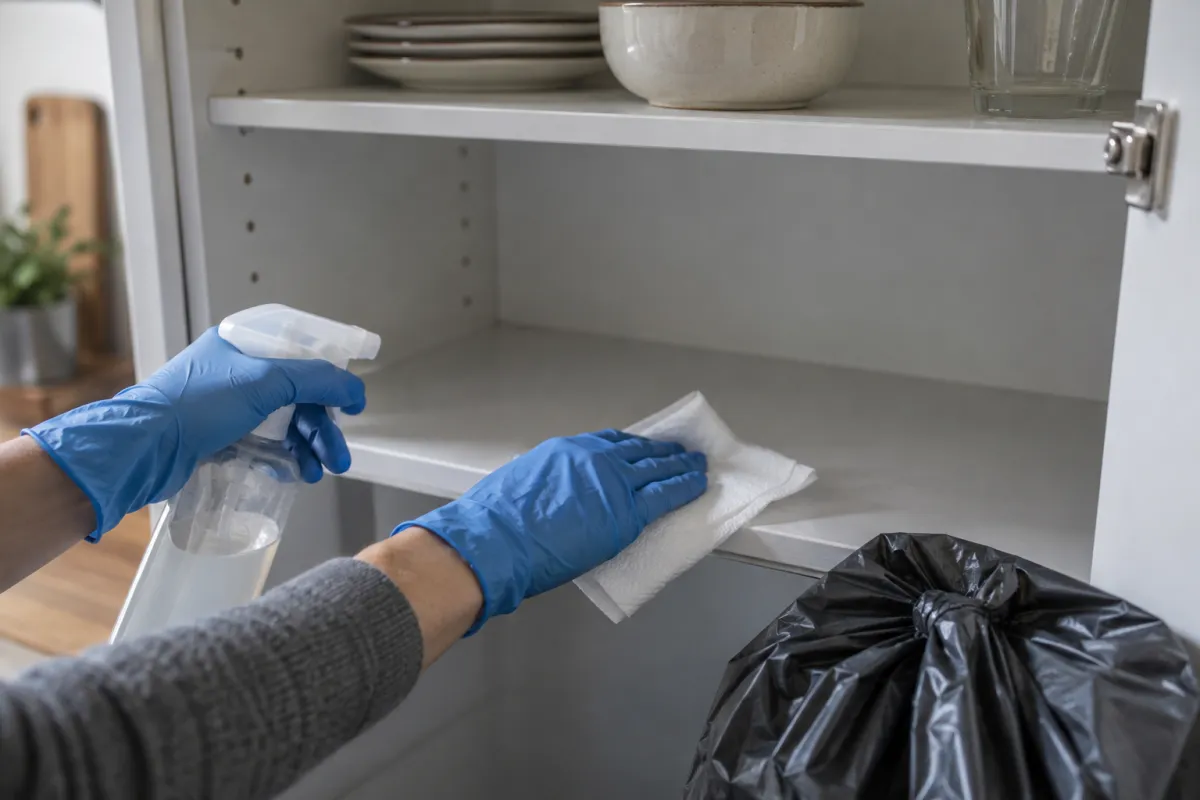
Once the mice have gone, or while you're still dealing with them, there's the clean-up: droppings, urine, nests and sometimes a dead mouse. Mice can carry bacteria such as salmonella and listeria, and dried droppings and urine break down into dust that's easy to stir up. Cleaning carefully and in the right order protects you, and it also makes it easier to tell whether the mice have really gone.
Before you start
Clean twice: once as soon as you find the signs, and again once the activity has stopped. Clearing the old droppings gives you a clean slate, so any fresh ones that appear afterwards show you straight away that mice are still active, and where. After a treatment, wait until you've gone at least a week without finding new droppings before the final deep clean.
You'll need:
- rubber or disposable gloves
- a disposable dust mask, rated FFP2 or better, for lofts or anywhere very dusty
- a household disinfectant, or bleach diluted as the label directs
- a spray bottle, paper towels and strong bin bags
Open the windows and leave the room to air for about half an hour before you start, especially a cupboard or loft that's been shut up. Never mix bleach with other cleaners, particularly anything containing ammonia or acid, as this gives off harmful gas. If you're pregnant, have a weakened immune system or have a lung condition, it's sensible to ask someone else to do the cleaning.
Cleaning step by step
- Soak first. Spray droppings, urine stains and nest material until they're properly wet, then leave them for around five minutes. This keeps the dust down and gives the disinfectant time to work.
- Wipe, don't sweep. Pick up the droppings with paper towels and put them straight into a bin bag. Don't sweep or vacuum them while they're dry.
- Clean the surface twice. Wipe the area with disinfectant, then go over it again with fresh paper towels. On shelves and worktops used for food, rinse with clean water afterwards if the product label says to.
- Bag it up. Tie the bag, put it inside a second bag and take it to your outside bin.
- Wash your hands thoroughly with soap and water, even though you wore gloves.
Grey smear marks along skirting boards and around holes come off with a detergent or degreaser, although old marks on paintwork may need repainting. A lingering urine smell often responds to an enzyme cleaner, which breaks down the residue rather than masking it.
Food, kitchenware and fabrics
- Food. Throw away anything gnawed, any open packet, and any loose food stored where you've found droppings or urine. Unopened tins and glass jars can be kept, but wash them before you open them.
- Crockery, pans and utensils. Anything kept in an affected cupboard should go through the dishwasher or be washed in hot soapy water.
- Fabrics. Tea towels, clothes and bedding that mice have run over or nested in should go on a hot wash, at 60°C if the fabric allows. Rugs and carpets can be shampooed once the droppings have been picked up.
- Cupboard bases. Kitchen units are often made of chipboard, which soaks up urine and swells. If a base still smells after cleaning, replacing that panel is usually easier than trying to clean it.
Nests, dead mice and lofts
Spray a nest thoroughly, wait a few minutes, then lift it out in one go with gloved hands and bag it. To pick up a dead mouse, wet it with disinfectant, turn a bin bag inside out over your gloved hand, pick the mouse up through the bag and pull the bag back over it. Double-bag it for the outside bin. Snap traps can be washed in hot soapy water, dried and used again.
Loft insulation that's heavily soiled with droppings or urine should be bagged and replaced rather than cleaned. Mineral wool irritates skin and eyes, so wear long sleeves, gloves and a mask. Replacing it is a good chance to bring the insulation up to the recommended depth of around 270 mm.
Larger droppings, around 10–14 mm long, are more likely to be from rats. Rat urine can carry leptospirosis, so take extra care: cover any cuts and don't touch your face while you work.
When the droppings keep coming back
If fresh droppings turn up after you've cleaned, the mice haven't gone. Our page on mice in walls, lofts and under floors explains how to work out where they're living, and the step-by-step guide to getting rid of mice covers trapping and proofing. For a heavy build-up across a loft, under floors or through a stockroom, it's usually worth having the infestation treated before anyone starts cleaning. The mice control page explains what that involves.
If mice keep coming back after you've cleaned up, call Mighty Pest Control on 020 7112 8473.